
Last updated November 14, 2026
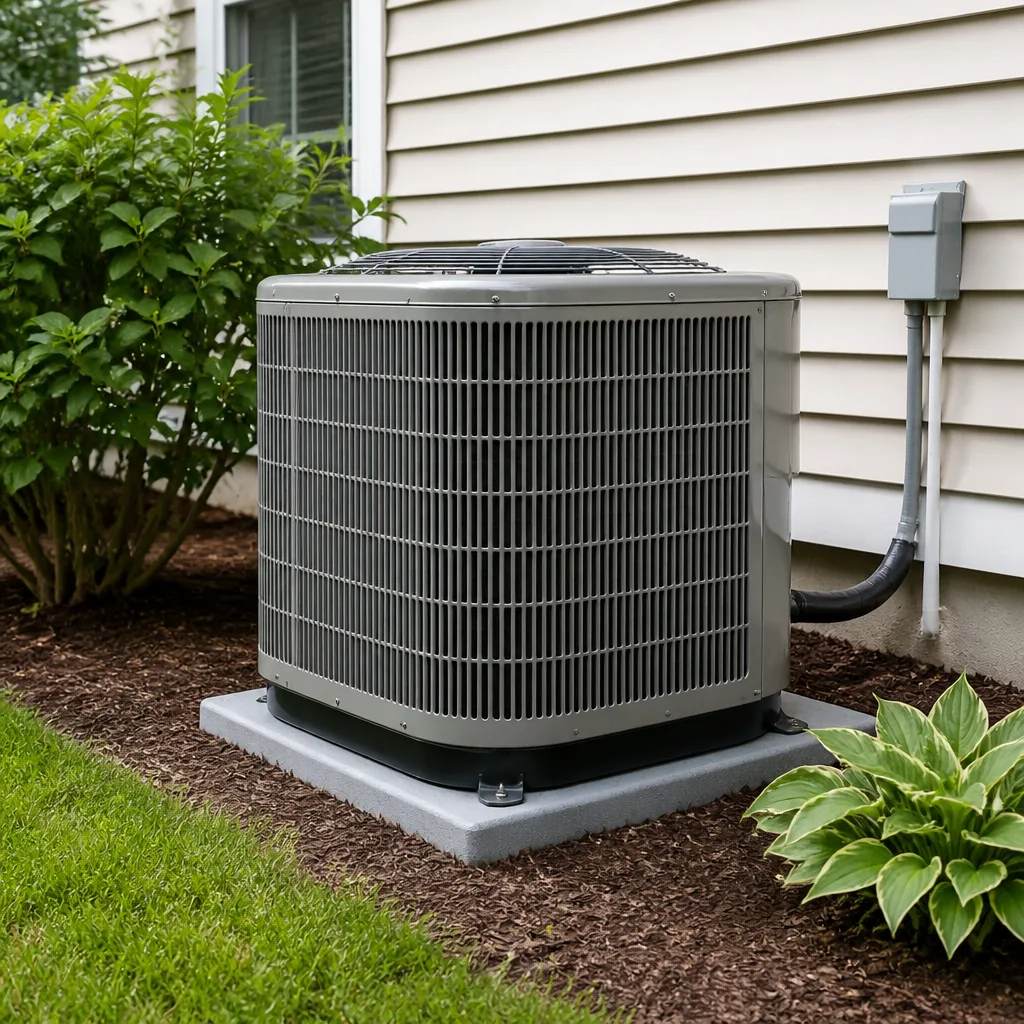 AC repair
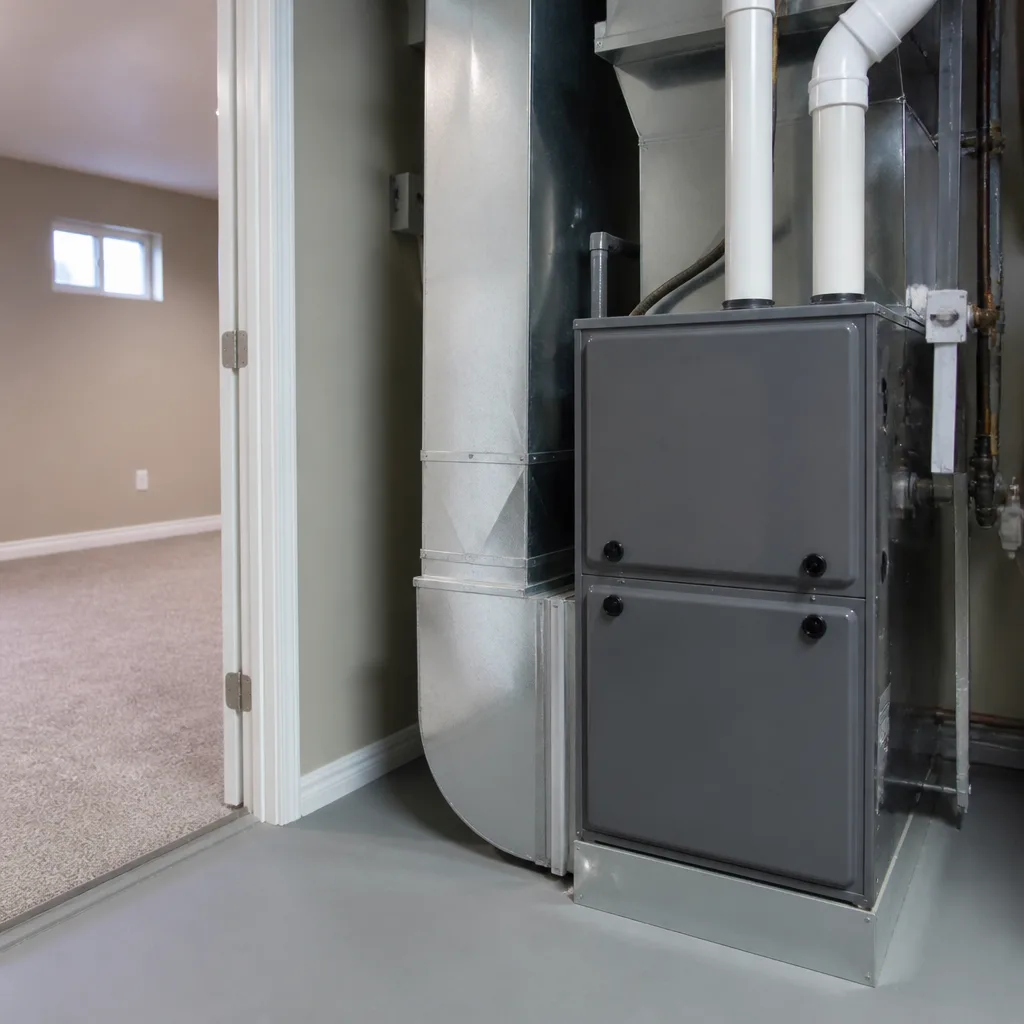 Furnace & heating
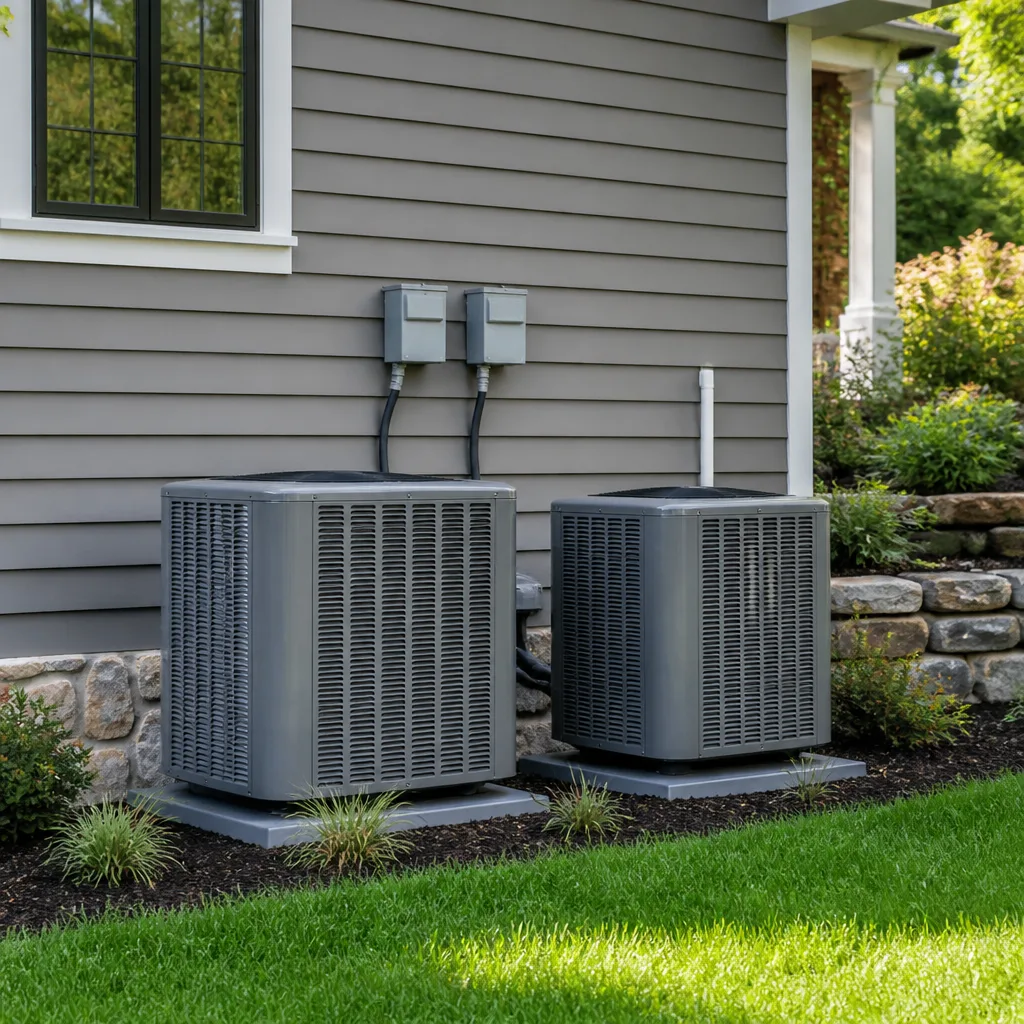 Heat pumps
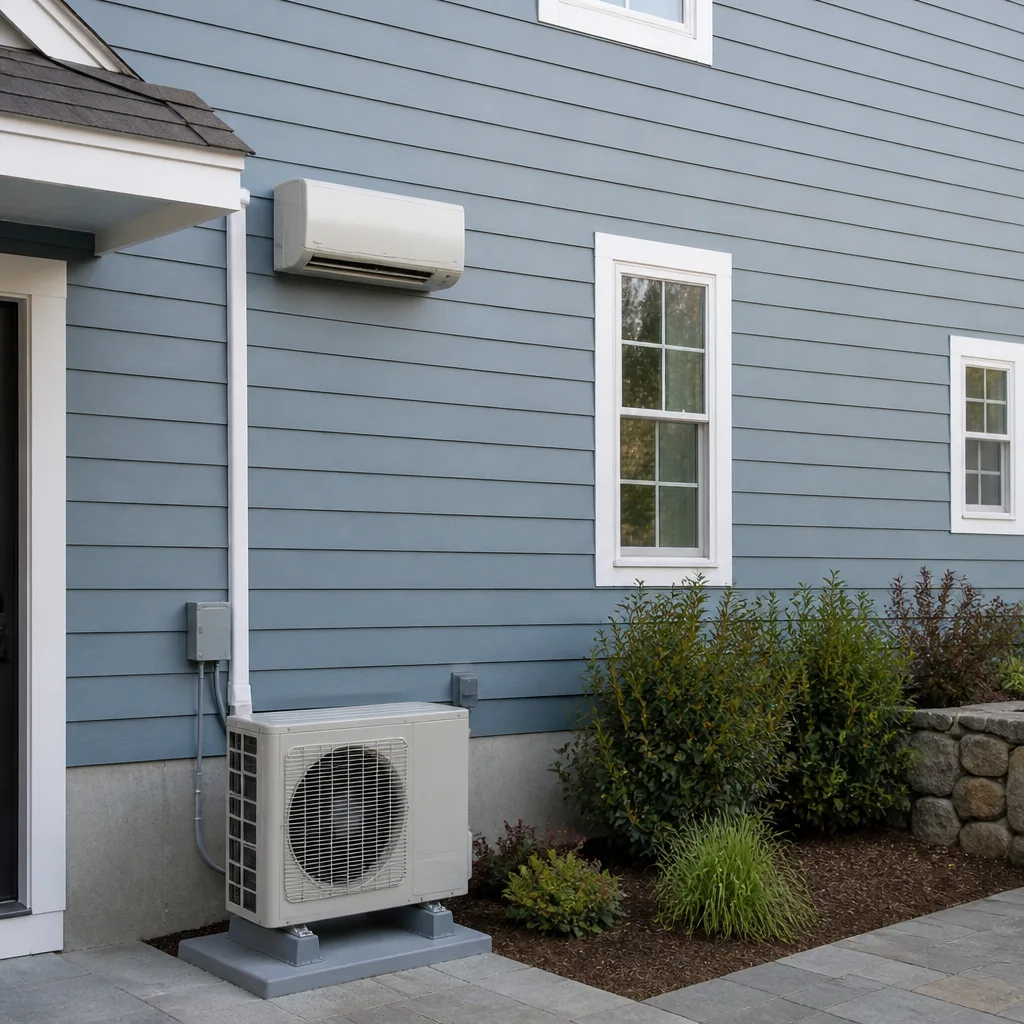 Ductless mini splits
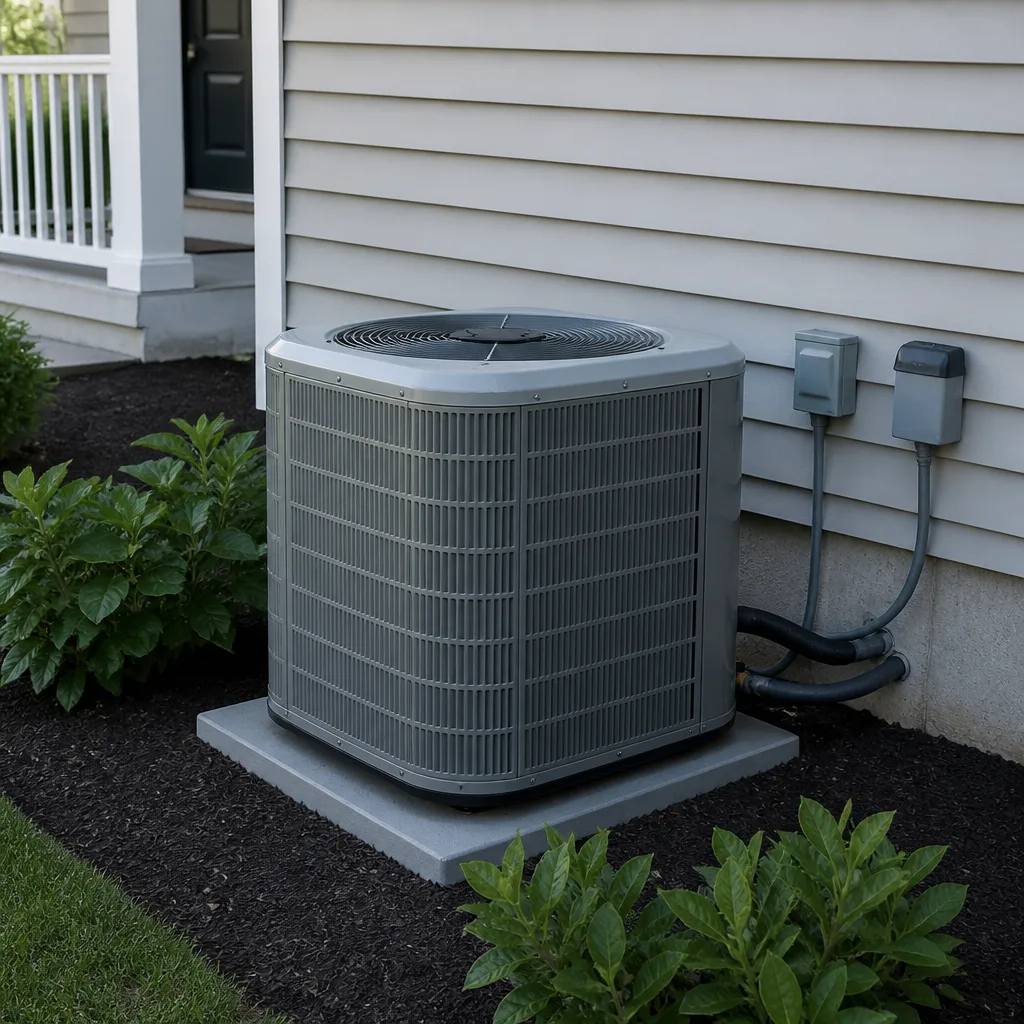 Carrier
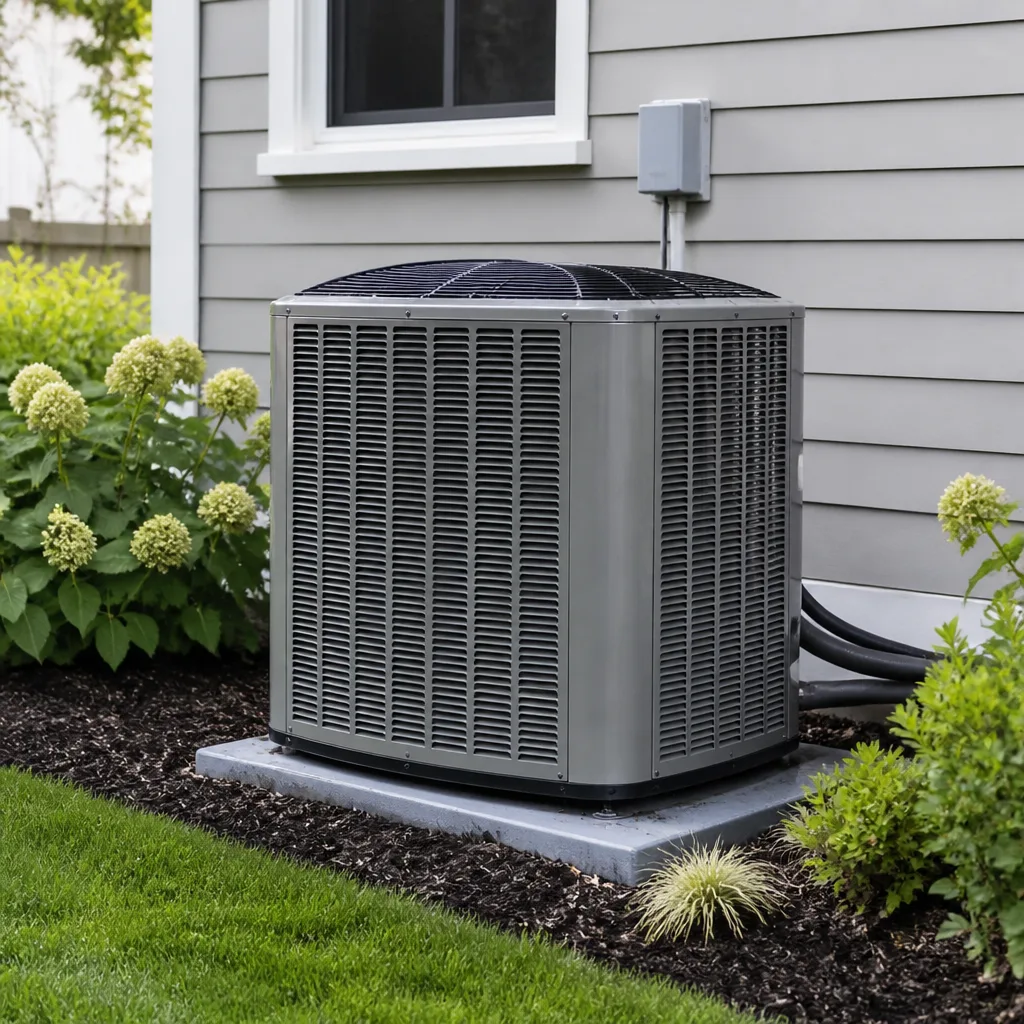 Trane
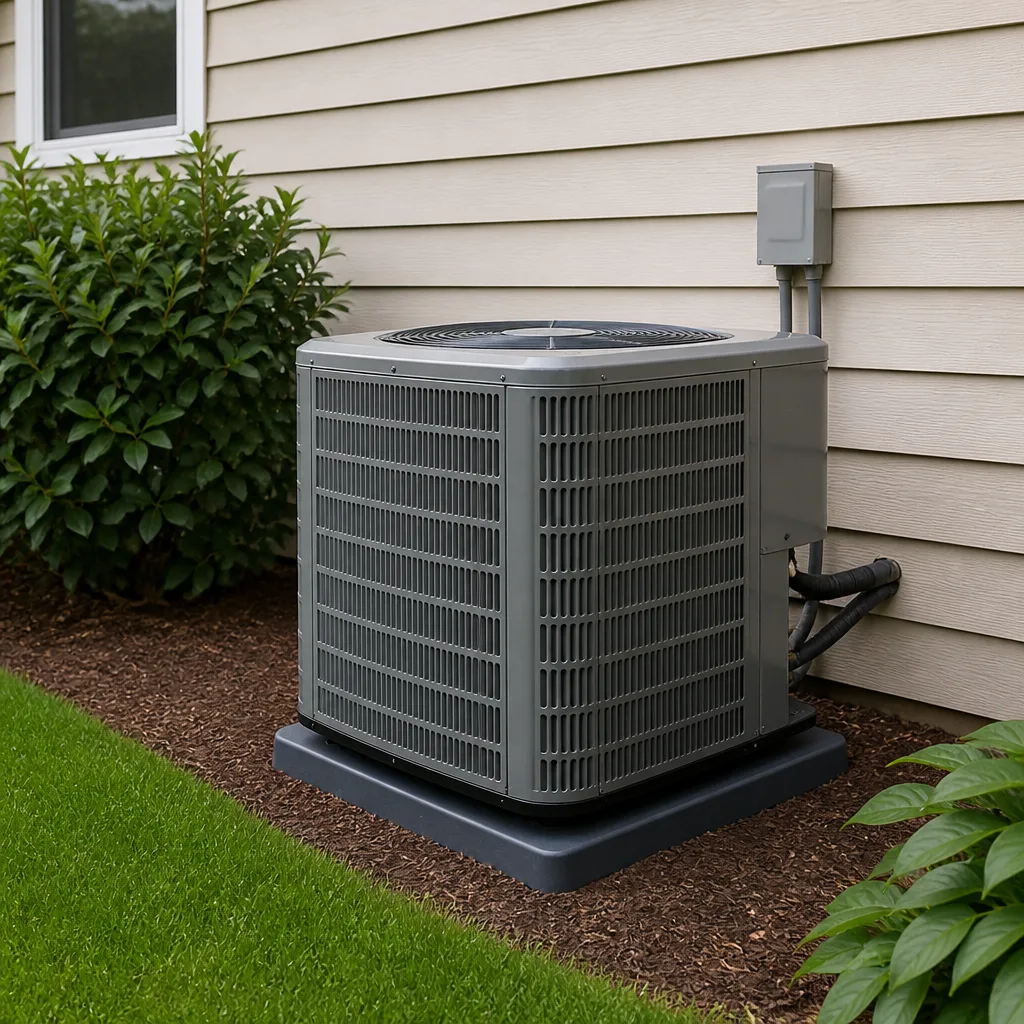 Goodman
Seasonal tune-up and full diagnostic on your Carrier, Trane, or Goodman system - readings shown to you before any repair is proposed
Diagnosis first, numbers second - you approve the repair price before a single part goes in.
Get your free estimateHVAC Warning Signs: A Garland Homeowner’s Reference Guide
Most HVAC warning-sign lists treat a struggling system like a mysterious illness: here are the symptoms, call a doctor. That’s not much help when you’re standing in your hallway at 3pm in July, listening to a unit that sounds wrong and wondering whether you’re about to be sold a compressor you don’t need. A unit that short-cycles every few minutes in Garland heat is telling you something specific about refrigerant charge or airflow restriction, and the fixable root cause often gets skipped in favor of a bigger, more expensive diagnosis. This reference connects each thing you can observe to the component most likely responsible, so you can walk into the conversation with your technician already understanding what you’re looking at, what it probably means, and what a reasonable repair looks like.
Quick Answer
The most reliable early HVAC warning signs are short-cycling, indoor humidity that stays high after the system has run a full cycle, sounds that change with compressor or blower activity, and electric bills that rise faster than the weather explains. Every one of those signs points to a specific subsystem: refrigerant charge, airflow, a failing component like a contactor or blower bearing, or a thermostat communicating badly. Catching them early is the difference between a repair and a replacement, which is why we diagnose the problem and not the upsell.
Styles & brands we work with
- AC repair
- Furnace & heating
- Heat pumps
- Ductless mini splits
- Carrier
- Trane
- Goodman
Table of Contents
- Short-Cycling: Three Causes, One Symptom
- What Your System’s Sounds Are Telling You
- High Indoor Humidity as a Diagnostic Clue
- Reading Your Utility Bill Like a Technician
- “Runs but Doesn’t Cool”: The Garland Summer Decision Tree
- Furnace Warning Signs Garland Homeowners Miss in Winter
- What a Technician Actually Checks
- Repair or Replace: How to Decide
Short-Cycling: Three Causes, One Symptom
Short-cycling is when your air conditioner turns on, runs for a few minutes, shuts off, and turns back on again well before the house has actually cooled. In properly sized equipment, a cooling cycle should run long enough to pull humidity out of the air and reach the thermostat setpoint, which usually means 15 to 20 minutes of steady operation before any break. A system cycling every six to ten minutes is failing that job, and there are exactly three families of cause worth separating.
- Refrigerant charge. Low refrigerant makes the compressor work harder to reach the same pressure, and the system’s internal safeties can trip the compressor off before the coil gets cold enough. The classic sign: the system cycles, the air coming out of the vents is only mildly cool, and the cycle lengths get shorter as outdoor temperature climbs. A refrigerant gurgle at the indoor unit is a related clue.
- Airflow restriction. A clogged filter, a failing blower capacitor, a partially closed damper, or a collapsed flex duct all starve the coil of air. The coil gets too cold, ice forms on it, and the system cycles on a safety or on the thermostat’s anticipation. If the filter looks clean but the cycle time is still short, the restriction is somewhere past the filter.
- Thermostat or control fault. A thermostat with a bad temperature sensor, a loose wire at the control board, or a smart thermostat running a schedule that fights the equipment will cause perfectly healthy hardware to cycle. This is the cheapest of the three to test and the easiest to mistake for something worse.
For Garland homes, the climate does not usually cause short-cycling directly, but it exposes the underlying problem fast. A system that limped through a mild month will cycle badly the first week that Garland temperatures cross the mid-90s, which is why late spring and early summer are the most common times for these calls. Multi-brand experience matters here: a Rheem or Bryant unit with a low-charge condition and a York unit with a failing capacitor can present with very similar cycle patterns, and knowing the specific failure points of each brand family makes the diagnosis faster.
What Your System’s Sounds Are Telling You
Your ears are a genuine diagnostic tool, and the trick is learning which sounds belong to which part of the machine. Air conditioners make a lot of noise by design, but the character of a noise, and the point in the cycle when it happens, tells a technician where to look first.
- A high-pitched metallic squeal, usually at startup or at the end of a cycle. That’s almost always a bearing. It could be the blower motor bearing or the outdoor condenser fan bearing. Both are wear items and both are straightforward repairs if caught early, before the bearing seizes and takes the motor out with it.
- A rapid clicking or chattering from the outdoor unit, followed by the compressor failing to start. That sound is the contactor trying to pull in and dropping back out, often on low control voltage or a failing capacitor. In Garland heat, capacitors are a common wear item, and their failure is usually far cheaper to fix than it sounds when you first hear the noise.
- A gurgling, hissing, or bubbling at the indoor coil. That’s refrigerant, either moving correctly through the coil or moving through a leak. If it’s accompanied by poor cooling, get it checked. If the system is cooling well and you hear it only at startup or shutdown, it may be normal.
- A boom or bang at the moment the compressor starts. That’s usually the compressor itself, or a loose panel vibrating against the cabinet. Loose panels are a five-minute fix. A compressor starting bang can indicate a failing start component or a compressor on its way out.
- Whistling through the vents. Airflow is being restricted somewhere. That could be a dirty filter, a closed register, or undersized return ductwork. It’s worth checking, because restricted airflow is the second-leading cause of coil freeze-up after low refrigerant.
If you hear a sound and can’t place it, the useful detail to give a technician is not just what it sounds like, but when it happens: at startup, in the middle of a run, or on shutdown. That timing single-handedly narrows the list of likely components.
High Indoor Humidity as a Diagnostic Clue
A lot of homeowners treat indoor humidity as a comfort complaint. In our experience, it’s actually one of the most useful diagnostic signals in the house. A properly working air conditioner dehumidifies as a byproduct of cooling: warm moist air passes over a cold coil, moisture condenses on the coil, and it drains away. When humidity indoors stays high despite the system running, one of a few specific things has gone wrong.
- The coil is running too warm. An undercharged system or a system with an airflow restriction cools the air only slightly, so the coil never gets cold enough to pull moisture out of the airstream. The house feels cool-ish but clammy, and the unit runs constantly.
- The system is oversized. An oversized air conditioner cools the house so fast that it never completes a full dehumidifying cycle. It satisfies the thermostat in fewer minutes than needed to wring the moisture out of the air. This is a common issue in Garland homes where a previous replacement was sized by square footage rather than a load calculation, and it’s why we run a proper load calculation before quoting a new system.
- The blower is set too high. Many air handlers have a blower speed setting that can be adjusted. If the blower pushes too much air across the coil, the air passes too quickly to give up its moisture. A technician can check and adjust this on most equipment.
- The drain or the coil is blocked. If the condensate drain clogs, water backs up and can trip a float switch or overflow the drain pan. Humidity staying high indoors alongside water at the air handler is a sign to shut the system down and call for service.
If your home in Garland feels sticky even when the thermostat reads 76, ask a technician to check the temperature split across the coil and the blower speed. Those two readings separate a charge problem from an airflow problem from a sizing problem in a way that a “it just feels muggy” call never will.
Reading Your Utility Bill Like a Technician
Utility bills are the most underused diagnostic tool homeowners have, and the reason most people miss the signal is that they compare this month to last month without accounting for weather. A 20% jump in July over June could be nothing but a hotter month. A 20% jump over the same month last year, adjusted for the difference in cooling days, is something else.
Here’s how to build a rough baseline for your Garland home:
- Pull twelve months of electric bills. Your utility’s online account will show them.
- Separate the seasonal baseline. The minimum bill your home produces in mild months (usually February or March in Garland) is your non-cooling baseline: hot water, appliances, lights, everything but the air conditioner.
- Subtract the baseline from each summer month. That’s roughly what your air conditioner cost you that month.
- Compare the cooling cost against the same month last year, and against the outdoor temperature trend. Roughly speaking, cooling cost should rise and fall with how hot the month was. If the cooling cost jumped 25% but the month was 5% hotter, part of that gap is equipment degradation.
- Look for a step change, not a slope. A gradual year-over-year rise is normal as a system ages. A sudden step change in one month, on fairly normal weather, is a sign worth investigating.
A clogged filter, a dirty condenser coil, or a system running a low refrigerant charge all show up on the bill before they show up as a breakdown. Catching that step change early is often the difference between a filter-and-coil cleaning and a compressor replacement.
“Runs but Doesn’t Cool”: The Garland Summer Decision Tree
The most common call we get in a Garland summer is the unit running and running and the house not cooling. Before you call, a short decision tree helps you describe the problem in a way that saves diagnostic time.
Step 1: Is the outdoor unit actually running?
Put your hand near the top of the outdoor condenser. If the fan is spinning and you feel warm air being blown out, the compressor and condenser fan are likely working. If the fan is spinning but the air coming off the top feels cool, the compressor is not running, even though the fan is. That’s an important detail to relay. If the fan is not spinning at all, the system may have tripped a breaker, blown a capacitor, or failed a safety.
Step 2: Is there ice on the indoor unit or the refrigerant lines?
Look at the large insulated copper line going into the air handler. If it’s frosted over, the coil is frozen. Turn the system off at the thermostat and let the ice melt before calling. A frozen coil points strongly toward low refrigerant charge or restricted airflow and needs to be diagnosed by a technician, not restarted repeatedly. Running a frozen system can damage the compressor.
Step 3: Is the indoor blower running?
With the thermostat set to cool and the system calling, put a hand near a vent. If you feel no airflow at all, the indoor blower has stopped. If airflow is weak but present, the blower is running but something downstream is restricted.
Step 4: Is the air at the vents cool, cool-ish, or room temperature?
Cold air with weak flow suggests airflow restriction. Cool-ish air with normal flow suggests low charge. Room-temperature air with the outdoor unit running and the indoor blower running suggests a compressor fault or a serious refrigerant loss.
Those four answers give a technician a head start before they arrive. At Sunstone, we’re certified on the equipment lines that dominate Garland neighborhoods, including Rheem and Daikin, so the diagnosis usually starts with the specific failure points of that unit’s model class rather than a generic guess. If you’re not sure whether the problem warrants a call or a wait, our AC repair team can talk it through.
Furnace Warning Signs Garland Homeowners Miss in Winter
Garland winters are mild, which means most homeowners don’t think about the furnace until the first cold snap and then find out something is wrong at the worst time. That’s a seasonal risk, not a mechanical one: the system sat unused for eight months and its first run is also its first test. A few signals are worth watching for before that first cold morning.
- A yellow or orange burner flame instead of a steady blue one. That’s a combustion signal. If you see it, stop using the furnace and call. It can indicate incomplete combustion, and it’s not something to troubleshoot yourself.
- A musty or burning smell on startup. A light musty smell at the first run of the season is often dust burning off the heat exchanger. A strong smell, or a smell that persists, is not. Turn the furnace off and call.
- Uneven heat from the vents. Some rooms warm and others stay cool can indicate a duct problem, a blower issue, or a furnace that isn’t delivering the airflow its rating calls for.
- Rattling, squealing, or grinding. The blower motor and the inducer motor (on higher-efficiency furnaces) are the usual culprits. Both are wear items.
- Repeated trips of the furnace breaker or the furnace going into a lockout. Modern furnaces lock themselves out on a failed safety check as a design feature. Repeated lockouts usually mean something specific, often a pressure switch, flame sensor, or control board.
Gas furnaces carry real safety risk. The heat exchanger, the gas valve, and the flue are not parts to poke at with a screwdriver and a video tutorial. If you smell gas, leave the house and call your gas utility first, then call us.
What a Technician Actually Checks
Understanding what happens during a diagnostic visit makes the conversation easier and helps you spot a technician who is guessing instead of checking. A thorough diagnosis covers the following, roughly in order.
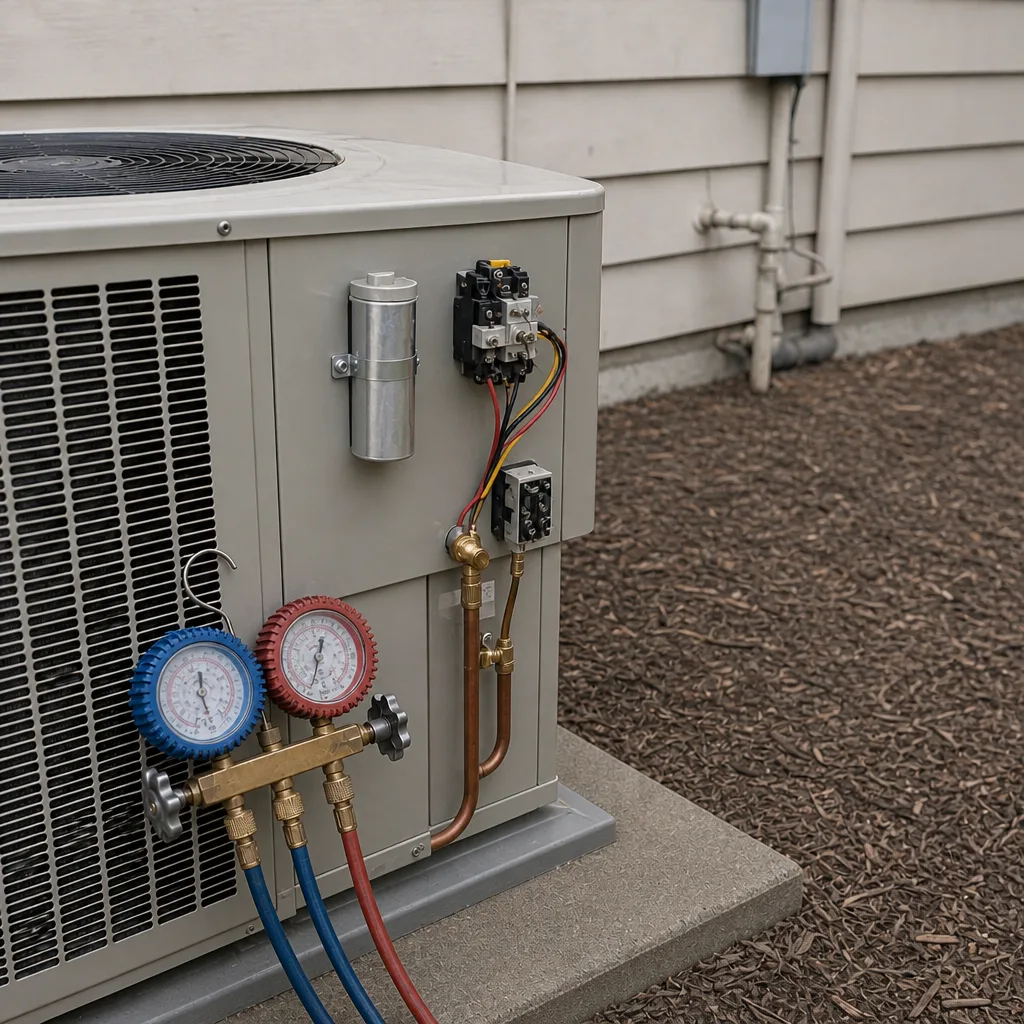
- Temperature split. The difference between return-air and supply-air temperature tells the technician whether the system is delivering rated cooling. Normal is a specific range that varies by system; a low split points to charge, a high split points to airflow.
- Superheat and subcooling. These are the pressure-based measurements that confirm whether the refrigerant charge is correct. A technician is not guessing about refrigerant without these.
- Static pressure. This measures how restricted the ductwork and filter are. High static pressure starves the coil and shortens blower life. This is the measurement most often skipped on a quick tune-up and the one most useful on a system that keeps freezing.
- Electrical draw at the compressor and the blower. A compressor pulling more amps than it should is on its way out. A blower pulling more amps than it should has a tight bearing or a failing capacitor.
- Capacitor testing. Both the run capacitor and the start capacitor are checked against their rated microfarad values. In Garland heat, capacitors fail regularly and are a common, inexpensive source of the “unit won’t start” call.
- Coil condition. Both the indoor evaporator coil and the outdoor condenser coil are inspected for fouling, which reduces capacity and raises bills.
- Drain and safety switches. Condensate drains clog, float switches trip, and a small issue upstream becomes an overflow downstream.
If you want a second opinion on a diagnosis you’ve been given, particularly one that involves replacing a major component, we’ll happily do a diagnosis from scratch. We’re not locked into a single manufacturer, so the recommendation is driven by what the equipment actually needs. When it’s time for a new system, our AC installation team handles the load calculation and the install so the same company that repaired your system today can also replace it tomorrow if that’s the honest call.
Repair or Replace: How to Decide
The repair-versus-replace question comes up on almost every diagnostic call, and the honest answer is that it depends on three things: the age of the equipment, the cost of the repair relative to the cost of a new system, and the history of breakdowns. There is no single threshold that fits every Garland home, but there are rules of thumb worth knowing.
- A single repair on a system under ten years old is usually worth doing. The system has meaningful life left, and the repair extends it.
- A second major repair on a system over twelve years old tilts the math toward replacement. Equipment past its expected service life is more likely to have another failure not far behind.
- A compressor replacement on a system at or past fifteen years old is often better framed as a down payment on a new system. Same money, less remaining life.
- A refrigerant leak that comes back within a season after a repair is a decision point. Some leaks are fixable and stay fixed. Some don’t. The technician should be honest about which one they’re looking at.
- Any equipment with a compromised heat exchanger on the furnace side is a replace-now situation. That’s a safety issue, not a performance issue.
If a new system is on the table, a proper load calculation matters as much as the equipment brand. Garland homes vary widely in insulation, window area, and duct quality, so a like-for-like replacement sized by square footage is often the wrong answer. If your home has been sticky in summer even with a working system, that’s a sign the original sizing was already too big, and a smaller system with better airflow can be the more comfortable choice.
Common Mistakes to Avoid
- Resetting the breaker and hoping. A system that has tripped a breaker has a reason. Repeated resetting can cycle a failing compressor and turn a modest repair into a full replacement.
- Running a frozen system to “see if it catches up.” Ice on the coil means the system is starved of refrigerant or airflow. Running it frozen can slug liquid refrigerant into the compressor and destroy it. Shut it off and let it thaw before calling.
- Replacing the thermostat first. Many homeowners upgrade a thermostat hoping it will fix cooling that doesn’t work. Most of the time the thermostat is fine, and the underlying problem is charge or airflow. Diagnose before replacing.
- Assuming high bills mean a new system is needed. In Garland, a dirty condenser coil or an undersized return duct can add significant load without any component being bad. Get the diagnostics before committing to a replacement.
- Skipping the filter. A filter that’s overdue restricts airflow, starves the coil, and shortens blower life. It also makes every other diagnostic harder to read. Change it on a schedule.
- Letting the first cold snap be the furnace’s first test. Run the furnace in October before you need it. If it’s going to lock out, better to find out on a warm afternoon than a cold night.
- Calling the first name that answers. Ask what brands the company is certified to service. If the answer is “all of them” without naming any, that’s a signal about how the diagnosis will go. We’re certified on nine of the industry’s most-installed brands, including Rheem, Bryant, Daikin, and York, and we can tell you what that means for your specific equipment.
See the difference
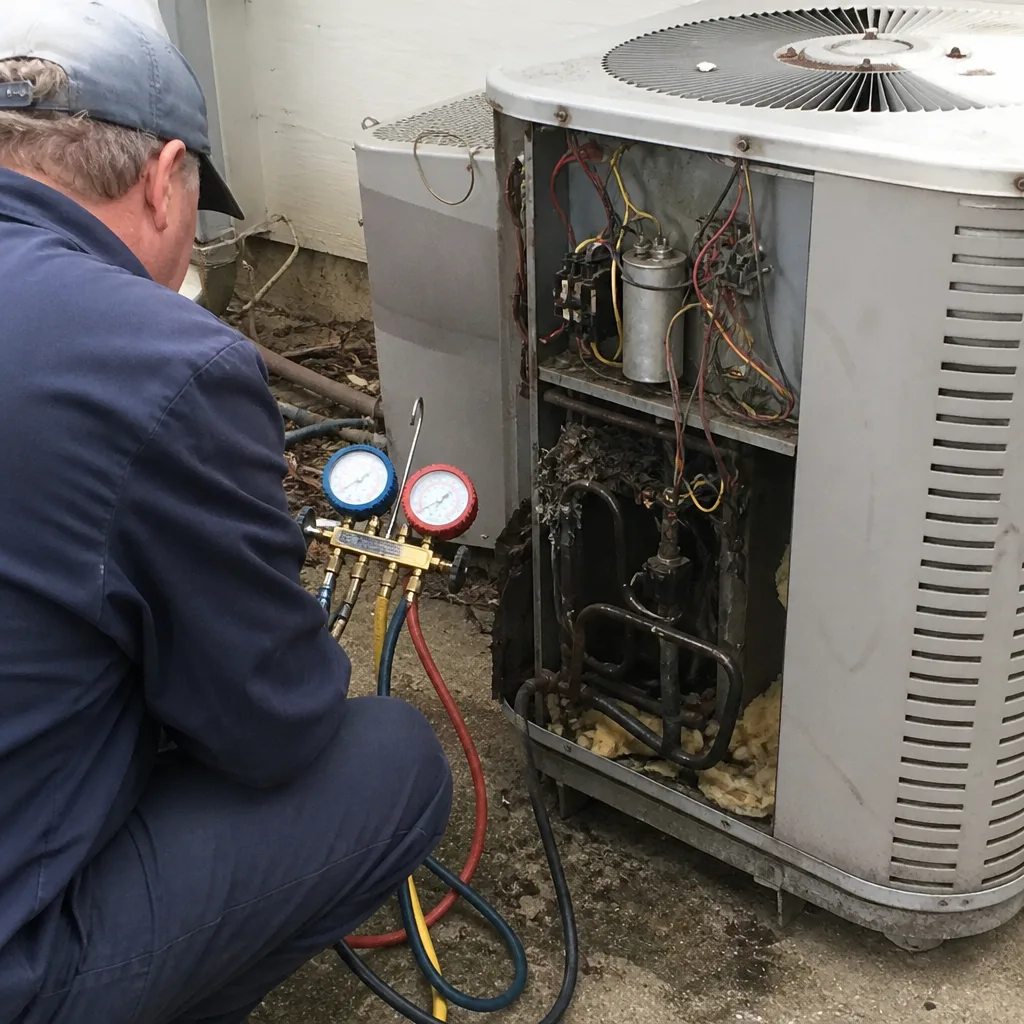 Before
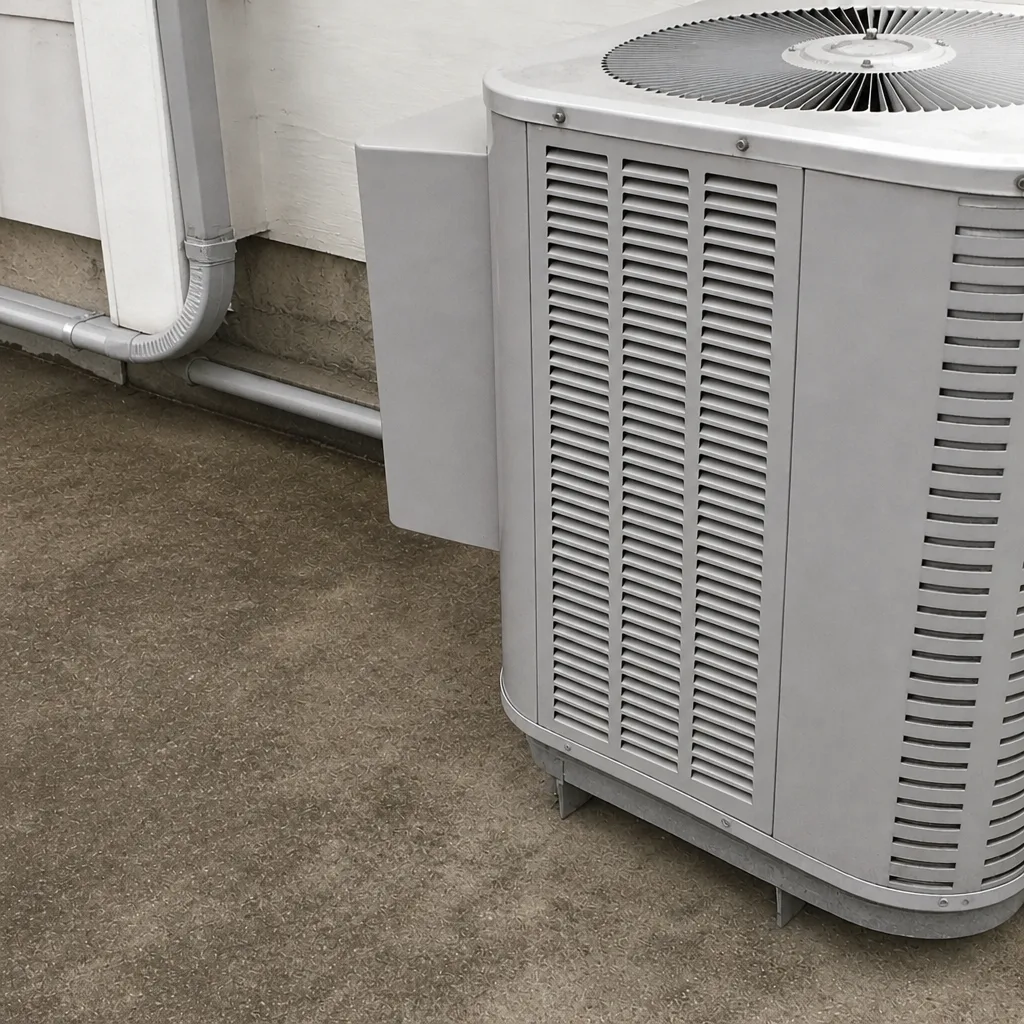 After
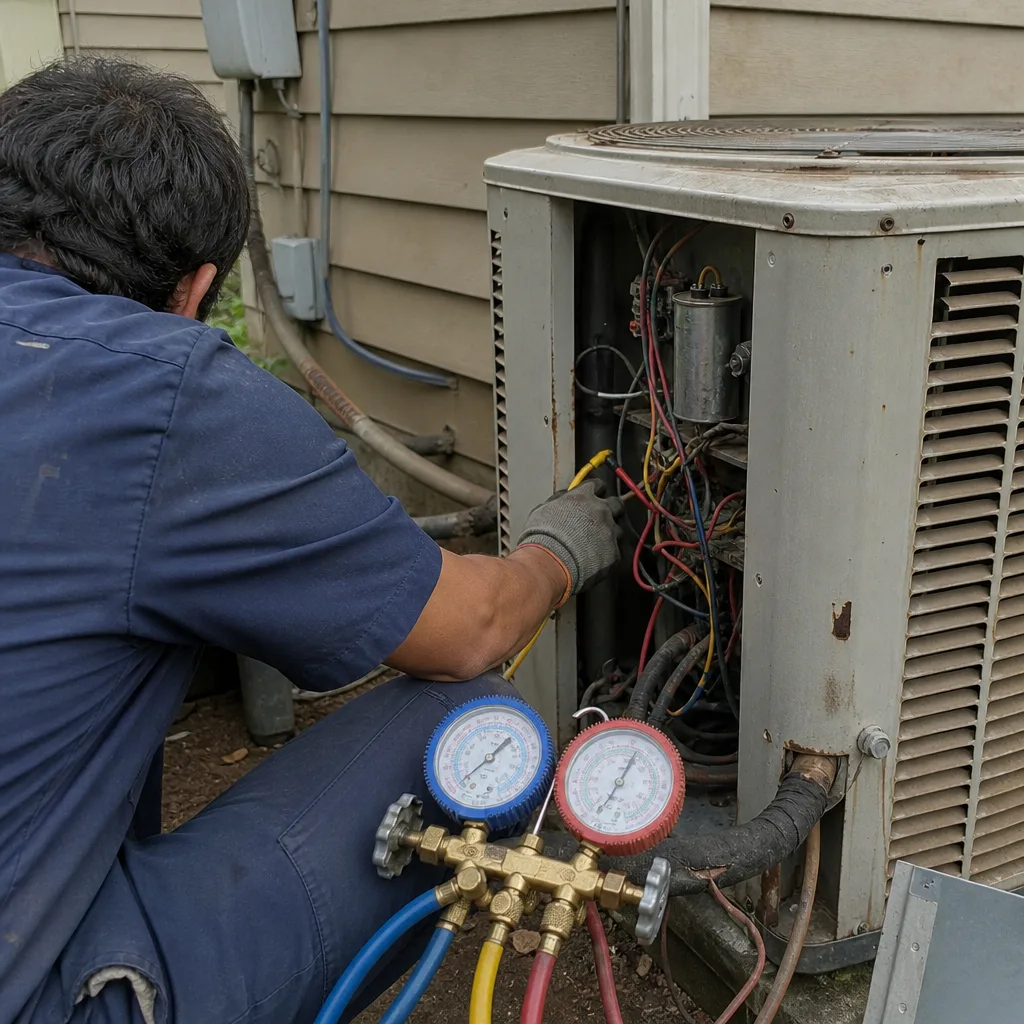 Before
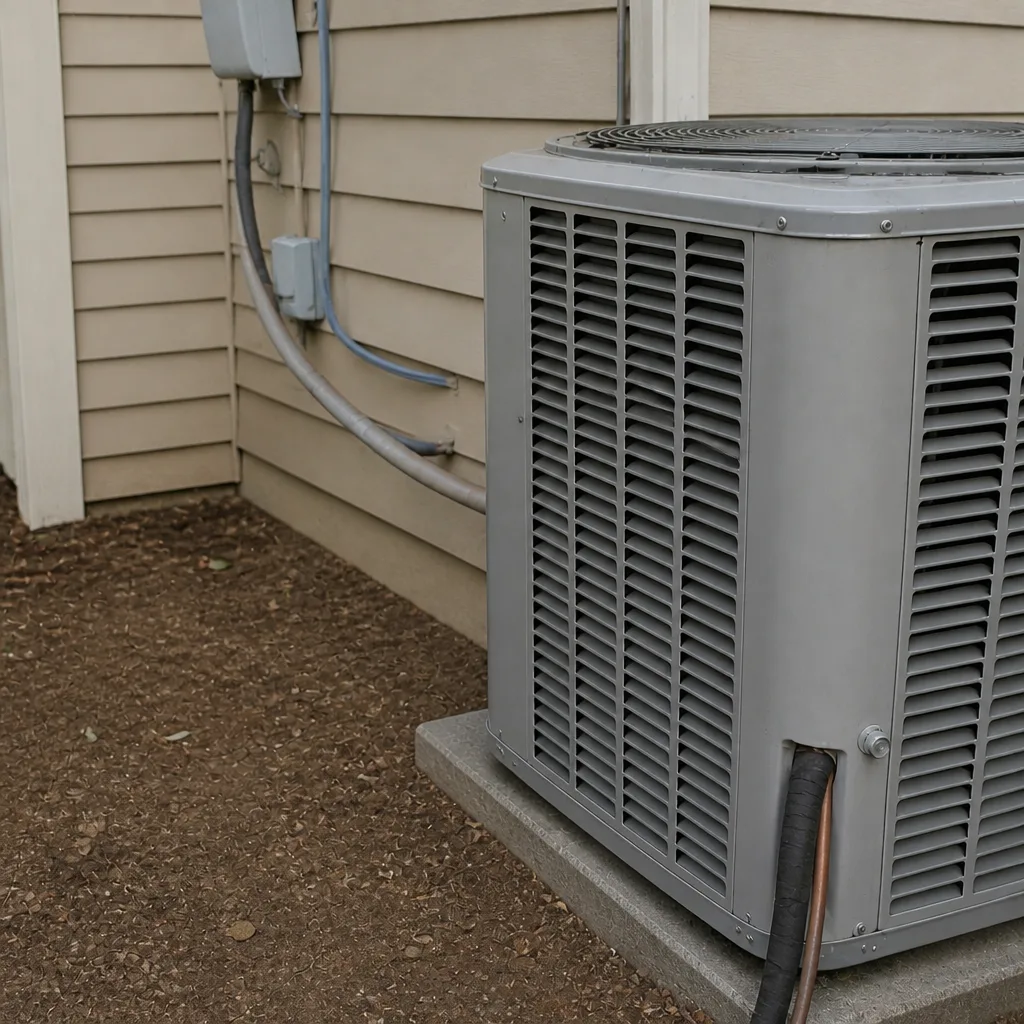 After
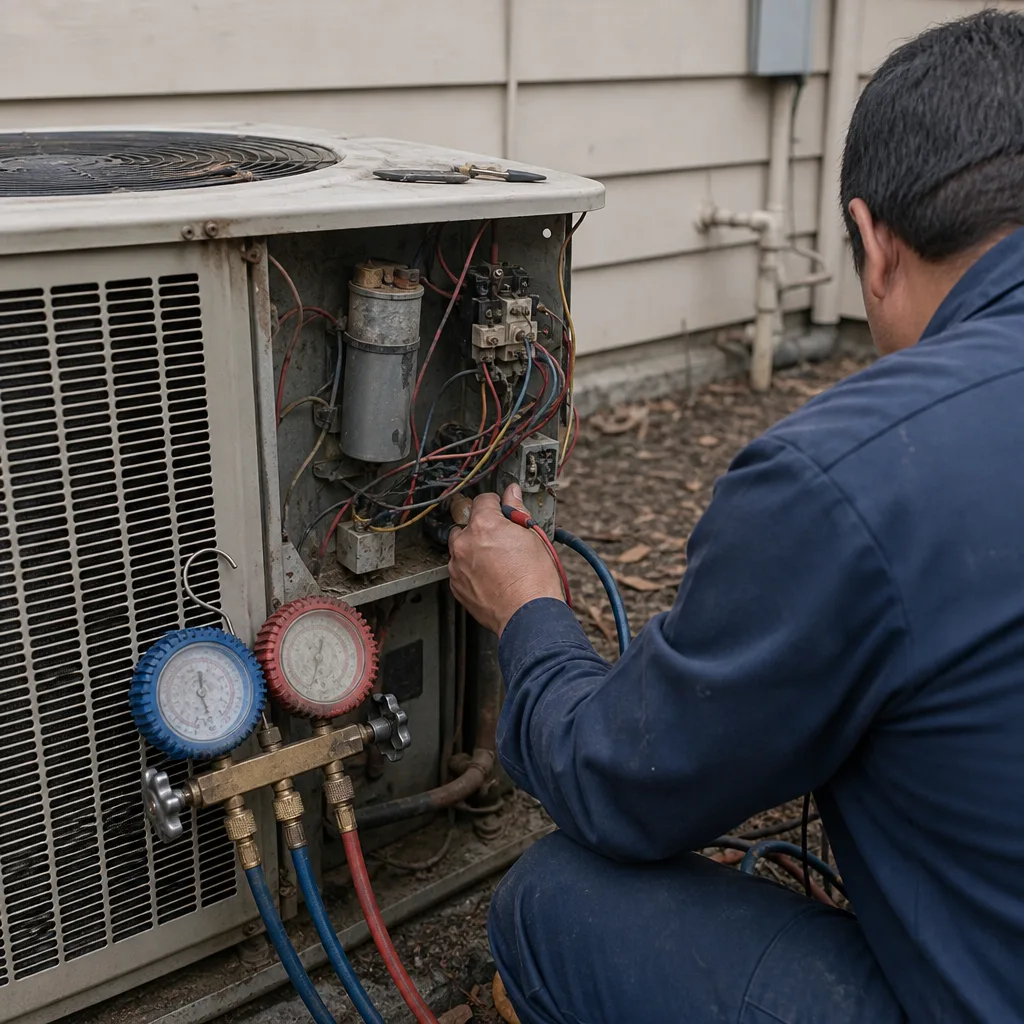 Before
 After
When to Call a Professional
Some warning signs are safe to observe and wait on. Others need a call today. Call us immediately if you smell gas, see a yellow flame at the furnace, find ice on the indoor coil with the outdoor unit running, hear a grinding sound from the compressor, or notice water at the base of the air handler. Those are signs to shut the system down at the thermostat and breaker (gas aside, where you should leave the house first) and get a technician out. For less urgent signs, like a bill that’s drifted up, a system that cycles longer than it used to, or uneven cooling room to room, a scheduled diagnostic is the right call. Sunstone AC Repair offers free estimates in Garland. Call (866) 970-7959. We answer 24/7. Fast dispatch from 7am to 7pm, Sunday through Friday.
Frequently Asked Questions
Never, as a rule. A healthy air conditioner should run a steady 15 to 20 minutes per cycle in normal Garland summer temperatures before it satisfies the thermostat and rests. Cycles shorter than that, especially ones that get shorter as the day heats up, point to a refrigerant, airflow, or thermostat problem worth diagnosing.
It usually means the coil isn’t getting cold enough to dehumidify, or the system is moving air too fast over it. Common causes are low refrigerant, restricted airflow, an oversized system running short cycles, or a blower speed set too high. A technician can measure the temperature split across the coil and the blower speed to tell those apart. Call (866) 970-7959 for an exact diagnosis; estimates are free.
Sometimes. A one-time jump is worth checking if the weather in that month was similar to the same month last year. A step-change in an otherwise consistent bill is the pattern to look for, not a gradual seasonal rise. If the jump came with a mild change in how the house cools, call.
Not safely, and not accurately. Refrigerant work requires EPA-certified handling and gauges to measure superheat and subcooling. What you can do safely is check the filter, listen for the gurgle, and see whether the coil is icing. Those observations give a technician a useful starting point, which is what the decision tree above is for.
If it’s the first major repair on the system and the rest of the equipment tests healthy, repairing is usually the right call. If it’s a second or third major repair, or the repair is a compressor on a system that age, replacement starts to make more economic sense. We diagnose the problem, not the upsell, so we’ll tell you which one the equipment actually warrants.
Yes. That’s one reason we focus on covering the full lifecycle: the same team that diagnoses and repairs your system today can install a replacement tomorrow if that’s the honest answer. Our furnace repair capability means you’re not looking for a second contractor in winter, either. Call (866) 970-7959 and we’ll walk through what your equipment needs. For more about how we work in Garland, see Garland.
Sunstone AC Repair is the multi-brand specialist that covers both cooling and heating, and our technicians are certified to diagnose and repair Carrier, Trane, Lennox, Goodman, Sunstone AC Repair is who you call when you want a technician who arrives already familiar with your unit’s known failure points. We work on nine of the most-installed residential brands, and we’re fluent in the equipment that shows up most in Garland neighborhoods.
The Bottom Line
HVAC warning signs are not vague omens. Each one maps to a specific component: short cycles to charge or airflow, sounds to bearings or contactors, high humidity to coil temperature or blower speed, and step changes in the bill to degradation that shows up there first. Learning to read those signals means you can describe the problem precisely, ask the right questions, and recognize when a recommendation is grounded in the equipment rather than the sales script. Garland summers test every system you own, and the earlier you catch the signal, the cheaper the fix usually is.
Call (866) 970-7959 for a free estimate. We answer 24/7. Fast dispatch from 7am to 7pm, Sunday through Friday. Repair today, replace only when it makes sense.
Written by the team at Sunstone AC Repair, serving Garland since 2018.