
Last updated November 14, 2026
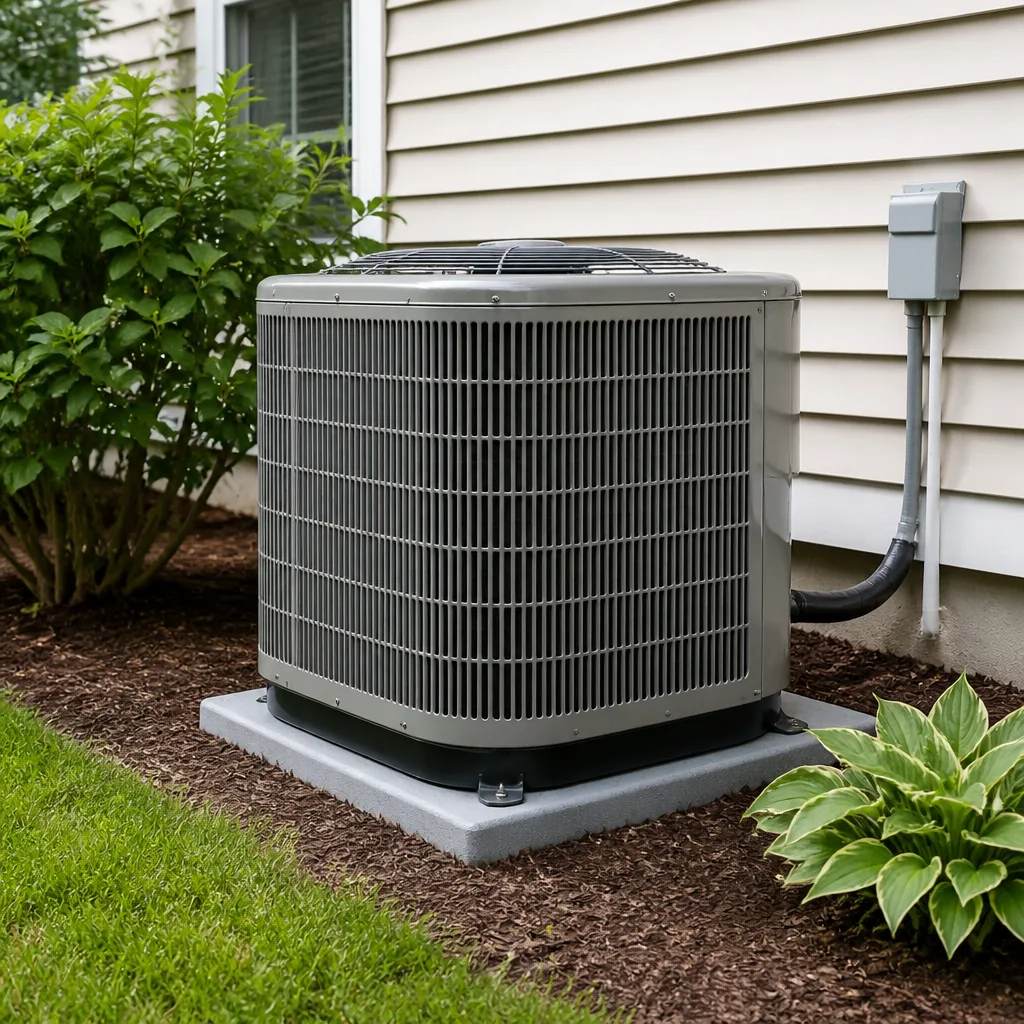 AC repair
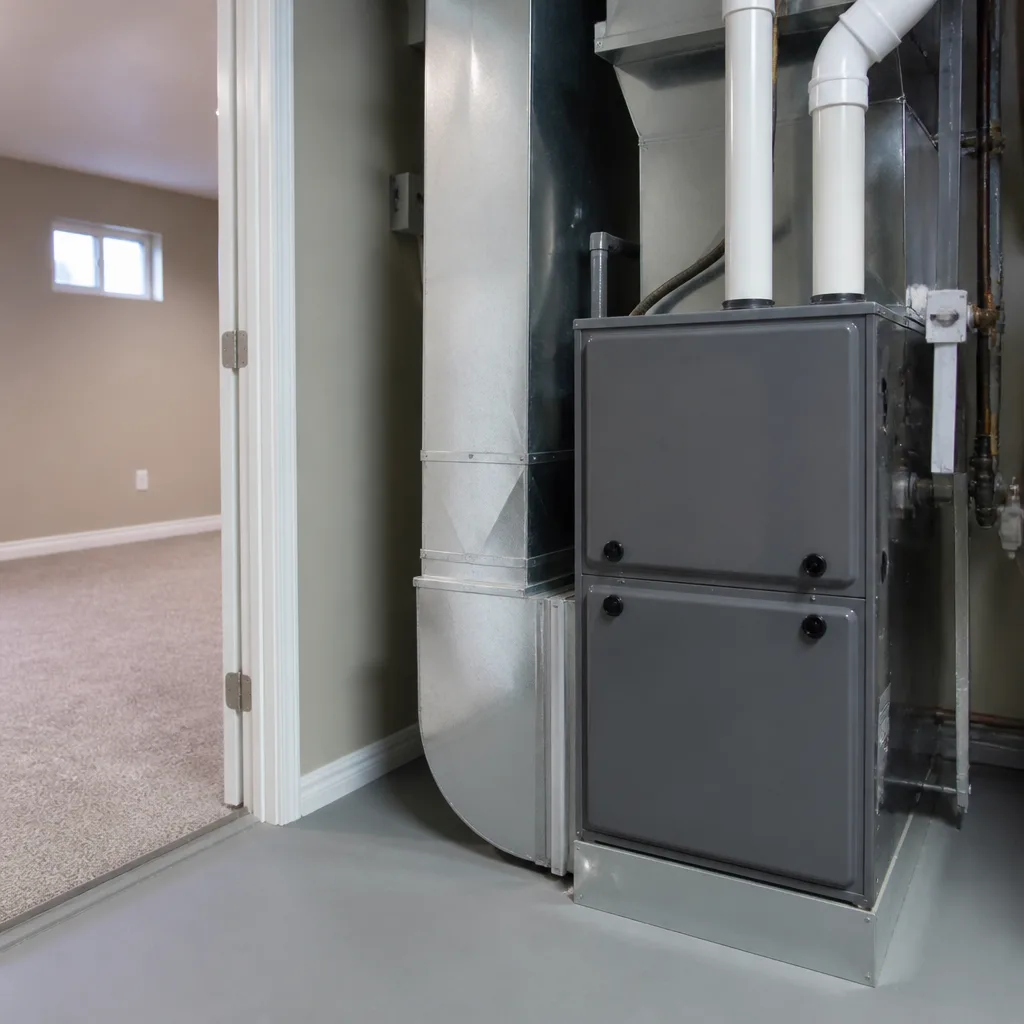 Furnace & heating
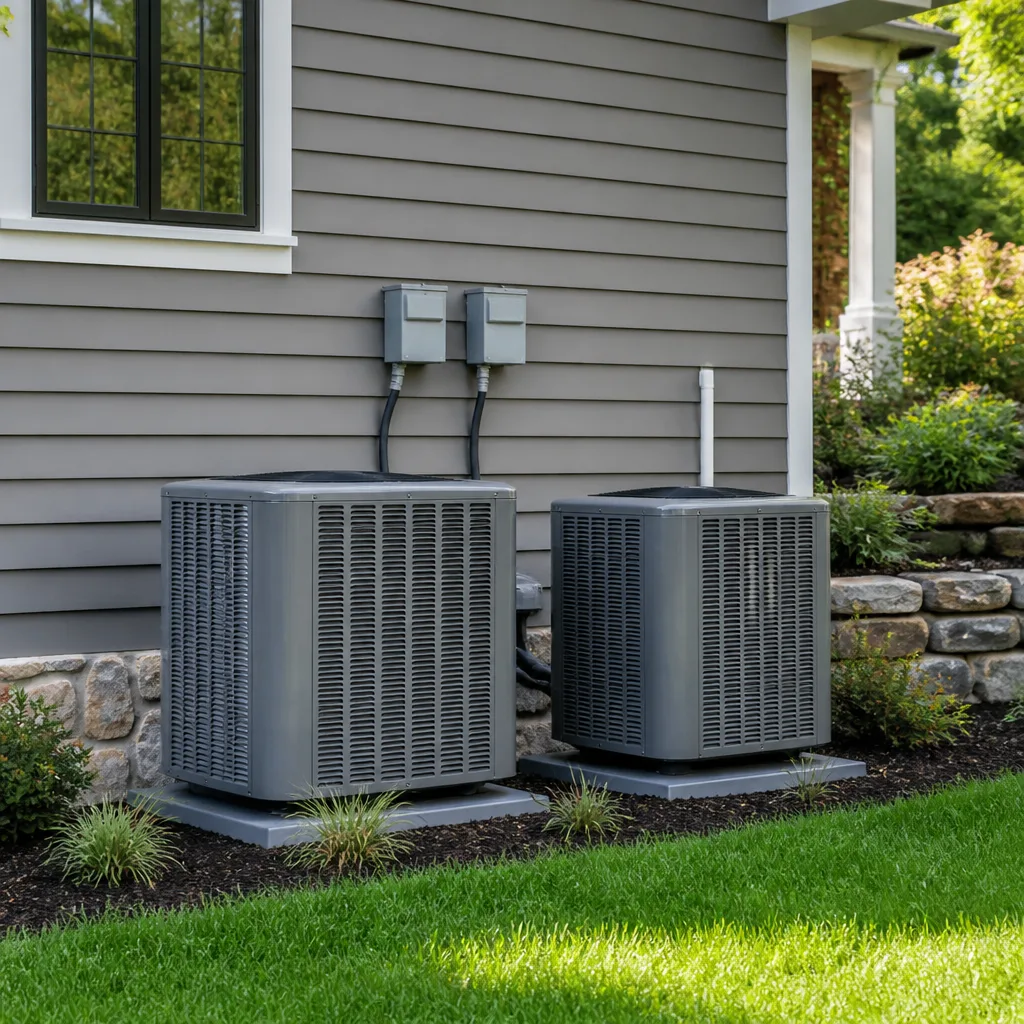 Heat pumps
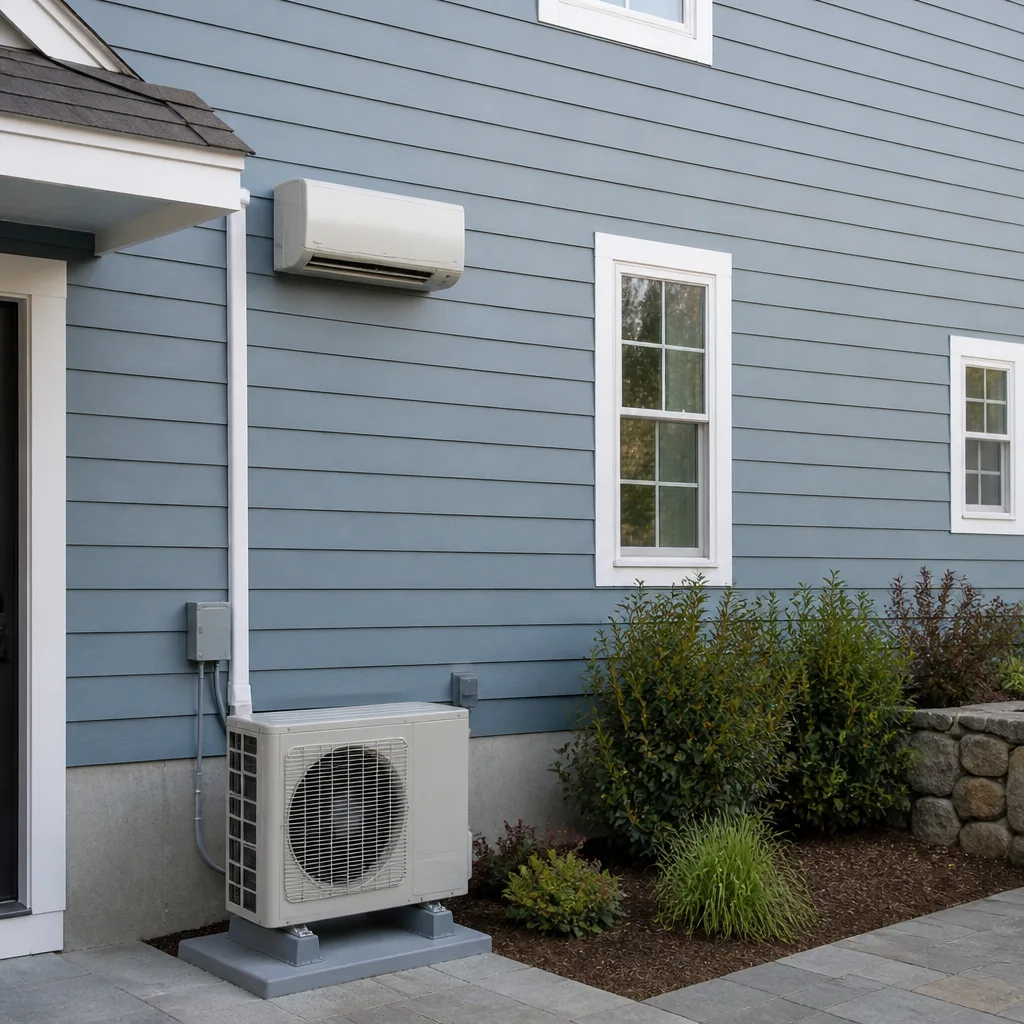 Ductless mini splits
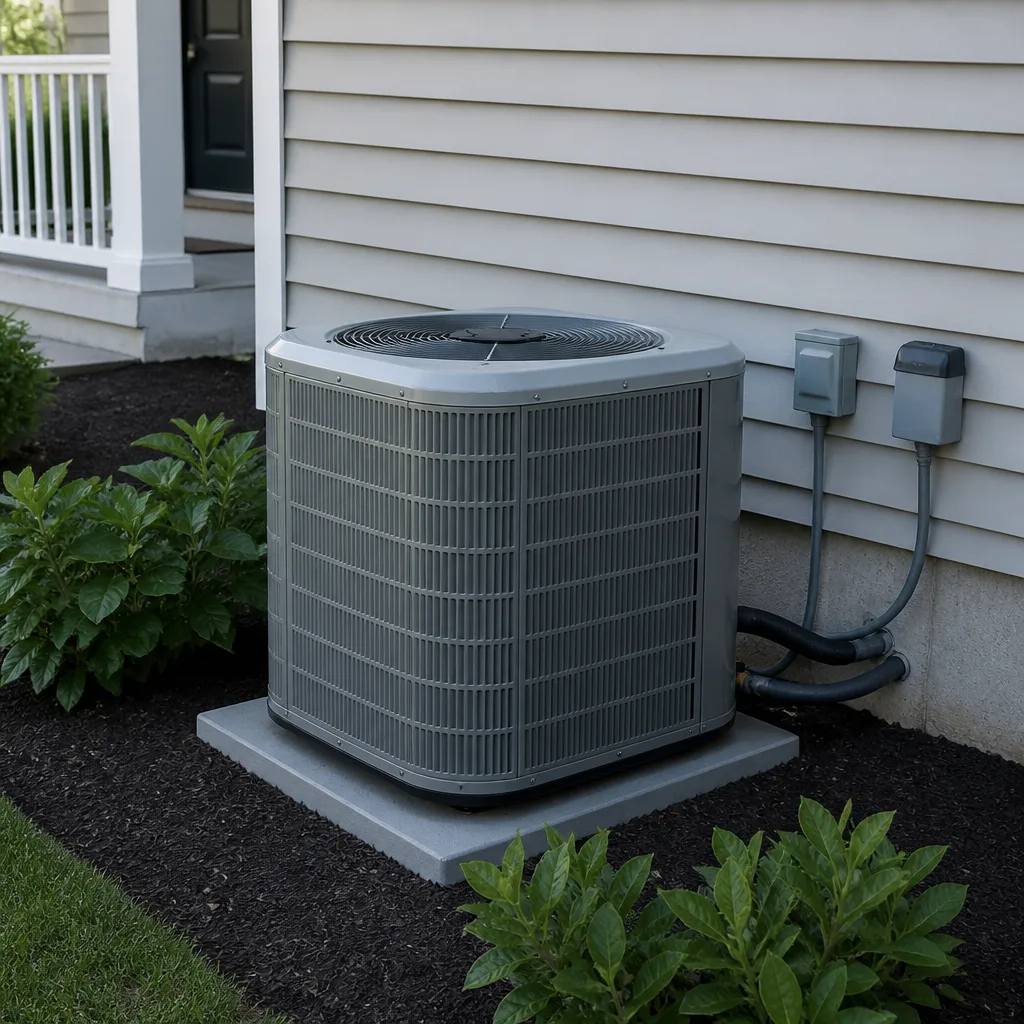 Carrier
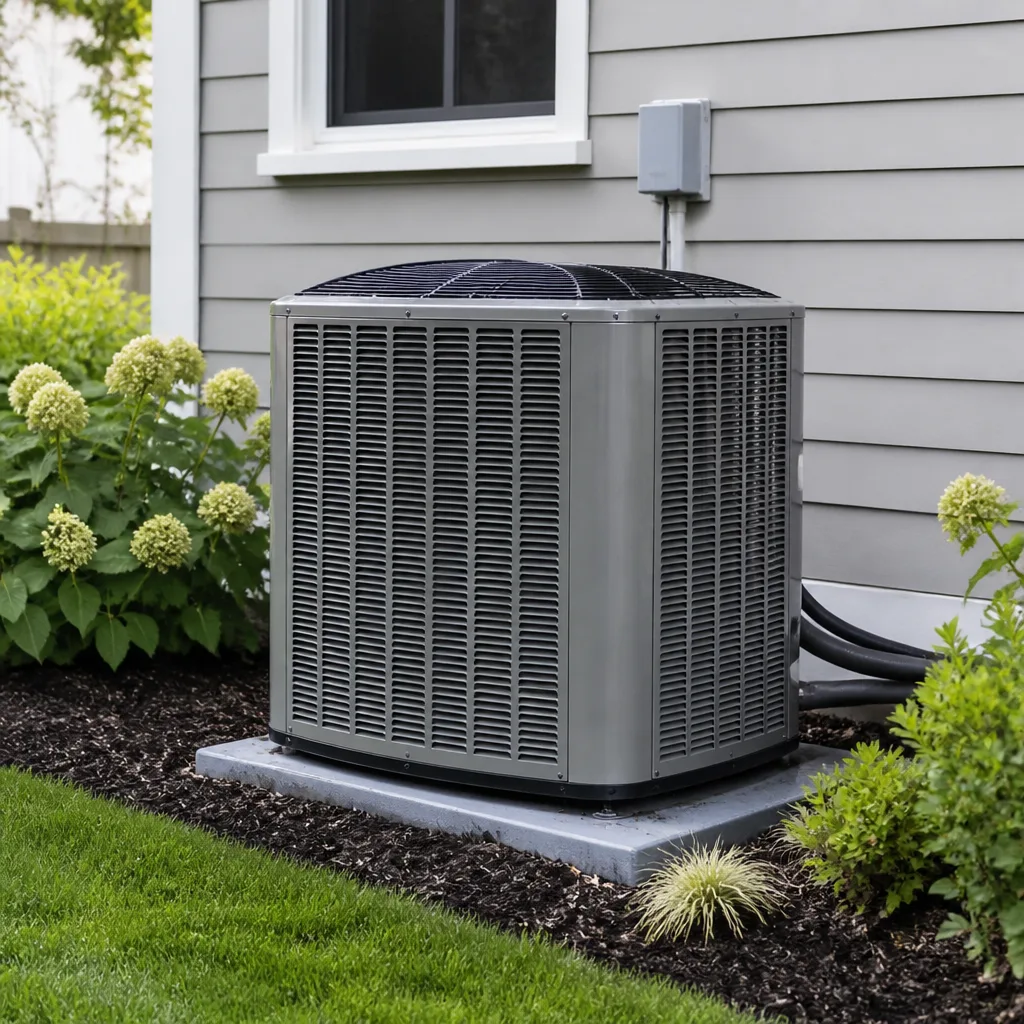 Trane
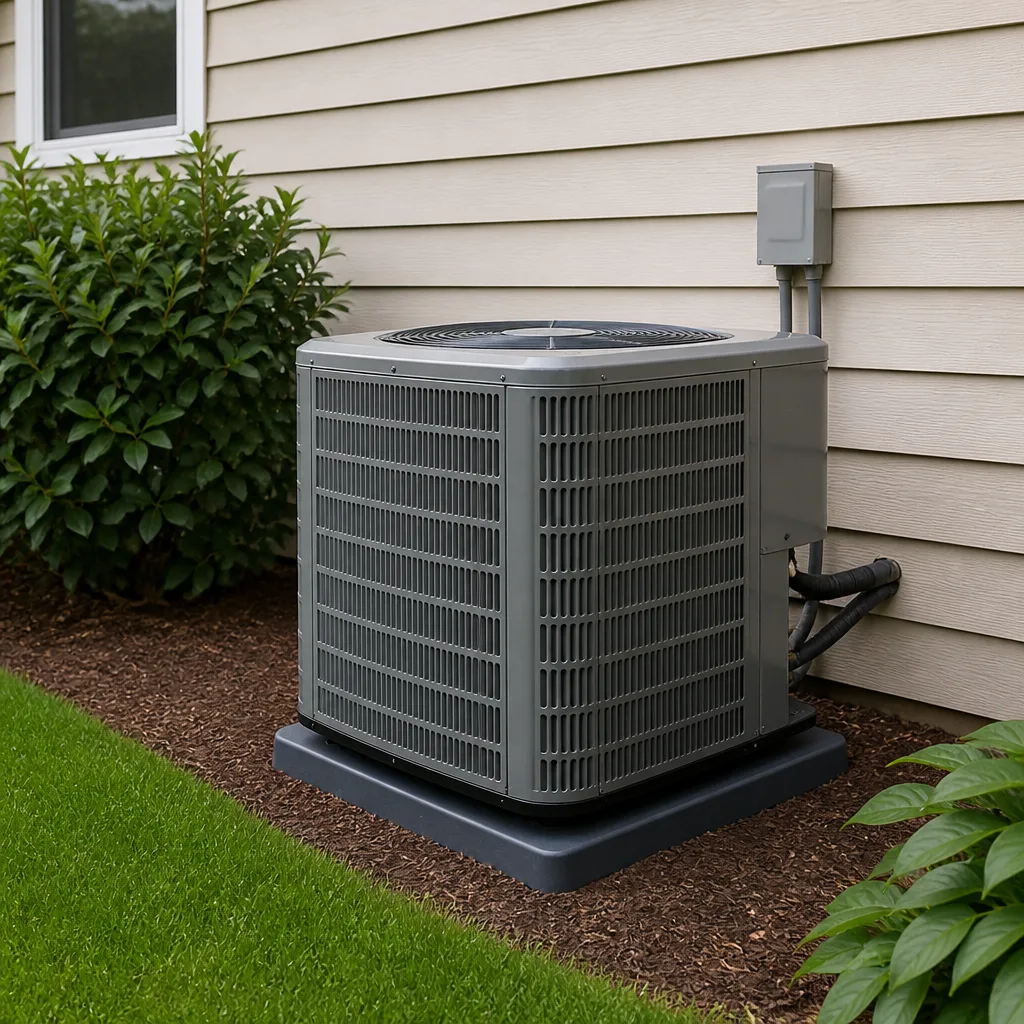 Goodman
Seasonal tune-up and full diagnostic on your Carrier, Trane, or Goodman system - readings shown to you before any repair is proposed
Diagnosis first, numbers second - you approve the repair price before a single part goes in.
Get your free estimateThe Complete AC Repair Guide for Garland Homeowners
Most AC repair guides are written for a climate that doesn’t exist. They talk about “extreme heat” in general terms and never mention the thing that actually shapes how air conditioners fail in Garland: soil that moves. This city sits on expansive clay that swells when it’s wet and shrinks hard when it’s dry, and that slow breathing pushes and pulls on the concrete pads and refrigerant lines your cooling system depends on. Add 19 days a year above 100°F and you get failure patterns you won’t read about in a guide written for Phoenix or Atlanta. This guide covers what actually breaks here, how to read your own system before you call anyone, and how to decide whether to repair or replace without guessing.
Quick Answer
AC repair in Garland most often addresses capacitor and contactor failures, low refrigerant from a stressed line, clogged condensate drains, and condenser units that have tilted out of level on shifting clay soil. Most of these are repairable on the same visit. The smartest first step is to check your thermostat for an error code and note it before you call, because that single detail shortens diagnosis and tells the technician where to look first. Call (866) 970-7959 for a free estimate.
Styles & brands we work with
- AC repair
- Furnace & heating
- Heat pumps
- Ductless mini splits
- Carrier
- Trane
- Goodman
Table of Contents
- Why AC Systems Fail Differently in Garland
- The Clay Soil Problem: Condenser Pads, Refrigerant Lines, and Foundation Shift
- The Repairs We See Most Often in Garland Homes
- How to Read Your Thermostat Error Codes Before You Call
- What System Capacity Actually Means in a Garland Home
- Repair or Replace? How to Do the Math on Your System
- Why Brand Matters at Year Seven
- A Year-Round View of Your System in North Texas
Why AC Systems Fail Differently in Garland
Garland’s summers are long and heavy, and the humidity swings between spring and late summer put real stress on every component that handles refrigerant and condensate. When the air is thick with moisture, your indoor coil pulls more water out of the air, and the drain system that carries it away has to work harder than it would in a dry climate. When that drain slows or clogs, water backs up, and you get the telltale sign: a ceiling stain or a pan overflowing in the attic.
The heat itself is a factor in how hard the compressor runs. Garland averages 19 days above 100°F. On those days, a system that’s slightly low on refrigerant or has a weak capacitor can’t keep up, and it runs continuously trying. That continuous running wears the compressor and the fan motor faster than short cycling would. Homeowners often describe it as “the AC just can’t keep up anymore,” and that’s usually the sound of a system that’s been working past its design limit for a season or two.
There’s a third factor that’s easy to miss: age of the housing stock. Much of Garland’s residential construction went up in waves through the 1960s, 70s, and 80s, and many of those homes have had their HVAC systems replaced once or twice, but the ductwork and the attic insulation are often original. A new condenser connected to thirty-year-old ducts and thin attic insulation will fight a losing battle, and the homeowner blames the equipment. In our experience, the equipment is part of the story, but the envelope matters just as much.
- Humidity swings stress condensate drains and indoor coils.
- Sustained 100°F days push compressors and capacitors to their limits.
- Aging ducts and attic insulation make a good system work harder than it should.
- Expansive clay soil moves the outdoor equipment and the lines connected to it.
The Clay Soil Problem: Condenser Pads, Refrigerant Lines, and Foundation Shift
This is the section most AC guides skip entirely, and it’s the one that matters most for a Garland homeowner. The expansive clay under this city does not sit still. It takes on water in the rainy season and swells, then dries and contracts through the summer. That movement is slow and mostly invisible, but your condenser sits on a concrete pad at the end of a refrigerant line set, and when the soil under that pad shifts, the pad tilts. A condenser that’s out of level puts uneven load on the compressor and fan bearings, and it can stress the copper lines where they enter the cabinet.
Over years, that stress shows up as a refrigerant leak at a joint or a vibration that rattles the whole unit. Homeowners sometimes notice a puddle of oil near a line connection, or they hear a new noise that wasn’t there last summer. Those are worth taking seriously. A refrigerant leak doesn’t just reduce cooling; it means the system is running low, which forces the compressor to work harder and hotter, and eventually it fails.
Foundation movement is a related issue. When the slab shifts, the line set running from the outdoor unit to the indoor coil can be pulled or pinched. In some cases the line is fine but the condensate drain line loses its slope, and water pools instead of draining. If you’ve noticed water near the indoor unit or a musty smell in the attic, a shifted drain line is a real possibility.
What can you check yourself? Look at the outdoor pad. Is it level? Is there a visible gap between the pad and the soil, or has one corner sunk? Listen to the unit at startup and shutoff. A new clunk or a rattle that repeats is worth noting. Check the copper lines where they enter the cabinet for oil residue. If you see any of these, it’s a good time to have a technician look at it, because catching a stressed line before it leaks is far less expensive than repairing a leak after the fact. A trained eye can also tell you whether the pad needs re-leveling or whether the line set needs to be re-routed, and those are not jobs for a homeowner with a shovel.
The Repairs We See Most Often in Garland Homes
When we open a system in Garland, the problems tend to fall into a few predictable categories. None of them are exotic, but the order in which they appear is shaped by the local climate. Here’s what a typical diagnosis looks like, roughly in order of how often we find them.
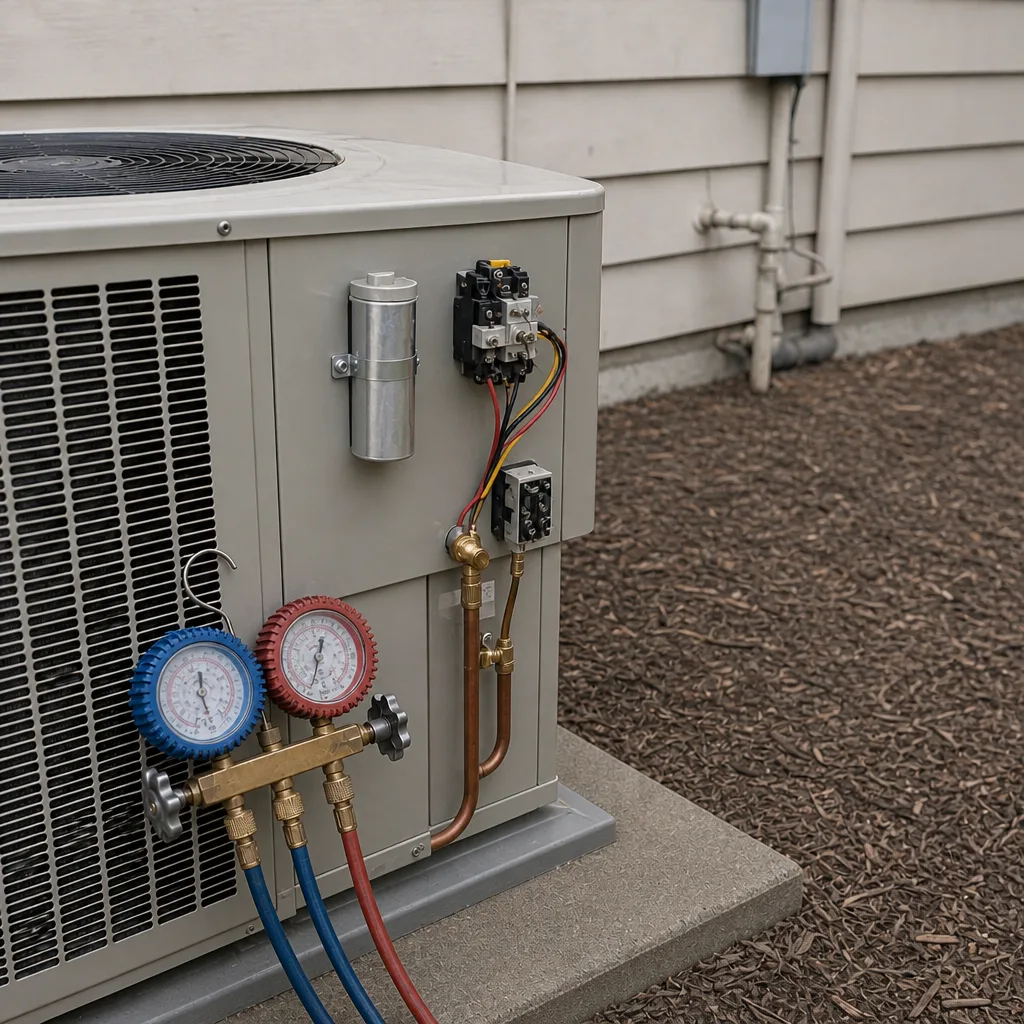
- Failed run capacitor. It’s the most common single repair we make. The capacitor gives the compressor and fan motor their starting jolt, and heat wears them out. A system that hums but won’t start, or starts and then shuts off after a minute, often has a bad capacitor.
- Contactor pitting. The contactor is the switch that sends power to the outdoor unit. Over thousands of cycles, the contacts pit and stick. A unit that won’t come on at all, or that runs continuously without shutting off, can be a contactor problem.
- Low refrigerant from a leak. Usually at a joint stressed by pad movement, or at a Schrader valve. We find the leak, repair it, and recharge to the manufacturer’s spec. This is not a “top it off and hope” situation.
- Clogged condensate drain. Humidity in Garland means the drain handles a lot of water. Algae and debris build up, the drain backs up, and water finds the ceiling. We clear the line and check the slope. A float switch that shuts the system off when the pan fills is worth having if your system doesn’t have one.
- Dirty condenser coil. Dust, pollen, and cottonwood fluff pack into the outdoor coil fins. A dirty coil can’t reject heat, so the system runs hot and long. A coil cleaning is inexpensive and it makes a measurable difference in how hard the compressor works.
- Blower motor wear. The indoor blower runs for thousands of hours a year here. Bearings wear, the motor draws more current, and airflow drops. Weak airflow means the system can’t move enough cool air through the house, even if the refrigerant charge is correct.
The good news is that all six of these are repairable, and most are same-day repairs. None of them require replacing the system. The mistake homeowners make is waiting until a small repair turns into a compressor failure, which is when the math changes. If you’re already hearing a new noise or seeing water, it’s worth having it looked at before the next stretch of 100°F days.
How to Read Your Thermostat Error Codes Before You Call
Your thermostat is telling you more than you think. Before you call anyone, take a photo of the screen and look up what the code means. It takes two minutes and it can save you a diagnostic step. Here’s how the common platforms used in Garland homes present information.
Honeywell T6 and similar Honeywell models. These often display a simple alert code or a “system malfunction” message with a number. A code referencing the indoor unit usually points to a blower or limit issue; a code referencing the outdoor unit points to the compressor or a pressure switch. Some models display a filter reminder that looks like an error but isn’t.
Ecobee. Ecobee thermostats tend to report “uncooled” or “not cooling” alerts through the app rather than on the screen. They also flag “low humidity” or “high humidity” alerts, which can be a sign of a drain or airflow problem. If the screen is blank but the app shows the unit running, that’s often a power or control-board issue, not a thermostat issue.
Lennox iComfort. The iComfort line displays two-digit fault codes. A code in the 10-20 range usually relates to the indoor unit or the control board; codes in the 30s and above tend to point to the outdoor unit. Write the number down exactly. A technician who knows what you’re seeing can often bring the right part on the first visit.
One caution: error codes narrow the search, they don’t finish it. A code that says “pressure switch open” can mean a failed switch, a clogged drain, a dirty filter, or a refrigerant problem. Don’t buy a part based on a code alone. The code is a starting point, and the technician’s job is to confirm the cause before replacing anything.
What System Capacity Actually Means in a Garland Home
Homeowners often ask whether their system is “the right size.” That’s a fair question, and the answer is more interesting than a tonnage number. Capacity in HVAC means how much heat the system can remove from your home in an hour, measured in tons (one ton equals about 12,000 BTU of cooling). A typical Garland home might have a 3-ton or 4-ton system. But the number that matters is not the one on the unit; it’s how that capacity matches the actual heat load of your house.
Heat load is shaped by several things, and in Garland homes, two of them dominate. First, west-facing windows. Garland’s afternoon sun is intense, and a large west-facing window or slider can pour more heat into a room than the system was sized to handle. If your back rooms are always warmer than the front, that’s usually a window or duct issue, not a capacity issue, but it’s worth understanding. Second, attic insulation. Many Garland homes have older insulation that has settled or was never adequate. When the attic is hot, the ceiling radiates heat into the rooms below, and the system has to work harder to keep up.
The practical takeaway: before you replace a system because “it’s too small,” have someone look at the load. A system that’s correctly sized but connected to leaky ducts and thin attic insulation will struggle, and a bigger system won’t fix it. In our experience, improving airflow and sealing ducts often does more for comfort than adding a half-ton of capacity. If you’re considering a new system, that’s exactly the conversation to have with the installer before anything is ordered. A proper load calculation is not optional; it’s the difference between a system that runs efficiently and one that short-cycles and wears out early.
- West-facing glass adds afternoon heat that a system sized for the house average may not handle.
- Attic insulation that’s thin or settled makes every room hotter.
- Leaky ducts lose cool air before it reaches the room.
- Oversizing causes short cycling, which is worse for the compressor than a slightly undersized system running steadily.
Repair or Replace? How to Do the Math on Your System
This is the question that decides the biggest check a homeowner writes for their HVAC. The honest answer is that it depends on age, brand, repair history, and what the repair actually is. Here’s a framework that works for most Garland homes.
The 7-to-10-year window. On a Carrier or Trane system, a repair at year 7 to 10 is usually worth doing, especially if the repair is a capacitor, contactor, drain, or coil cleaning. Those are the standard wear items, and a well-maintained mid-to-premium system can run well past 15 years. When the repair is a compressor or an evaporator coil on a 10-year-old unit, the math gets harder. Both are major repairs, and the cost of either can approach a meaningful fraction of a new system. That’s the point where you want a written comparison, not a guess.
Brand matters more than people think. A 10-year-old Carrier or Trane with a failed compressor is a different equation than a 10-year-old system with a name you don’t recognize and parts you can’t source. On a no-name unit, an expensive repair at year 10 can easily become a money pit, because the next failure is often six months behind the first. On a major brand where parts are available and the rest of the system is sound, a repair can buy you several more years of good service.
Energy costs and the 25C tax credit. Texas electricity costs are a real factor. A high-efficiency replacement can lower summer bills, and the federal 25C tax credit applies to qualifying high-efficiency equipment. The credit has rules and thresholds, so ask your installer what qualifies and confirm the numbers with a tax professional before you count on it. Don’t let the credit alone drive the decision; let it tip a decision you were already leaning toward.
The practical rule. If the repair is under a few hundred dollars and the system is under 10 years old, repair it. If the repair is a major component and the system is over 10 years old, get a written replacement estimate alongside the repair quote and compare the cost per year of remaining life. And if the system has had three or more repairs in two seasons, it’s telling you something. That’s the point to start planning a replacement rather than reacting to the next breakdown.
We don’t push replacement. We diagnose the problem, not the upsell, and that means sometimes the honest answer is “fix this one thing and you’re good for another few years.” If you want that comparison in writing, that’s what a free estimate is for.
Why Brand Matters at Year Seven
Every brand has its quirks, and a technician who works on the same families of equipment every week knows where to look first. That’s the practical reason brand knowledge matters. A Carrier system has known failure points that differ from a Trane’s; a Lennox iComfort has its own control-board behavior; a Goodman unit has a different parts ecosystem than a Rheem. Knowing the equipment means fewer guess-and-check visits and fewer return trips.
Sunstone works on nine of the most-installed residential brands: Carrier, Trane, Lennox, Goodman, Rheem, York, Daikin, Bryant, and American Standard. We’re not locked into one manufacturer, so the recommendation you get is driven by what your system actually needs. If a Carrier condenser needs a contactor, we replace the contactor. If a Trane coil is leaking, we find the leak and tell you what the repair costs versus a replacement, and you decide.
There’s a second reason brand matters at year seven and beyond: parts. A mid-to-premium brand from a major manufacturer has a parts supply chain that a smaller or discontinued brand doesn’t. When your system is 12 years old and the blower motor fails, the difference between a part available locally and a part on backorder can be days in a Garland summer. That’s not a sales pitch; it’s the reason we tell homeowners to weigh brand when they’re replacing, not just when they’re repairing.
A Year-Round View of Your System in North Texas
An AC system in Garland doesn’t get a real off-season. Cooling season runs long here, and by the time the heat breaks, heating season is close behind. That’s why we look at the whole system, not just the cooling side. Sunstone handles AC repair and furnace repair under one roof, so the same company that diagnoses a failing capacitor in July can look at the furnace in December. One call covers your whole system, and you’re not chasing down a second contractor for the heating side.
Fall is the time to have the heating side checked before you need it. A furnace that sat idle all summer can have a dirty burn chamber, a worn ignitor, or a blower that’s slow to start. Catching those in October is easier than catching them on the first cold night. Spring, before the first 90°F day, is the time to have the cooling side checked: clean the condenser coil, check the refrigerant charge, clear the drain, and look at the pad level.
Garland’s climate also means the system never gets a true rest. Even in the milder months, the system cycles. That’s normal, but it’s why annual checks matter. A small issue caught in a mild month is a repair; the same issue caught in August is often an emergency. Our AC installation work follows the same logic: a system sized and installed correctly for a Garland home, with the ducts and insulation addressed, runs less and lasts longer. If you’re in Garland and you want a straight answer about your system, that’s what we’re here for.
Common Mistakes to Avoid
- Ignoring a tilting condenser pad. A pad that’s sunk on one side puts uneven load on the compressor and stresses the line set. It’s easy to re-level and much more expensive to repair a leak later.
- topping off refrigerant without finding the leak. A low system has a leak. Recharging without repairing it just delays the same failure and puts more wear on the compressor.
- Buying a part based on a thermostat code alone. A code narrows the search; it doesn’t confirm the cause. The part you buy on a guess is often the wrong one.
- Replacing a system because one room is hot. A single warm room is usually an airflow, duct, or window issue, not a capacity problem. Fix the cause before you spend on tonnage.
- Skipping the attic. Thin or settled insulation and leaky ducts make a good system work harder than it should. Insulation and duct sealing often do more for comfort than a bigger unit.
- Waiting until August. A small repair in May is a repair. The same issue in a 100°F week can mean a failed compressor and a much larger job.
- Choosing a contractor by price alone. The lowest quote often doesn’t include a load calculation, a permit, or a written scope. The written estimate is what sets the final price, so read it.
See the difference
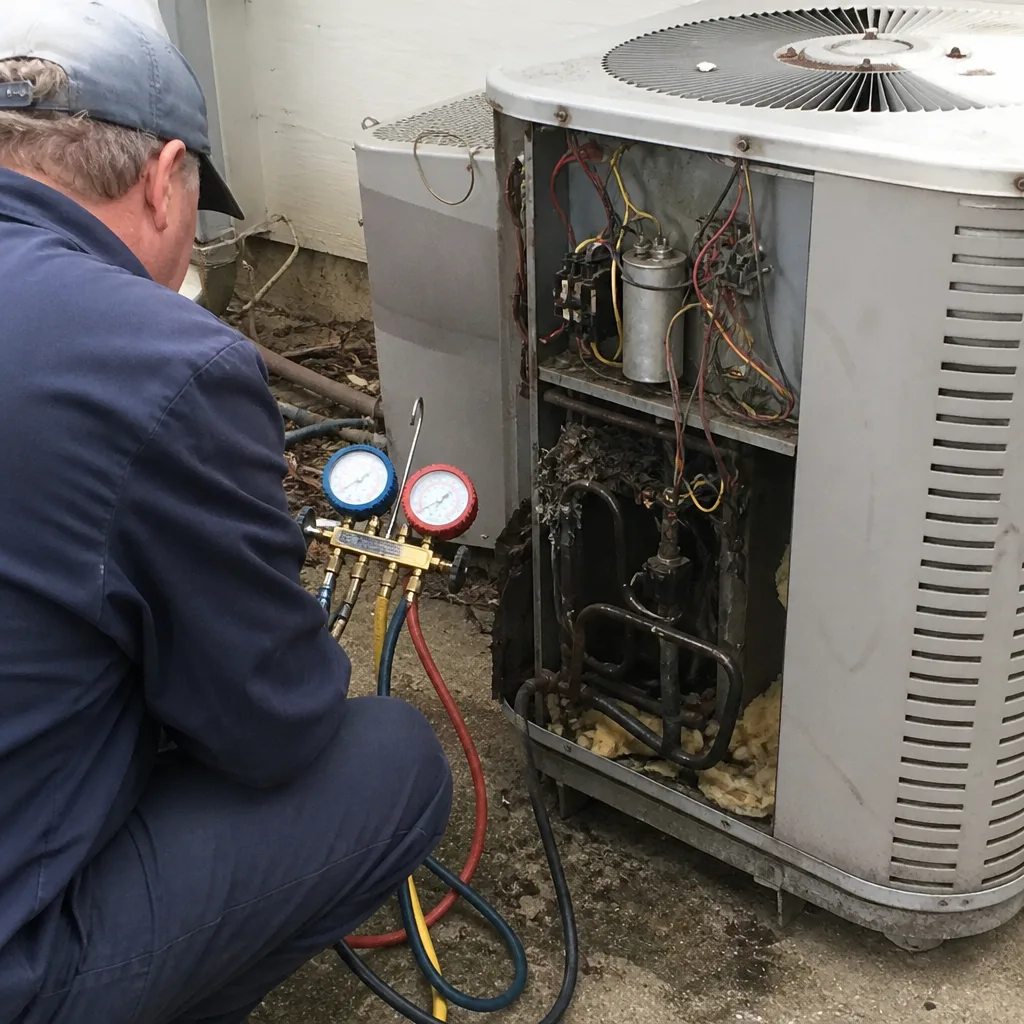 Before
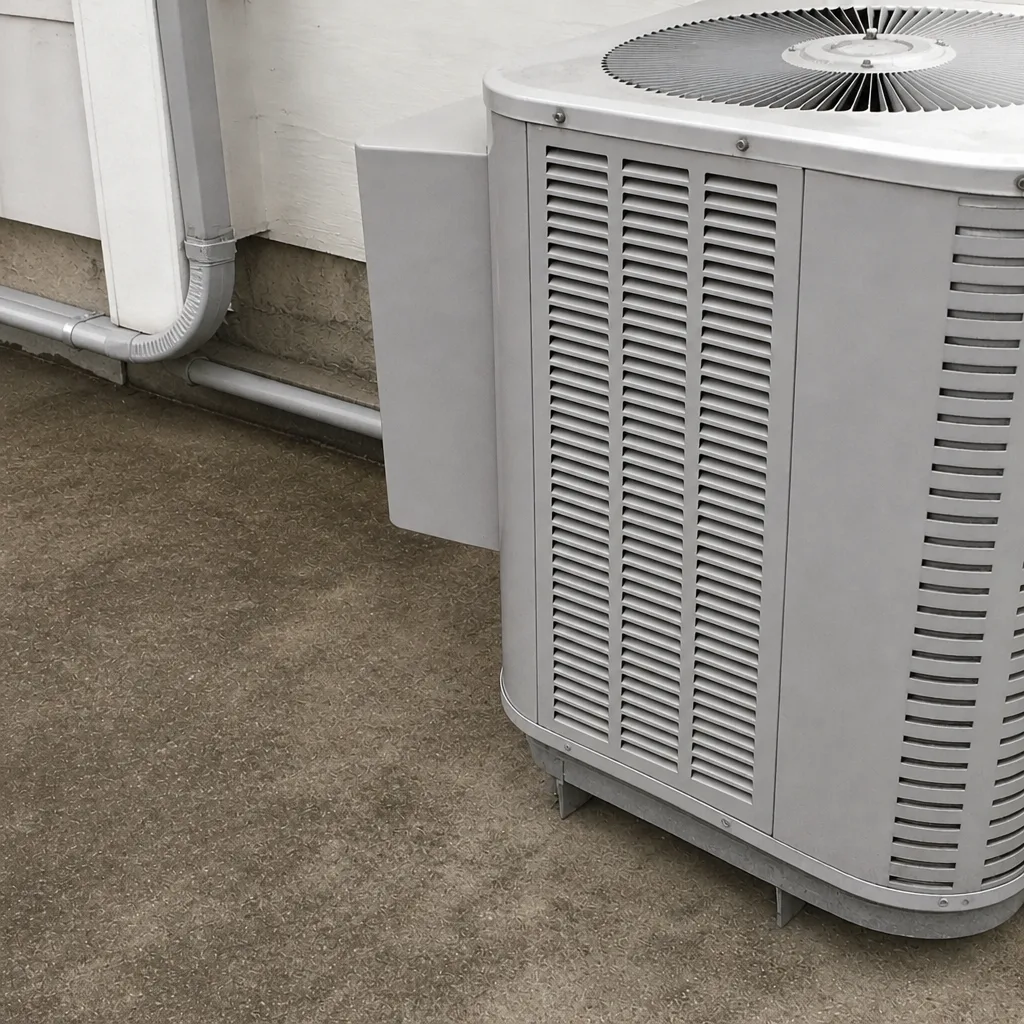 After
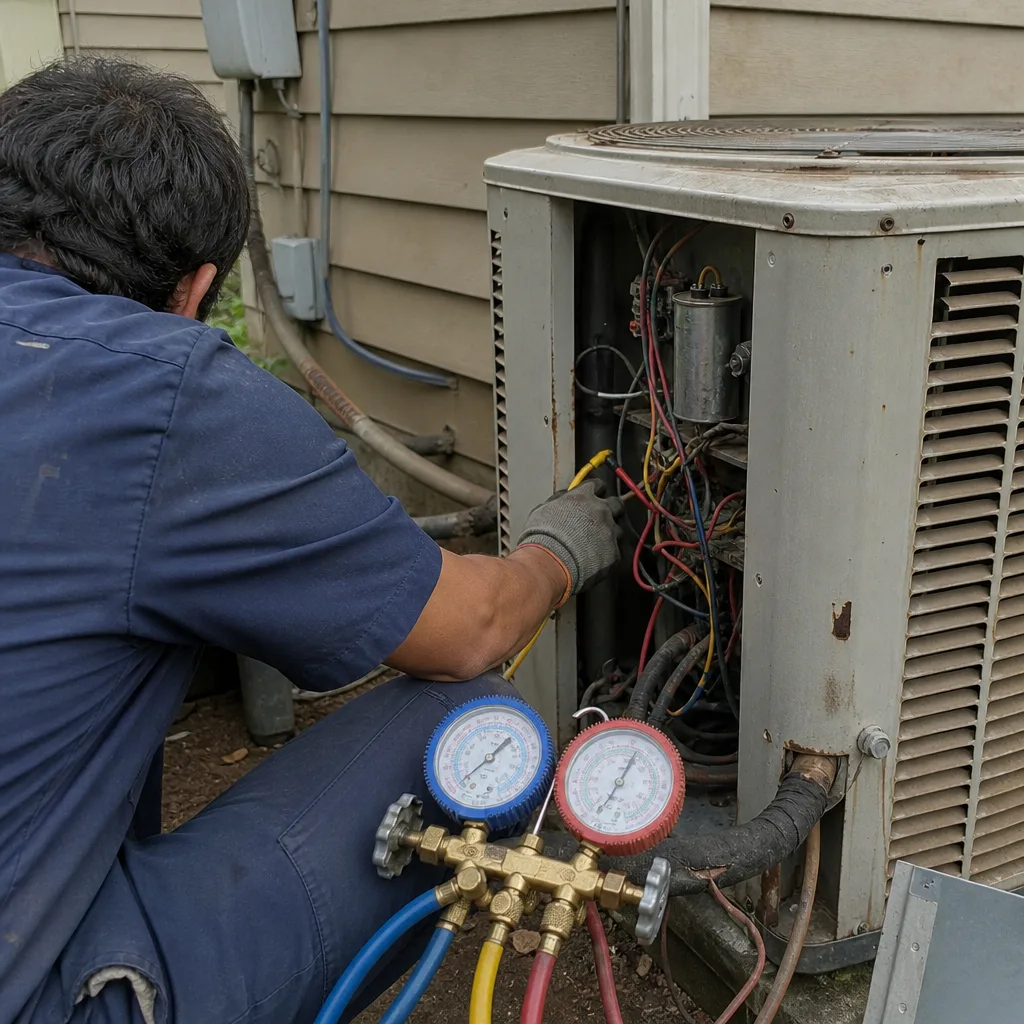 Before
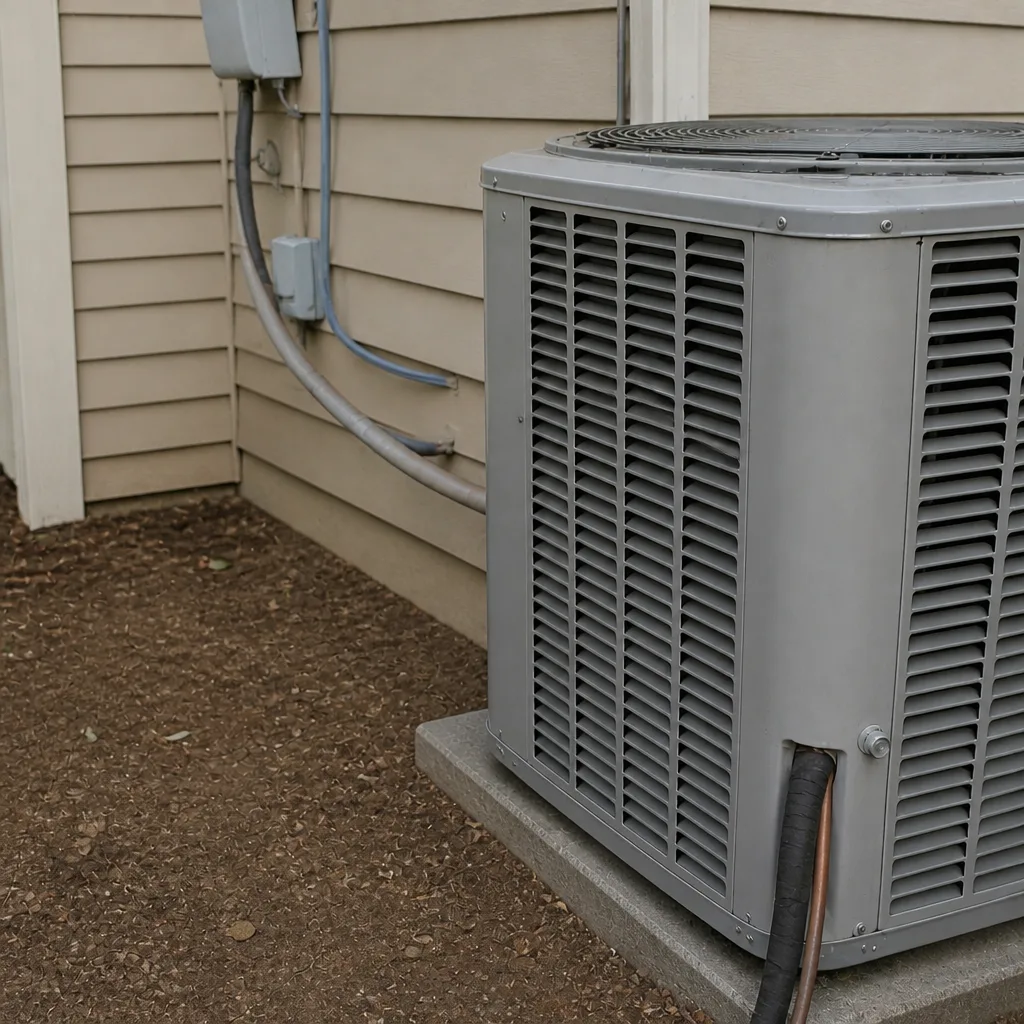 After
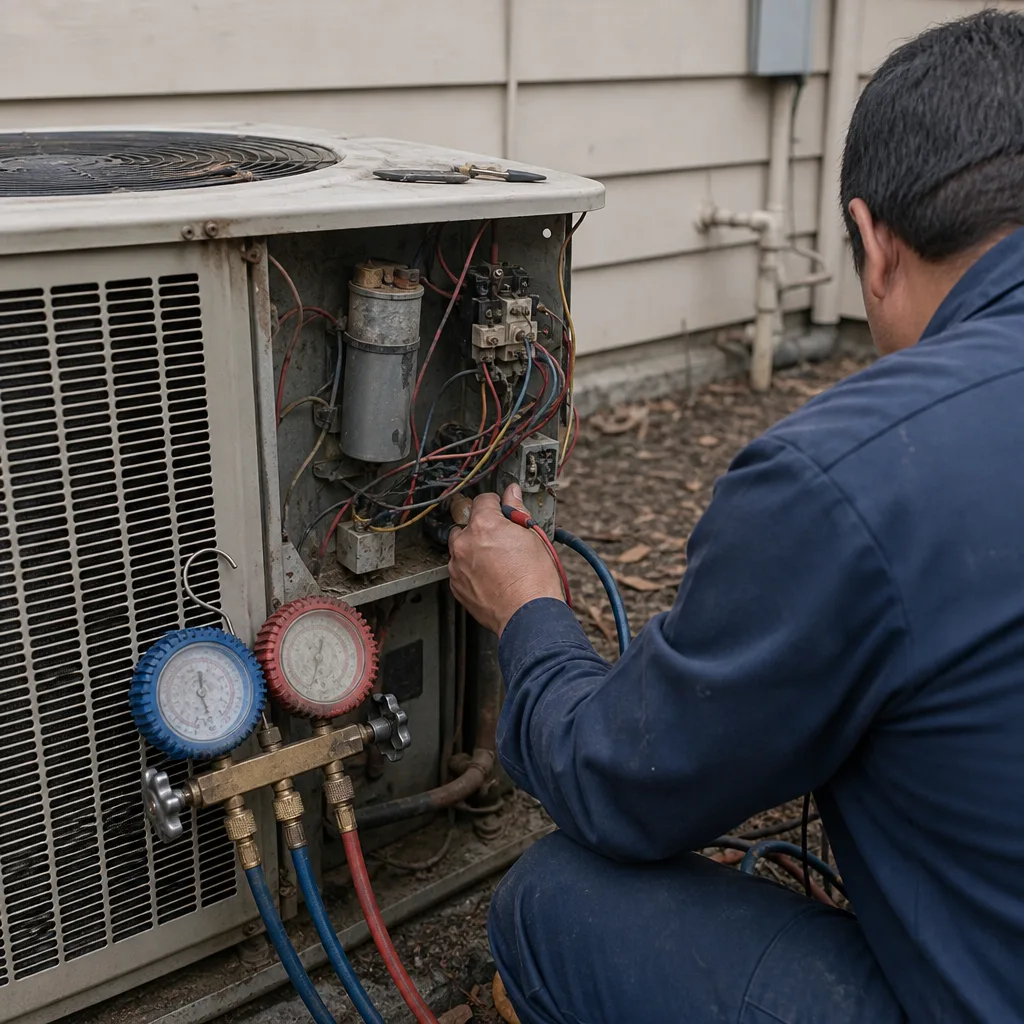 Before
 After
When to Call a Professional
Some things are worth checking yourself: a tripped breaker, a clogged filter, a thermostat set to the wrong mode. But several situations call for a trained technician, and waiting makes them worse. Call when the outdoor unit hums without starting, when you see oil residue or ice on the refrigerant lines, when water is pooling near the indoor unit, when the system runs continuously and never reaches the set temperature, or when you smell a burning or musty odor near the air handler. Refrigerant handling, electrical components, and gas heating are not homeowner jobs; they require the right tools and training, and a mistake can be dangerous. If your system is 10 years or older and has had more than one repair this season, it’s worth a full assessment before the next breakdown.
Sunstone AC Repair offers free estimates in Garland – call (866) 970-7959. We answer 24/7. Fast dispatch, 7am-7pm, Sunday through Friday, and we’re closed Saturday. Every price is set per job by the written estimate.
Frequently Asked Questions
Most AC repairs in Garland fall into a moderate range for common fixes like capacitors, contactors, and drain clearing, with leak repair and blower motor work costing more. The written estimate sets the final price, and the estimate itself is free. Call (866) 970-7959 for an exact quote – estimates are free.
Continuous running in a Garland summer is usually one of three things: a system that’s low on refrigerant, a dirty condenser coil that can’t reject heat, or a home with a heat load the system wasn’t sized for, often from west-facing windows or thin attic insulation. A technician can tell which it is in one visit. Call (866) 970-7959 to book a diagnosis.
Same-day service is often possible for Garland calls, and we dispatch Sunday through Friday, 7am to 7pm. We answer 24/7; a call outside dispatch hours is booked into the next opening, Sunday through Friday, 7am to 7pm. Call (866) 970-7959 to check availability.
Repair usually makes sense if your system is under 10 years old and the repair is a standard wear item like a capacitor, contactor, or drain. Replacement starts to make sense when a major component fails on a system over 10 years old, or when you’ve had several repairs in two seasons. On a Carrier or Trane, a repair at year 7 to 10 is often still the better value; on a no-name brand, an expensive repair at year 10 can be a money pit. Call (866) 970-7959 for a written comparison.
The federal 25C tax credit applies to qualifying high-efficiency equipment, and the rules and thresholds are specific. Ask your installer what qualifies and confirm the details with a tax professional before you count on it. Call (866) 970-7959 to talk through what your replacement would qualify for.
Garland sits on expansive clay soil that swells when wet and shrinks when dry, and that movement tilts the concrete pad under the condenser over time. A tilted pad stresses the compressor and the refrigerant lines, so it’s worth re-leveling before it becomes a leak. Call (866) 970-7959 to have it looked at.
The Bottom Line
AC repair in Garland is shaped by things a generic guide won’t tell you: clay soil that moves the outdoor unit and stresses the lines, humidity that keeps the drain working hard, and long stretches above 100°F that wear out capacitors and compressors. Most of what fails is repairable, and the smartest move is to catch it early, read your thermostat code, and get a written estimate before you decide. Repair what makes sense, replace only when the math says so, and keep the whole system in view, not just the cooling side. For a free estimate, call (866) 970-7959. We answer 24/7. Fast dispatch, 7am-7pm, Sunday through Friday.
Written by the team at Sunstone AC Repair, serving Sunstone AC Repair customers in Garland since 2018.