
Last updated November 14, 2026
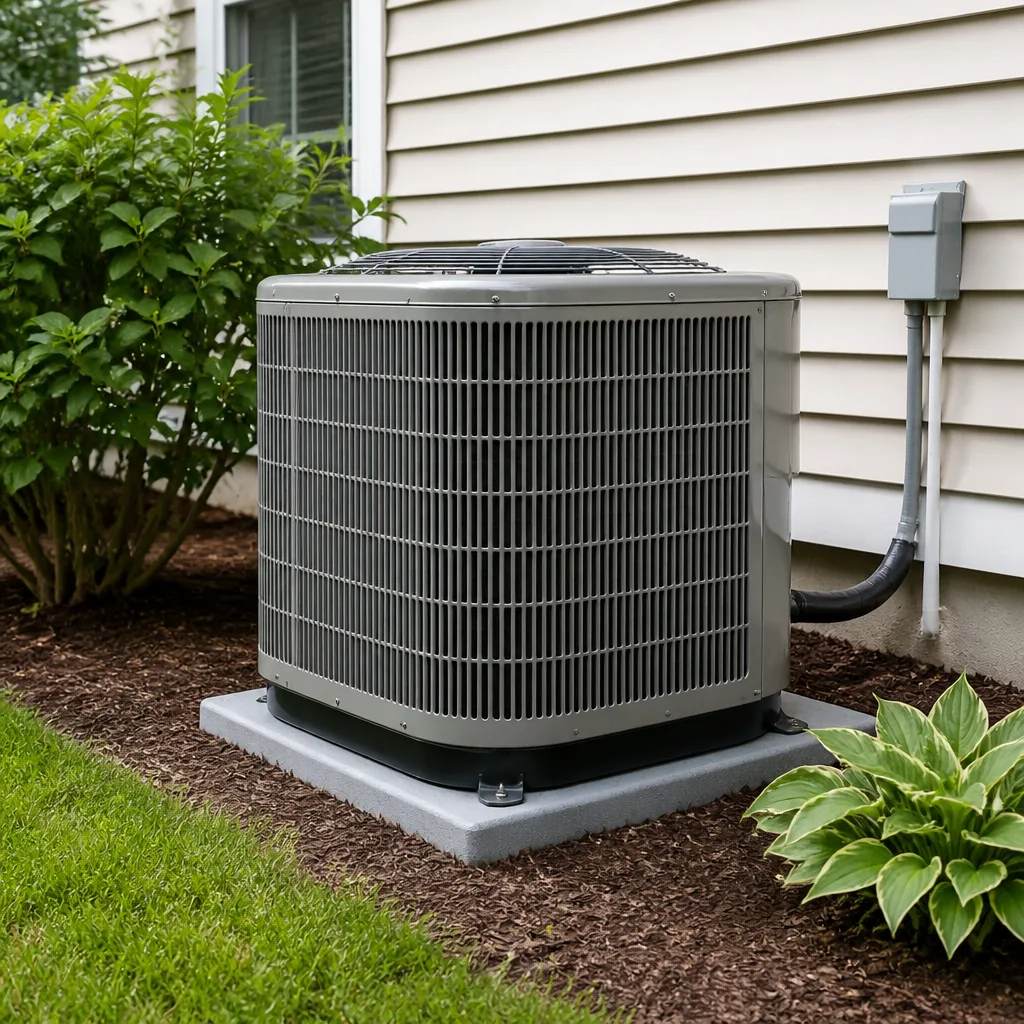 AC repair
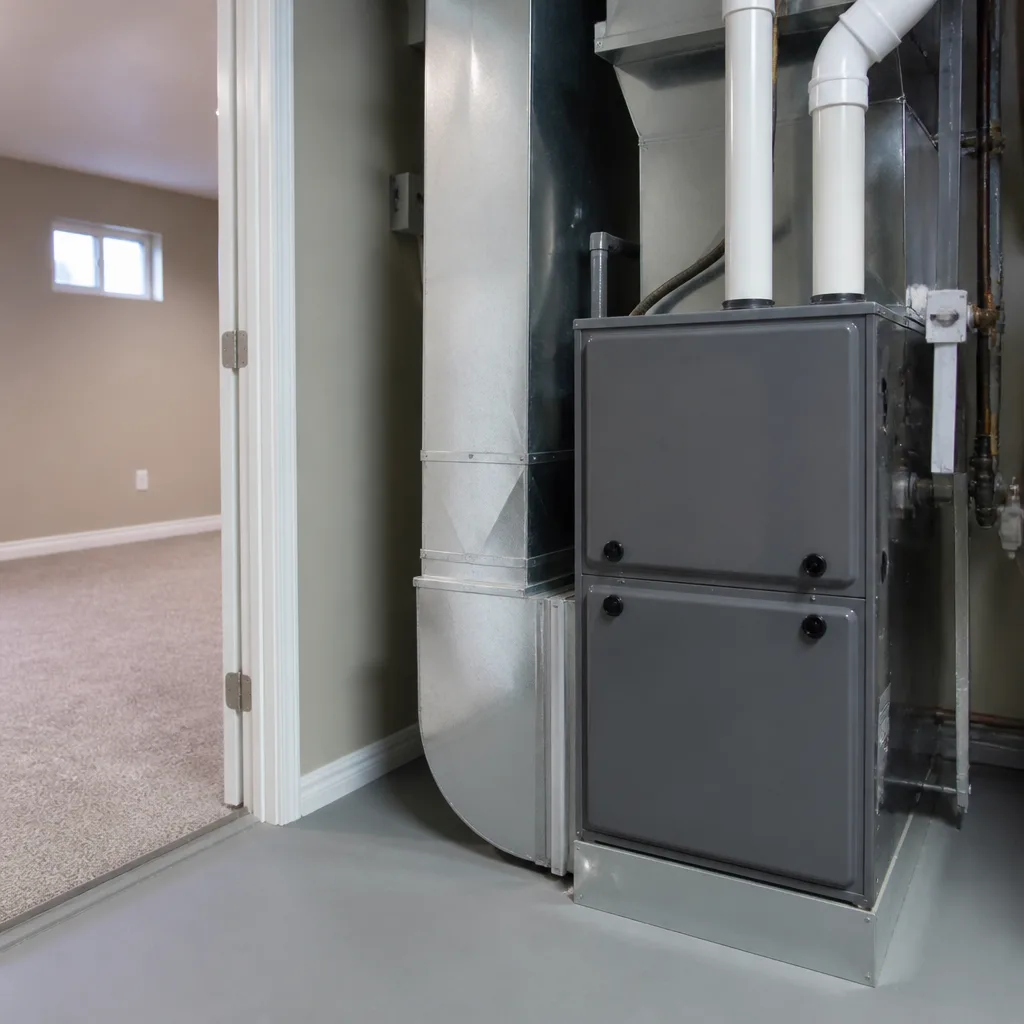 Furnace & heating
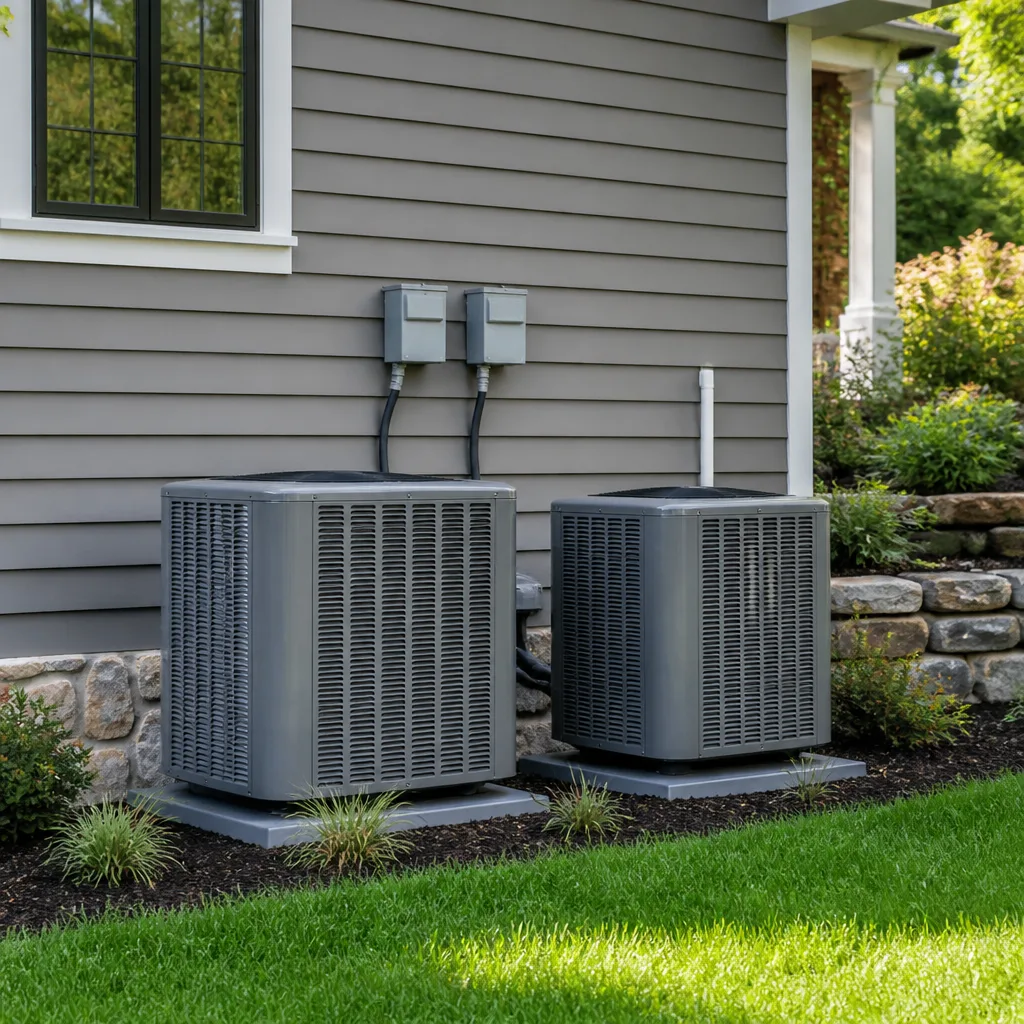 Heat pumps
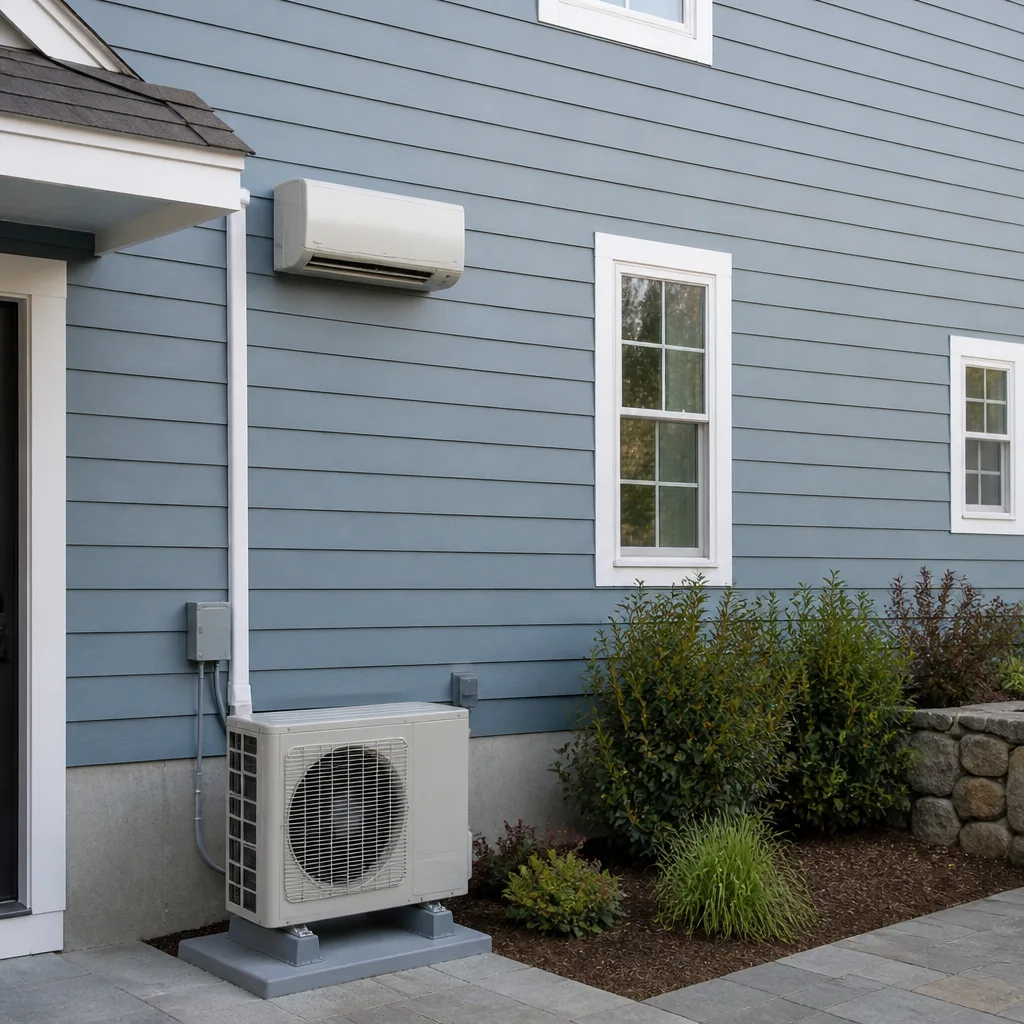 Ductless mini splits
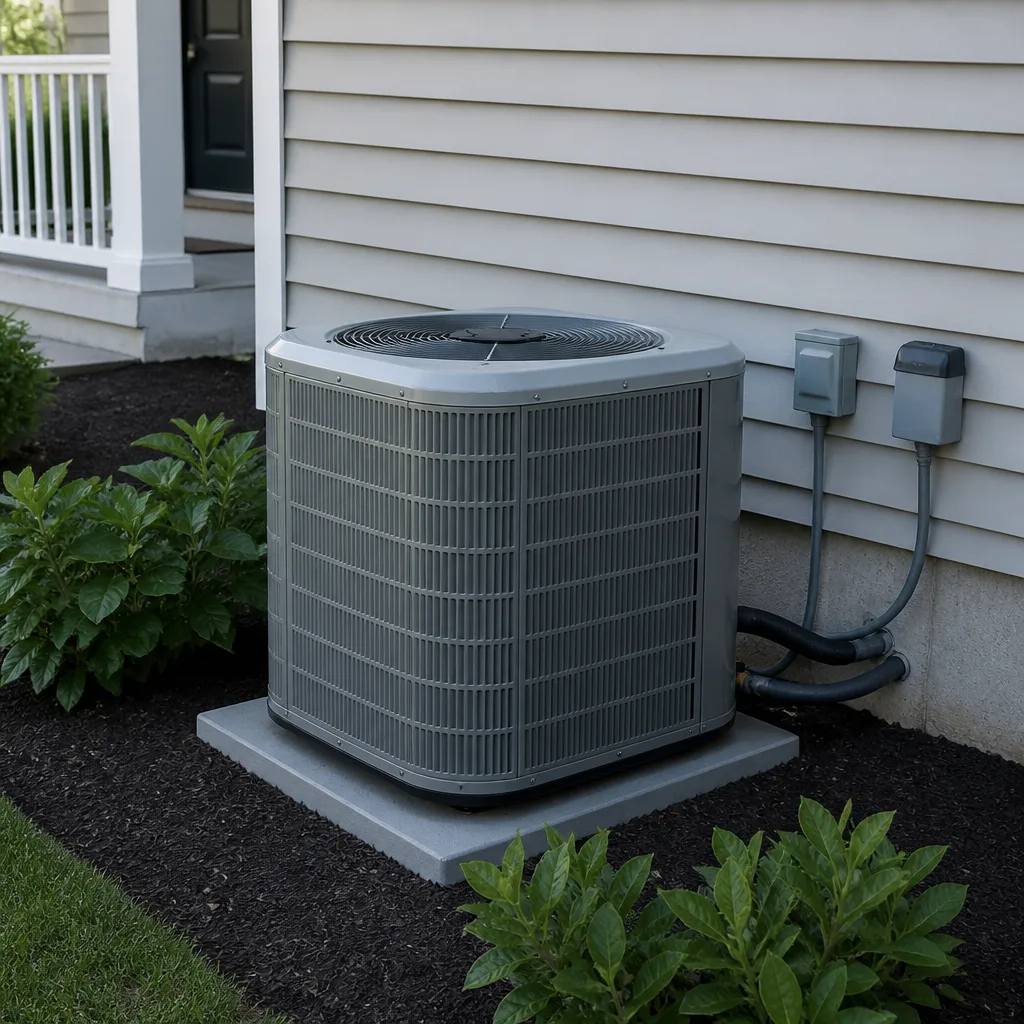 Carrier
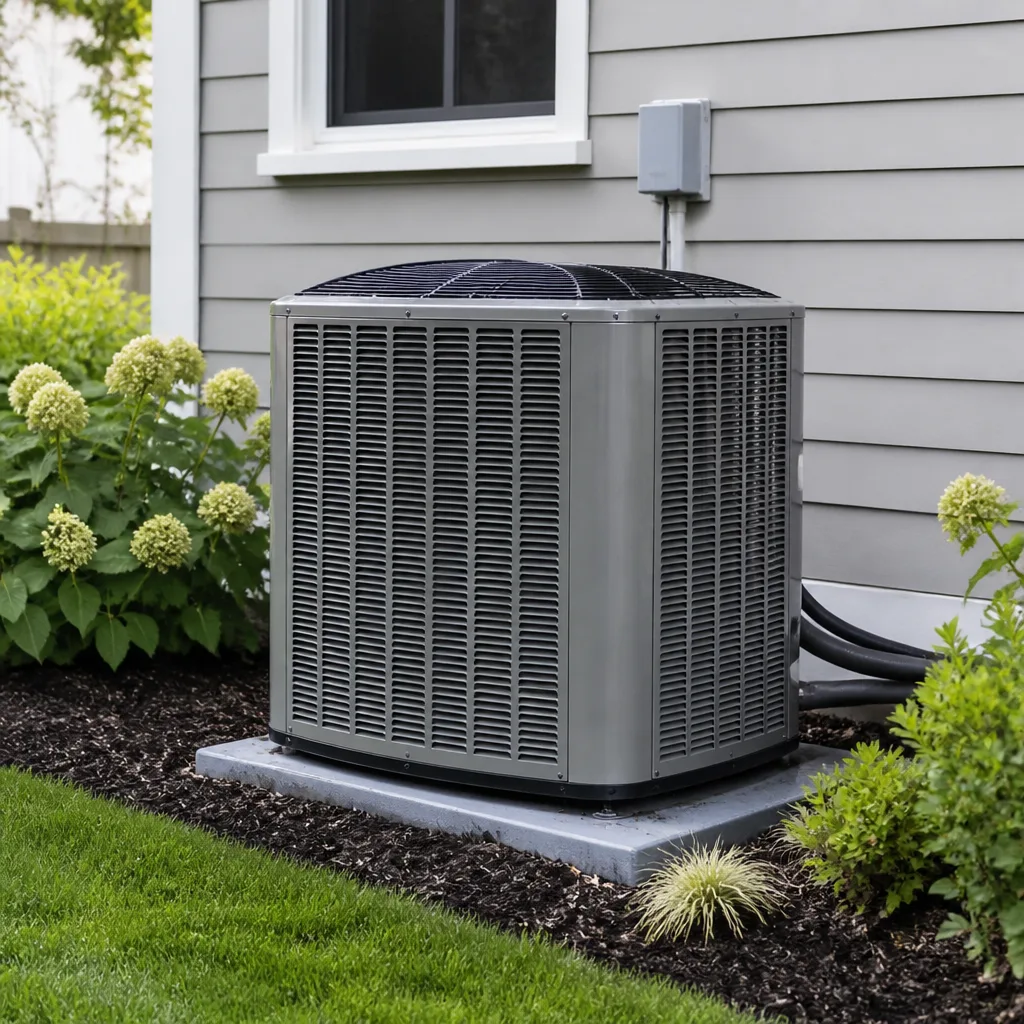 Trane
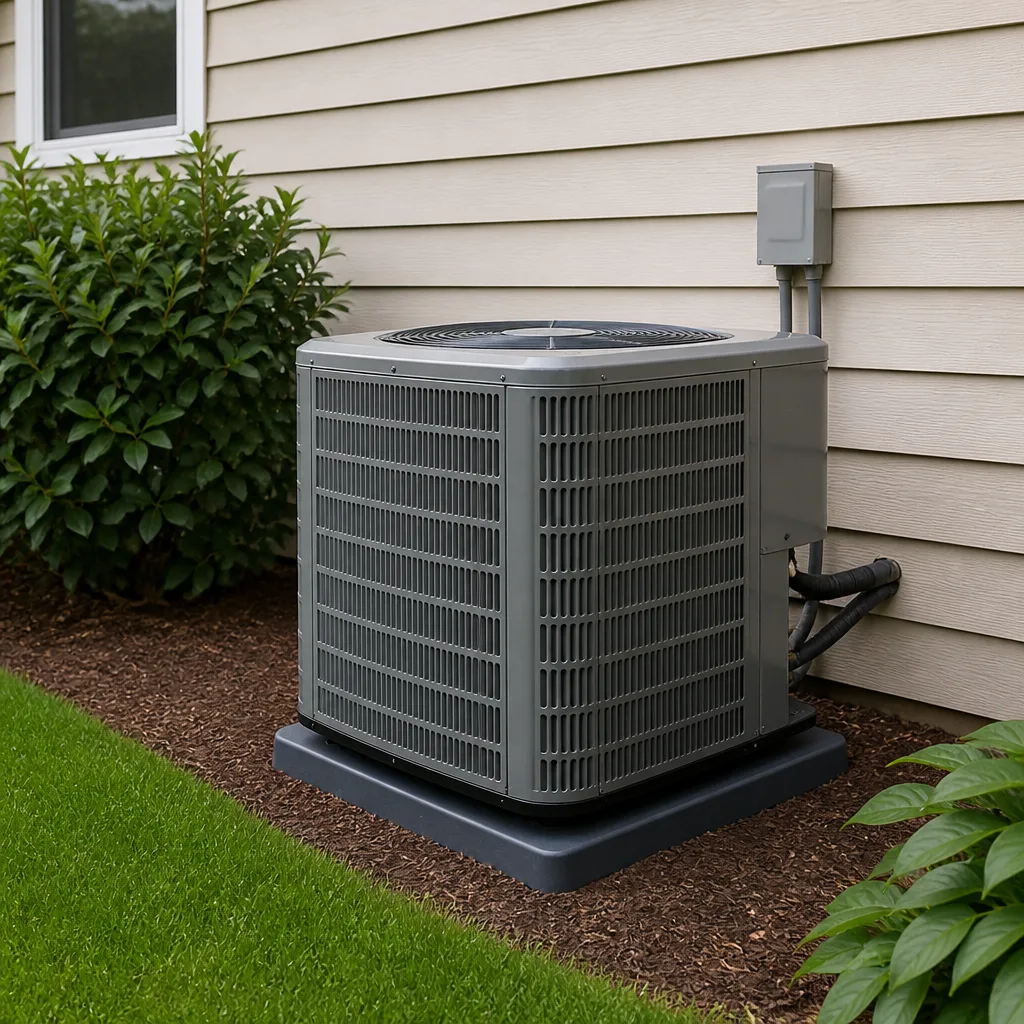 Goodman
Seasonal tune-up and full diagnostic on your Carrier, Trane, or Goodman system - readings shown to you before any repair is proposed
Diagnosis first, numbers second - you approve the repair price before a single part goes in.
Get your free estimateSeasonal HVAC Care for Garland: Year-Round Homeowner’s Guide
Most seasonal HVAC advice is written for a climate with two clean halves: a hot stretch and a cold one. Garland doesn’t work that way. A single month here can hand your system three different jobs in a week. The equipment that fights a 100-degree afternoon in August is the same equipment that has to hold through a hard freeze in February. The failures we see most often don’t happen in the middle of a heat wave or a cold snap. They happen at the transitions, when a system gets asked to change modes before anyone has checked whether it can. This guide maps maintenance to Garland’s actual weather windows and the five operating modes your system moves through in a year.
Quick Answer
Seasonal HVAC care in Garland works best when it’s tied to five operating modes – heavy cooling, shoulder cooling, mixed operation, heating standby, and hard heating – rather than to the national spring-and-fall template. The most valuable check happens in late March, before the first heavy cooling stretch, followed by a heating startup check in late October. Transitions are when preventable failures concentrate.
Styles & brands we work with
- AC repair
- Furnace & heating
- Heat pumps
- Ductless mini splits
- Carrier
- Trane
- Goodman
Table of Contents
- Garland’s five HVAC operating modes by month
- Why a late-March refrigerant check beats a May one
- Shoulder cooling and mixed operation: the two modes people skip
- Heat pump reversing valves through Garland’s freeze and thaw
- Fall furnace startup: standing pilots versus hot surface ignitors
- What Garland ice storms mean for outdoor covers and line sets
- Filters, coils, and drain lines across the year
- A month-by-month maintenance calendar for Garland
Garland’s five HVAC operating modes by month
The national HVAC calendar assumes a long cooling season and a long heating season with clean breaks between. Garland runs on five modes instead, and each one asks something different of your equipment.
1. Heavy cooling (roughly June through early September)
Long runtimes, high head pressure, and condensation on every cold surface. This is when a marginal capacitor, a dirty condenser coil, or a refrigerant charge that was never verified in spring turns into a no-cool call. The work in this mode is keeping airflow open and watching for short cycling.
2. Shoulder cooling (roughly April, May, and late September into October)
Mild afternoons, cool nights, and a system that runs in short bursts. Short-cycling in this mode hides problems: a unit can seem fine because it never runs long enough to frost a coil or show a pressure fault.
3. Mixed operation (the big one, and the one people miss)
Garland routinely gets days in late fall and early spring where the heat runs before sunrise and the cooling runs by mid-afternoon. A heat pump or a dual-fuel setup changes modes twice in one day. If the reversing valve, the defrost board, or the thermostat’s changeover are not healthy, this is when you find out. Mixed operation is the single most demanding mode on this list.
4. Heating standby (roughly November and March)
The furnace or heat strips sit mostly idle but must start reliably the first cold morning. Sitting idle is not free. Pilot assemblies foul, ignitors collect dust, and burners pull in whatever has settled in the cabinet since last season.
5. Hard heating (December through February, and any cold snap outside it)
North Texas cold comes in fast. A system that was never started up in fall gets pressed into hard heating on the first hard freeze, which is the worst possible moment to discover a cracked ignitor or a weak flame sensor.
If you map your maintenance to these five modes instead of to spring and fall, you stop catching problems after they happen. That’s the whole logic of this guide, and it’s the reason Sunstone AC Repair treats cooling and heating as one schedule rather than two separate service relationships.
Why a late-March refrigerant check beats a May one
The advice to “schedule your AC tune-up in May” is copied from cooler climates, and in Garland it costs you information. By late March, Garland has already logged its first warm afternoons – days warm enough that your system runs a real cooling cycle rather than a token one. That matters because refrigerant pressure and superheat can only be read meaningfully on a system that’s actually operating under load. A technician checking charge in March can watch the unit pull down a house at real outdoor temperatures. A technician checking in May can do the same thing, but three to four weeks closer to the first sustained heat, which is when a slow leak turns into a no-cool call at the worst moment.
There’s a second reason. If a late-March check finds a charge problem, you have room to find and repair the leak on a normal schedule instead of doing it in a rush during the first heat wave. Here’s what a useful late-March visit covers:
- Measure indoor and outdoor temperatures and verify the system is moving the delta it should.
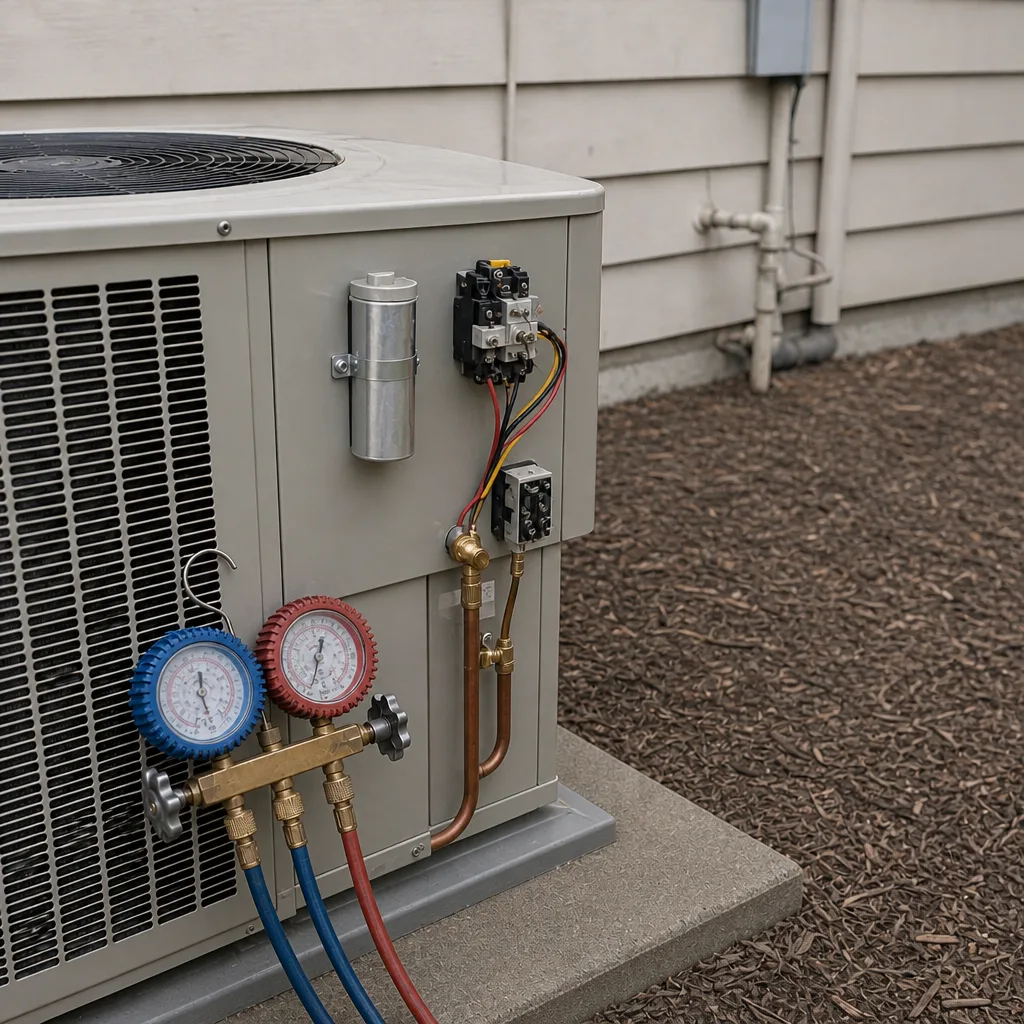
- Read suction and liquid pressures and compare against the manufacturer’s charging chart for that model.
- Check superheat or subcooling, depending on the metering device, to confirm the charge is right and not just “in range.”
- Inspect the condenser coil for cottonwood and grass debris and clean if needed.
- Test the capacitor under load – the single most common summer failure part on Garland systems.
- Check the condensate drain and float switch before the humid months arrive.
- Verify the contactor isn’t pitted and the disconnect is clean.
On a AC repair visit, that list is what separates a check from a guess. We work on Carrier, Trane, Lennox, Goodman, Rheem, York, Daikin, Bryant, and American Standard equipment, so the charging charts and known failure points aren’t something we have to look up on arrival. If your system is a Daikin or a Bryant from the last decade, the pressure targets and metering setup are specific to that line, and a generic “top it off” approach can mask a leak you’ll pay for again in July.
March also happens to be the right time to make a decision about replacement, if the unit is getting old. A system that needs a compressor or a coil is more sensibly handled in April than in August, and it gives you time to plan rather than react. That’s the thinking behind AC installation being a spring conversation rather than an emergency one.
Shoulder cooling and mixed operation: the two modes people skip
April, May, and late September are the months when homeowners turn the system off and forget about it, and those are exactly the months that surface the problems that show up later. Shoulder cooling hides issues because the system never runs long enough to declare them. Mixed operation hides nothing: it forces the equipment to prove it can switch.
Here’s what’s worth checking during shoulder cooling:
- Short cycling. If the system starts and stops every few minutes on a mild day, the thermostat may be oversized, the anticipator setting may be wrong, or a low charge may be tricking the control. Worth a look now, not in July.
- Condensate. Even a mild running cycle produces water. A slow drain line or a float switch that trips on and off is cheaper to fix in April than after a ceiling stain in June.
- Outdoor fan and capacitor. A fan that spins up slowly or hums before it starts is telling you something. Capacitors degrade quietly and fail loudly.
During mixed operation, the check is different. Run the heat in the morning and the cooling in the afternoon and watch what happens:
- Confirm the thermostat actually changes over to the mode you asked for, and that the outdoor unit responds within a reasonable time.
- On a heat pump, listen for the reversing valve shifting and feel the line set change temperature direction. A valve that sticks will defrost at the wrong time or not heat properly.
- Check that the auxiliary heat doesn’t come on unnecessarily during a mild morning. Aux heat running in 50-degree weather is a sign the heat pump isn’t keeping up when it should.
- Watch the condensate line on the heating side too. Heat pumps generate water in heating mode as well.
These two modes are the ones that get skipped, and they’re the ones that give you the most warning before a larger failure.
Heat pump reversing valves through Garland’s freeze and thaw
If your home heats and cools with a heat pump, the single component you should understand is the reversing valve. It’s what lets the same equipment heat in January and cool in August, and it’s also the part most often confused with a problem when it’s actually doing its job.
In heating mode, the outdoor coil absorbs heat from the outside air and gets cold – cold enough that moisture in the air condenses and freezes on it. That’s normal. The system periodically reverses itself into defrost mode to melt that frost off. During defrost, you may see the outdoor fan stop, the unit seem to run in cooling for several minutes, and steam rise from the outdoor cabinet. On a cold, damp morning, this can look alarming. It’s normal behavior for a heat pump in Garland’s winter, which is mild enough that the outdoor coil cycles in and out of frost and thaw repeatedly.
The question is how to tell normal defrost from an actual malfunction. Here’s the distinction:
- Normal: defrost cycles start and finish on their own, the frost clears fully within a few minutes, the indoor blower keeps running, and the house doesn’t drop noticeably in temperature.
- Abnormal: the unit stays in defrost far too long, the outdoor coil stays iced up between cycles, the reversing valve makes a repeated clicking or buzzing sound without actually switching, or the system never comes back to heating mode after defrost.
- Also abnormal: a heat pump that runs continuously in heating and never reaches setpoint while the auxiliary heat is on. That points to a low charge or a valve that isn’t fully shifting.
A reversing valve is not a part to test by trial and error, and its solenoid is electrically live during operation. If you see persistent frost, repeated clicking, or a unit stuck in defrost, that’s a job for a technician. On a York or American Standard heat pump, the defrost board logic and the valve behavior are specific to the model, which is why a service call should start with the brand and model rather than with a generic theory. When we diagnose a heat pump, we’re checking the defrost sensor, the board, the valve solenoid, and the charge together, because a stuck valve and a low charge look surprisingly similar from the thermostat.
Fall furnace startup: standing pilots versus hot surface ignitors
October is when Garland furnaces sit somewhere between heating standby and hard heating, and the smart move is to start the furnace on a mild morning, on purpose, before the first real cold snap. The procedure depends entirely on how your furnace lights, and the two types fail in different ways.
Standing pilot furnaces
Older furnaces with a continuously burning pilot have a distinctive startup routine. On these:
- Check that the pilot flame is present and burning blue, not yellow or lifting away from the orifice.
- Look at the thermocouple or thermopile that sits in the pilot flame – it’s been in continuous service for months and can oxidize.
- Watch the main burners light and confirm they burn evenly with a steady blue flame and no lifting or yellow tipping.
- Have the burners and the heat exchanger visually inspected as part of the startup.
Standing pilot failures tend to be pilot flames that won’t stay lit, thermocouples that lose signal, and burners that collect dust over the off-season.
Hot surface ignitor furnaces
Modern furnaces light with a silicon nitride or silicon carbide ignitor that glows when the control board energizes it. On these:
- Watch the startup sequence: draft inducer runs, pressure switch closes, ignitor glows, gas valve opens, burners light.
- Notice whether the burners light within the control’s trial-for-ignition window, or whether the board retries several times.
- Listen for the draft inducer and pressure switch and check for the correct sequence rather than assuming.
- Have the flame sensor cleaned as part of the startup – a dirty sensor is one of the most common reasons a modern furnace starts and immediately shuts off.
Hot surface ignitors are fragile, and they’re a common failure at exactly this point in the year. The first cold morning is when people find out the ignitor didn’t survive the summer. If your furnace tries several times before lighting, or lights and goes out shortly after, that’s worth calling in. Furnace work involves gas lines and the heat exchanger, and both are a matter for a trained technician. If you notice a gas smell, shut the system down and call from outside the house.
Furnace repair is one of the three things we do, alongside AC repair and installation, and this fall-startup work is what we spend October doing. The specific failure points on a Bryant or a Rheem furnace – and how the control board sequences them – are something we’ve learned brand by brand. That’s what we mean when we say we diagnose the problem and not the upsell.
What Garland ice storms mean for outdoor covers and line sets
Garland gets occasional ice storms, and they do real things to outdoor HVAC equipment. The instinct to protect the unit is good. The execution is where people create new problems.
A heavy, sealed cover or a tarp strapped over an outdoor unit is the wrong move. A sealed cover traps moisture, and the unit then sits in a wet, unventilated space for days. Several days of that can corrode electrical connections, and on a heat pump it can interfere with normal defrost. If you want to protect the top of the unit during an ice storm, a loose, ventilated cover that keeps ice off the fan grille without enclosing the cabinet is the safest approach. Don’t cover a heat pump at all while it’s operating – the outdoor coil is doing its job in the cold.
Line sets need attention too. The insulated refrigerant lines running along the outdoor wall on some installs take the brunt of ice accumulation and sun over years. Check them at the start of winter:
- Is the insulation intact? Brittle or missing insulation lets ice form directly on the copper and stresses the line.
- Are the lines secured to the wall? Ice weight can pull a line set loose from its clamps, and a line set that rubs against a wall will eventually wear through.
- Is anything hanging on the line set? Vines, cords, and leftover holiday decorations aren’t worth the wear.
What’s not worth protecting is the cabinet itself. Outdoor units are built for weather. Wrapping one up the way you’d wrap a hose bib creates a moisture trap that does more damage than the ice would. The better protection is a pre-winter check of the disconnect, the electrical connections, and the line set – done before the first storm, not after.
Filters, coils, and drain lines across the year
The rest of the schedule isn’t special to Garland, but the timing is. Here’s the year-round list, and it’s the one thing on this page you can handle without a technician.
- Filter, every month in heavy cooling and hard heating, every two months otherwise. A clogged filter is the cheapest possible failure to prevent and one of the most expensive to ignore.
- Outdoor coil, in spring and again in late summer. Cottonwood, grass clippings, and neighbor’s leaves find their way into the fins. A rinse from the outside at low pressure clears them.
- Indoor coil, once a year as part of a startup visit. If it’s pulling air through a wet drain pan, it will collect dust and lose capacity slowly.
- Condensate drain, at the start of shoulder cooling and the start of heavy cooling. A float switch that trips in July turns into a no-cool call even if the system is otherwise healthy.
- Thermostat batteries and settings, at the start of each season. A dying battery in mixed operation mode is a surprisingly common cause of weird behavior.
- Snowbird and vacation checks, before any extended leave. A system that’s been sitting idle for months gets a startup visit before it’s run in earnest.
A month-by-month maintenance calendar for Garland
Here’s the calendar this guide adds up to. Every homeowner’s situation differs, but this is the sequence that fits Garland’s weather.
- Late March: full cooling startup and refrigerant check; condenser coil clean; capacitor test under load; condensate drain check. Also the right window to decide whether an aging system is worth repairing or replacing.
- April and May (shoulder cooling): watch for short cycling, listen for the outdoor fan, and note any change in cooling performance.
- June into early September (heavy cooling): filters monthly, outdoor coil rinse mid-summer, and a call at the first sign of icing, short cycling, or a house that won’t hold temperature.
- Late September and October (mixed operation): run the heat on a mild morning, verify the changeover, and by early October get the furnace or heat pump checked before the first cold snap.
- November into February (heating standby and hard heating): filters on the heating side, a watchful eye on the outdoor unit during freezing weather, and a call if the defrost cycle looks wrong.
- February and March (the transition back): a post-winter inspection of line set insulation, outdoor disconnects, and electrical connections, then straight into the late-March cooling check.
That’s the loop. Done on this schedule, your system never has to make an unprepared transition. If you’re near Garland, that loop is the whole point of annual care: fewer failures, fewer rushed repairs, and a system that lasts long enough to justify the money you spent on it.
Common Mistakes to Avoid
- Following the “tune-up in May” advice. In Garland’s climate, May is one heat wave away from a no-cool call. Late March gives you buffer.
- Skipping the fall furnace startup. Waiting for the first cold morning to turn on a furnace that’s sat idle since March is how small problems become urgent ones.
- Wrapping the outdoor unit for winter. A sealed cover traps moisture and can hurt a heat pump. A ventilated top cover during an ice storm is the safe option; a full wrap is not.
- Assuming a defrost cycle is a malfunction. Steam, a stopped fan, and a few minutes of apparent cooling are normal. Persistent frost between cycles and repeated clicking are not.
- Treating shoulder season as a break. April and May are when short cycling and slow drain problems quietly appear. They don’t announce themselves in July; they announce themselves now.
- Buying the wrong filter in bulk. A filter that’s too dense for your system’s return will strangle airflow. Match the filter to what the system was designed for, not to the highest possible MERV.
- Ignoring line set insulation. It’s the cheapest thing on the list to fix and one of the most expensive to neglect over many years.
See the difference
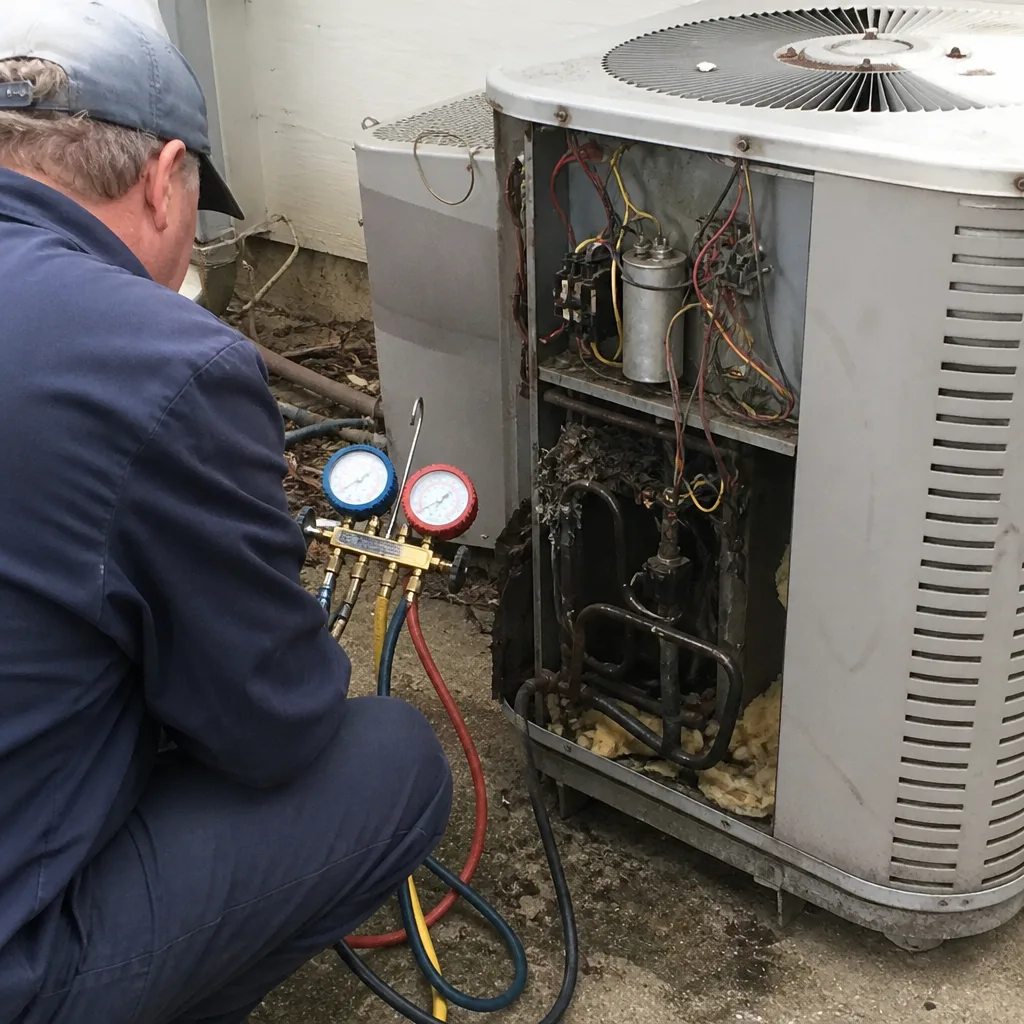 Before
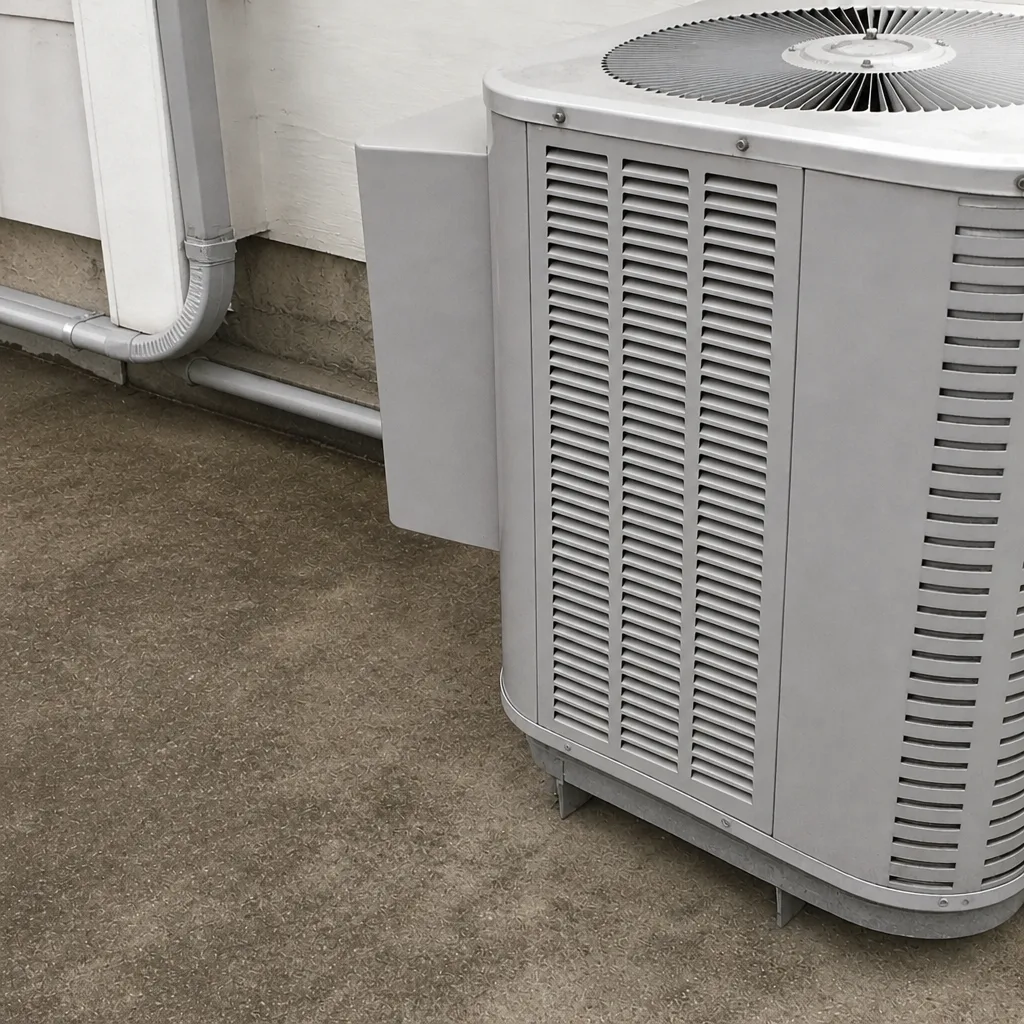 After
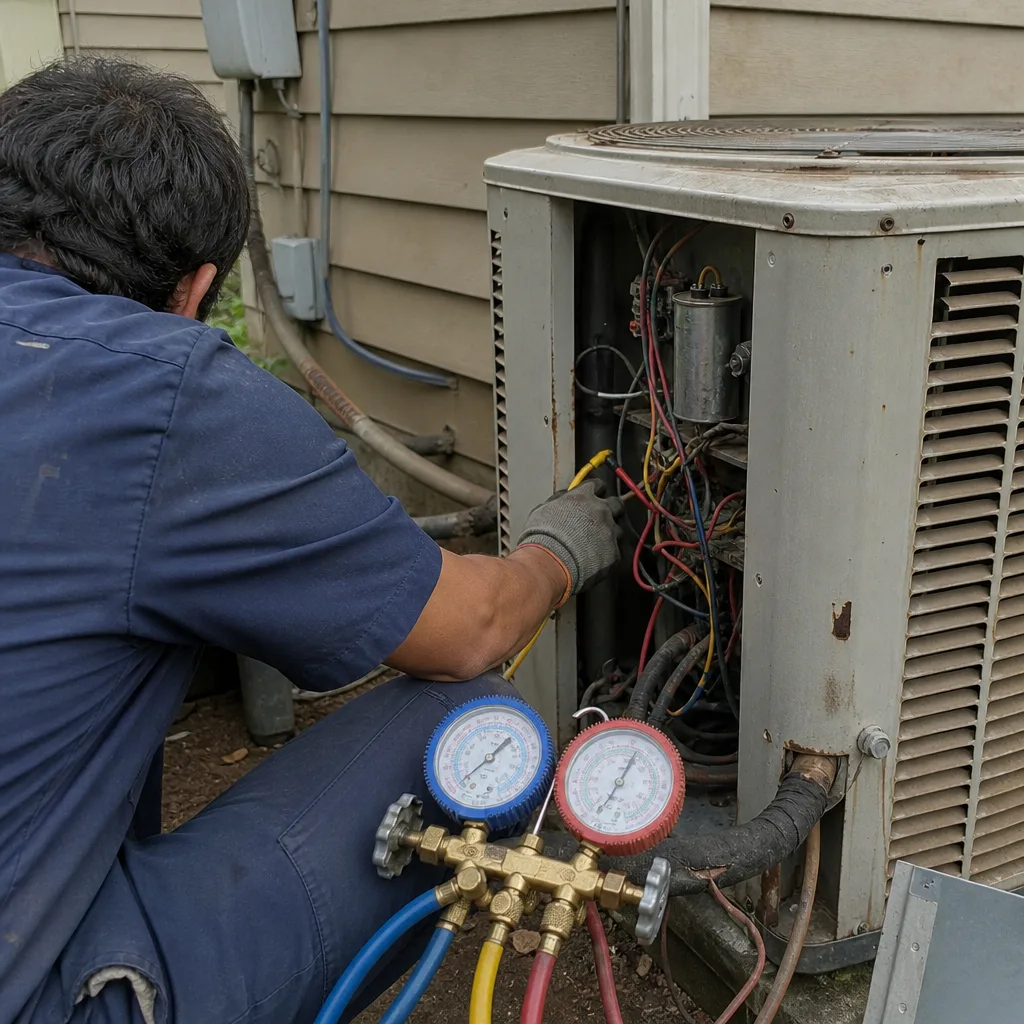 Before
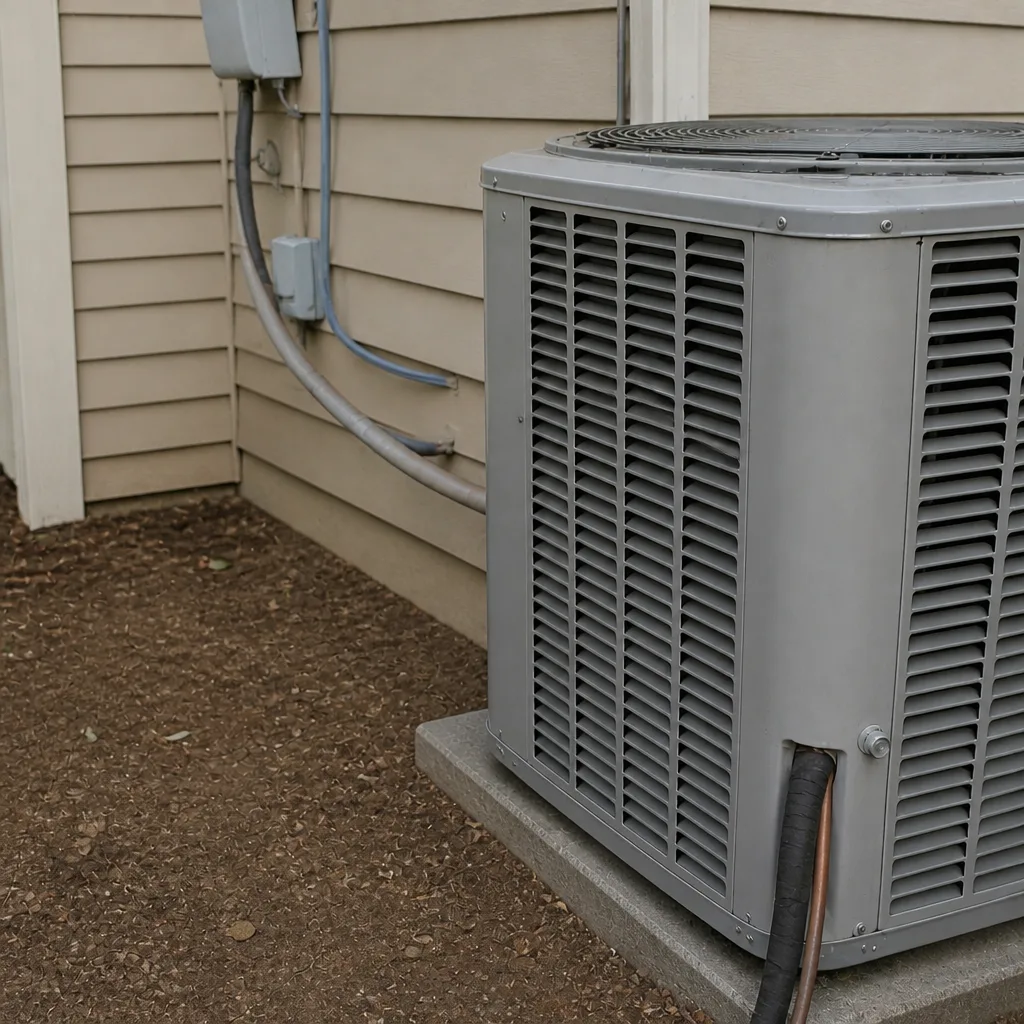 After
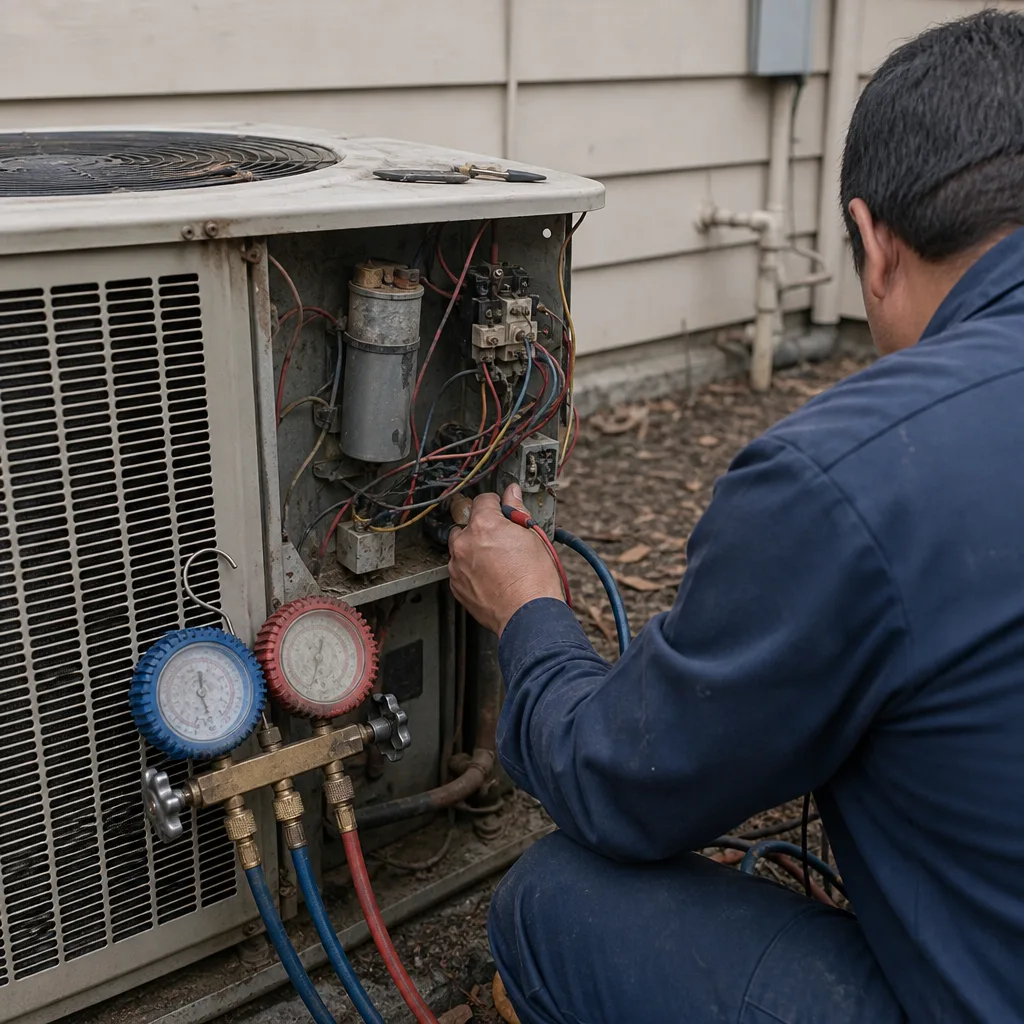 Before
 After
When to Call a Professional
Some issues are maintenance. Others are a job for a trained technician, and this is where we’d rather be honest about the line. Call us if your system is icing up, short cycling, or not holding temperature; if your heat pump sticks in defrost or clicks repeatedly and never switches; if your furnace retries several times before lighting or lights and goes out; if the outdoor fan hums or starts slowly; if you smell gas (shut the system down and call from outside the house); or if a pre-season check finds a problem you don’t want to sit on. Reversing valves, refrigerant circuits, gas-fired heat exchangers, and electrical components under load are all things that reward training and punish improvisation. Sunstone AC Repair offers free estimates in Garland – call (866) 970-7959. We answer 24/7. Fast dispatch from 7am to 7pm, Sunday through Friday.
Frequently Asked Questions
Twice a year, on a Garland calendar rather than a national one: a late-March cooling check before heavy cooling starts, and a late-October heating check before the first freeze. Houses with heat pumps benefit from a mid-winter check of the defrost cycle as well. Between visits, filters and a visual look at the outdoor coil handle the rest. If you’ve never had the system checked in either mode, call to set up a starting point – estimates are free.
In Garland, yes, because March has enough warm afternoons that the system runs under real load and pressures can be read honestly, while still leaving weeks of buffer before the first sustained heat. If a charge problem is found, you have room to fix it on a normal schedule. Call (866) 970-7959 to book a late-March check – estimates are free.
The main sign is a valve that clicks or buzzes without actually switching modes, or a unit that sticks in defrost and never returns to heating. Normal defrost cycles are short, clear the frost fully, and end on their own. Persistent frost between cycles or a heat pump that runs continuously without reaching setpoint both point to a problem worth a service call. A technician can test the valve and the charge together; that’s not something to diagnose by feel.
Leave it uncovered, or use only a loose, ventilated cover that keeps ice off the fan grille without sealing the cabinet. A tarp or sealed cover traps moisture and can corrode electrical connections, and it can interfere with normal defrost on a heat pump. Check that the line set insulation and clamps are in good shape before storm season. If your unit takes a hit from falling ice or a limb, call and we’ll come look.
Yes. Standing pilots need a look at the pilot flame and the thermocouple that sits in it, while hot surface ignitors need a watch on the control sequence and a clean flame sensor. The failure points are different on the two types, and the timing matters – test in October, not on the first freezing morning. If the furnace retries several times or lights and goes out, call (866) 970-7959.
We’re trained on nine of the most-installed residential HVAC brands: Carrier, Trane, Lennox, Goodman, Rheem, York, Daikin, Bryant, and American Standard. That means arriving already familiar with the specific failure points on your model rather than guessing from a generic script. If you know your brand and model, mention it when you call – it speeds up the diagnosis.
The Bottom Line
Seasonal HVAC care in Garland works best when you stop thinking in spring and fall and start thinking in five modes. Late-March cooling check, shoulder season vigilance, a mixed-operation test in October, a proper fall furnace or heat pump startup, and a post-winter inspection back into spring. Filters monthly during the heavy months. A watchful eye on defrost and line sets during ice storms. The equipment that owns your winter and your summer is the same equipment – one call covers your whole system, and one schedule protects it year-round. If you’d like to start the loop with a free estimate, call (866) 970-7959. We answer 24/7. Fast dispatch from 7am to 7pm, Sunday through Friday.
Written by the team at Sunstone AC Repair, serving Garland since 2018.