
Last updated November 14, 2026
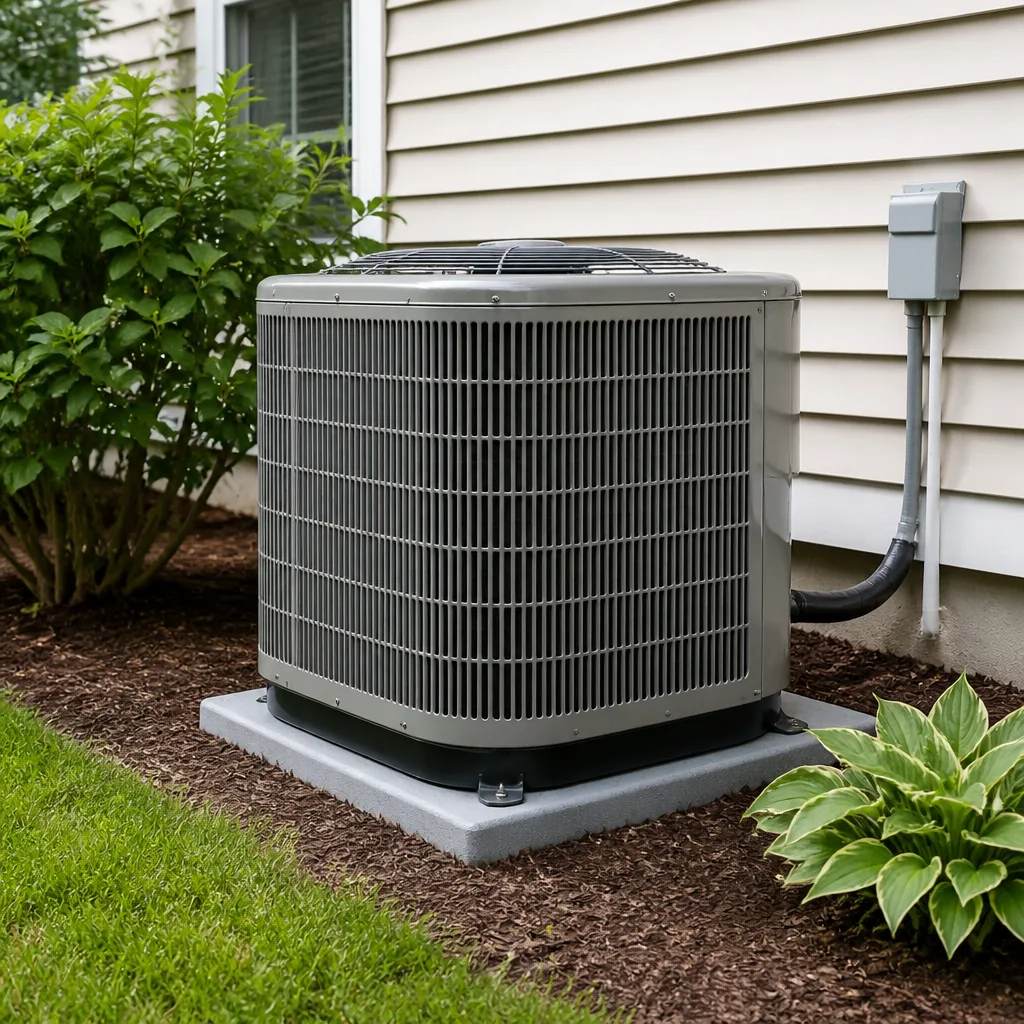 AC repair
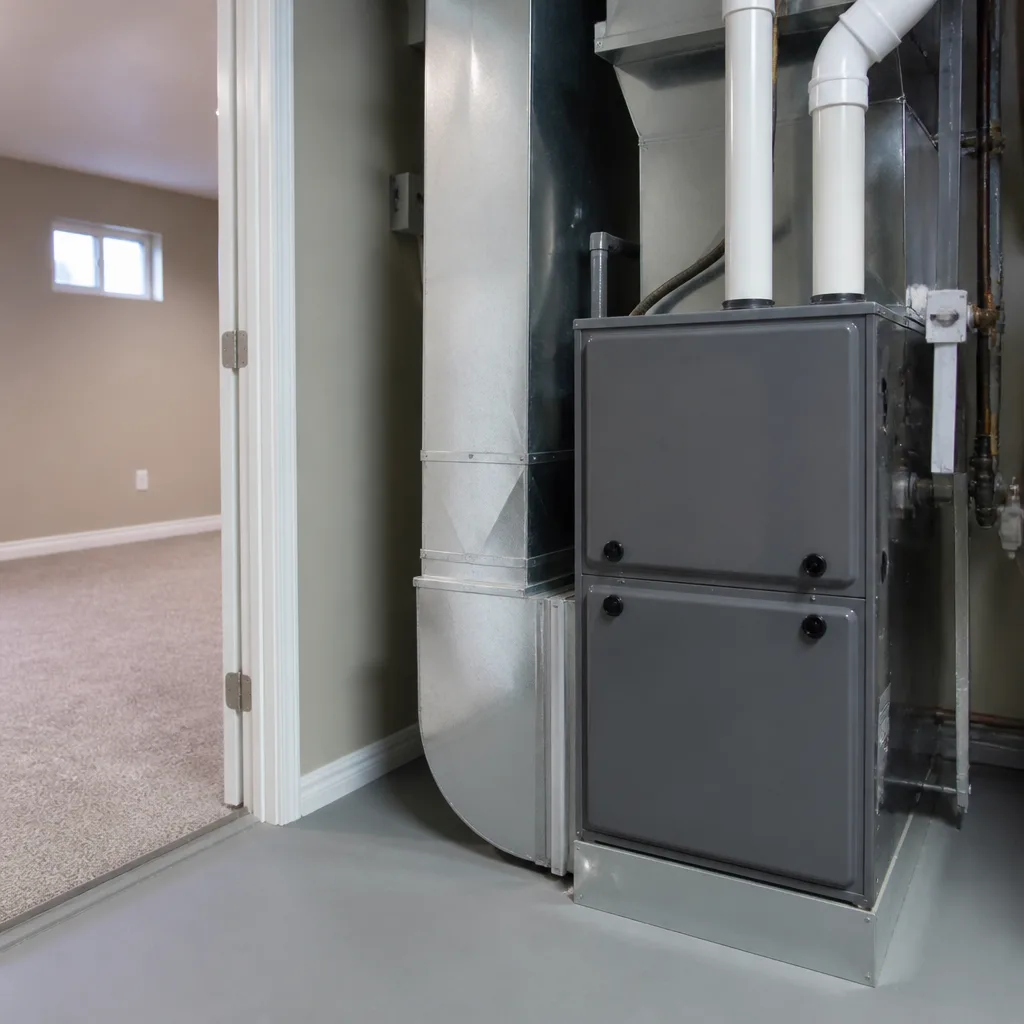 Furnace & heating
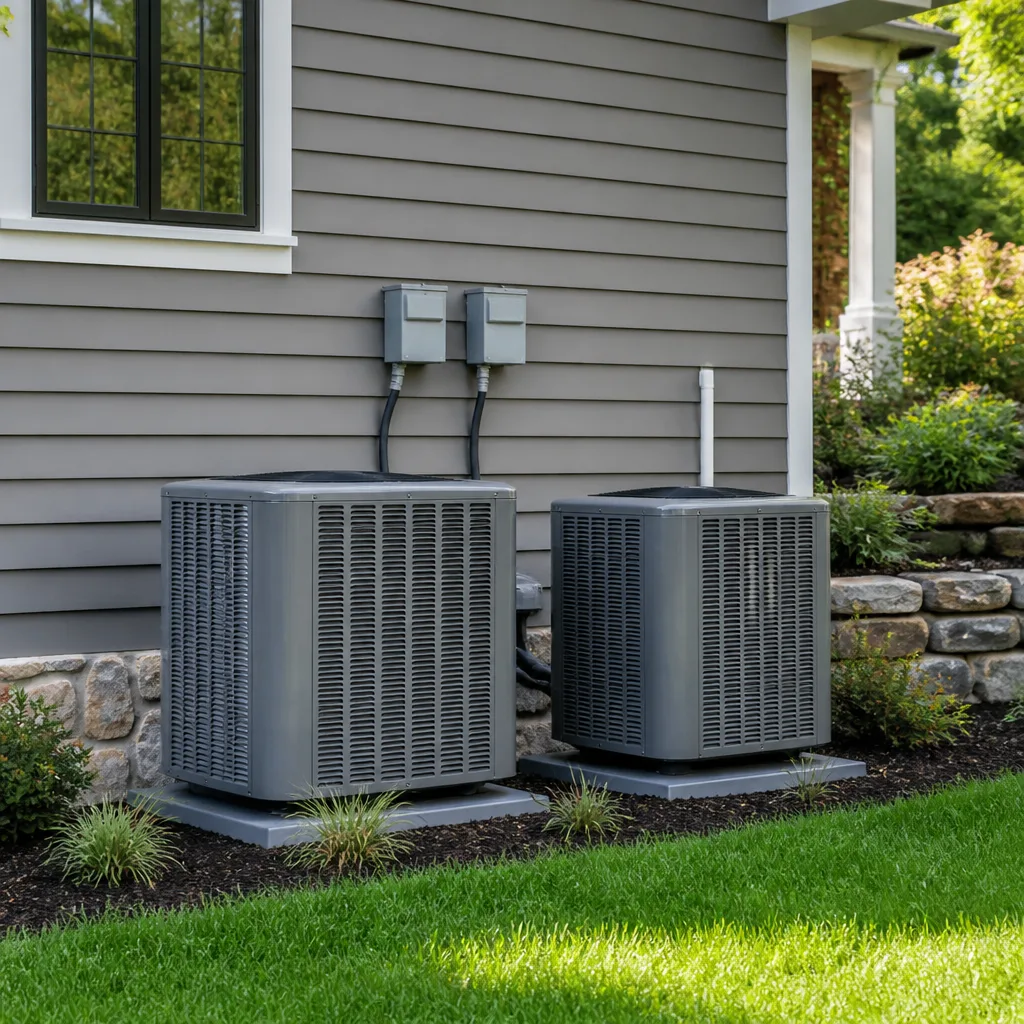 Heat pumps
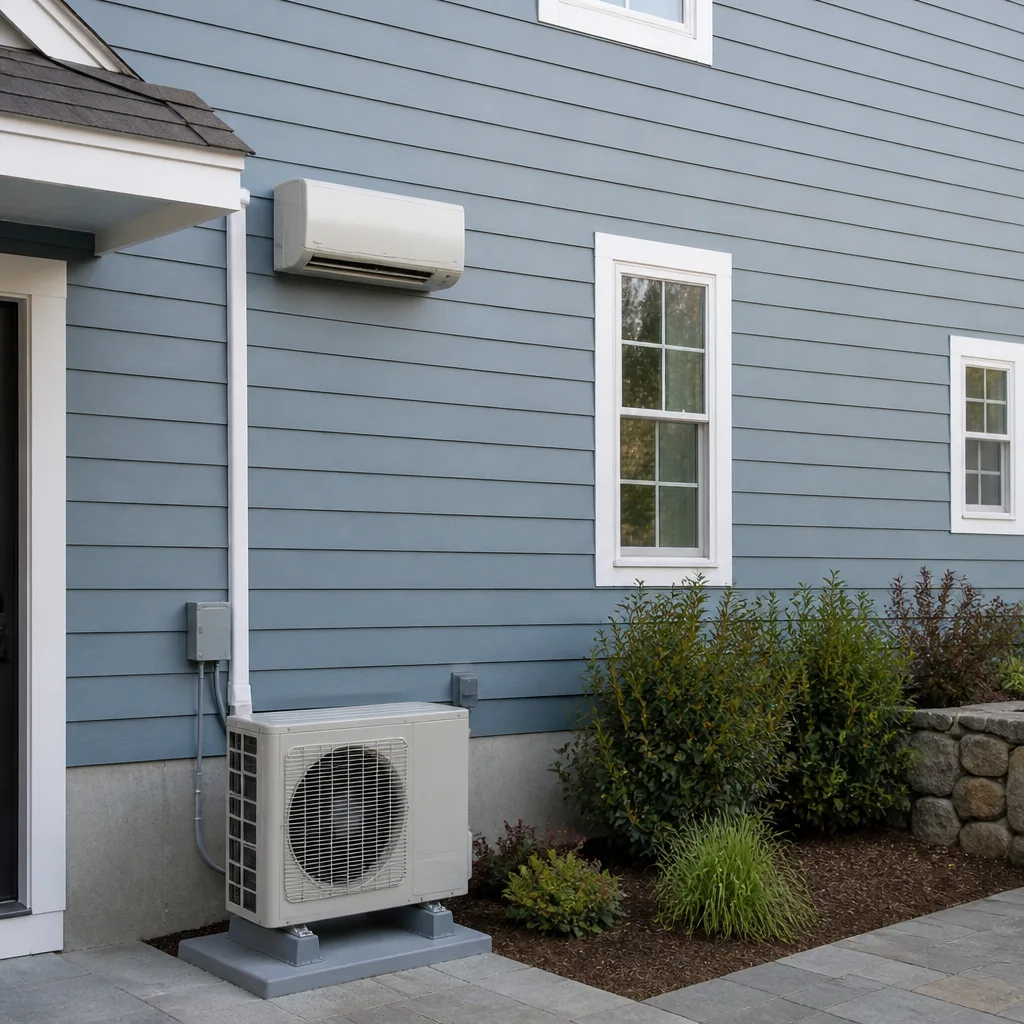 Ductless mini splits
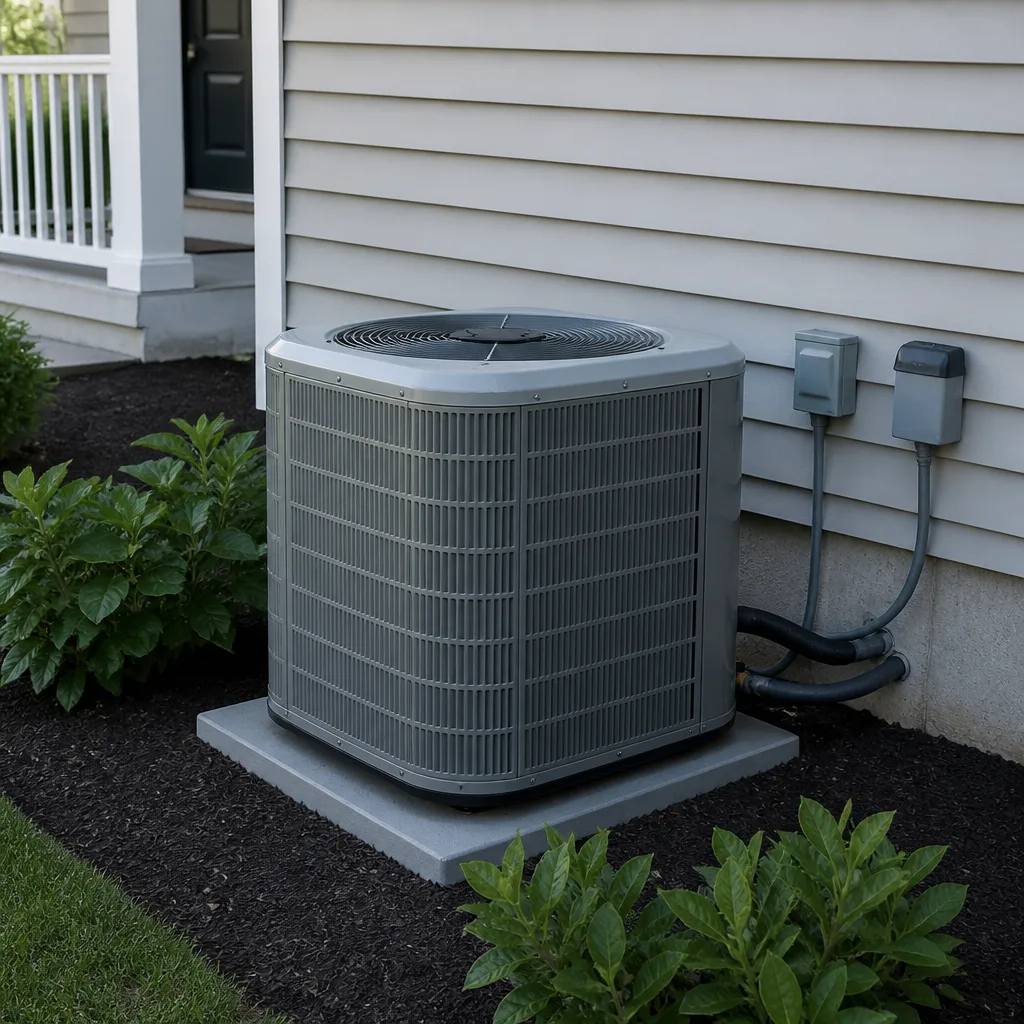 Carrier
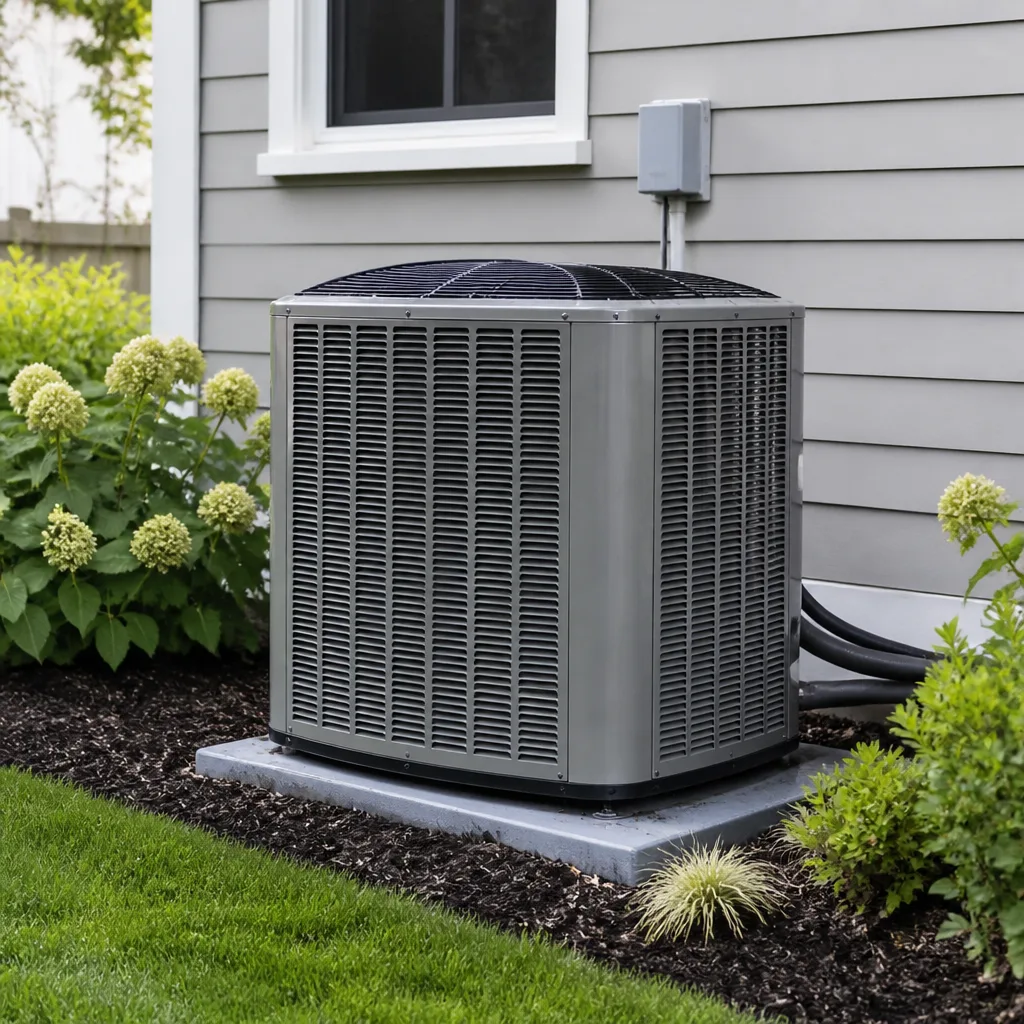 Trane
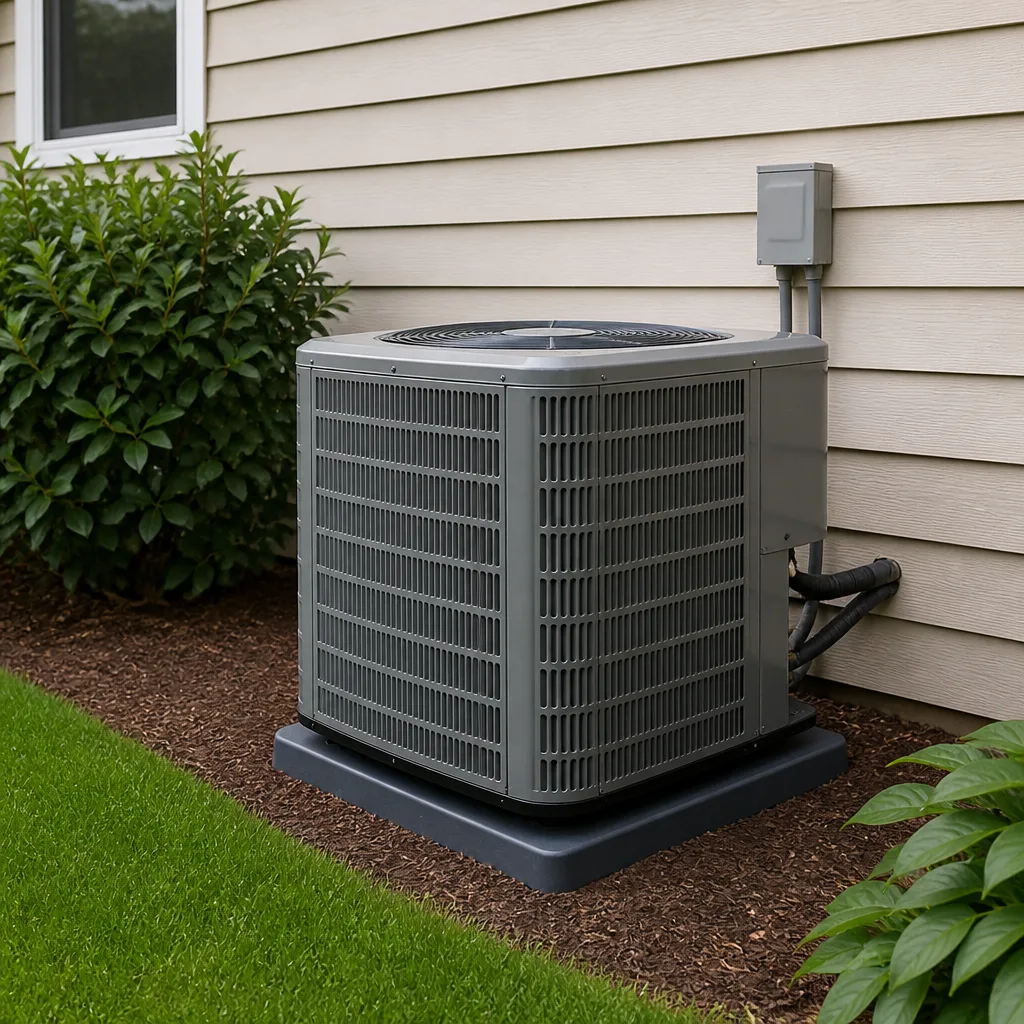 Goodman
Seasonal tune-up and full diagnostic on your Carrier, Trane, or Goodman system - readings shown to you before any repair is proposed
Diagnosis first, numbers second - you approve the repair price before a single part goes in.
Get your free estimateHow to Hire an HVAC Contractor in Garland: A Step-by-Step Guide
Most homeowners hire an HVAC contractor the way they’d pick a restaurant: a quick look at star ratings, a friendly phone call, and a gut feeling. In Texas that approach can cost you. A contractor’s license isn’t a lifetime pass, and the state’s own lookup tool regularly shows lapsed licenses still being advertised on local business pages. None of the three things that actually matter most, licensing currency, load-calculation practice, and labor warranty terms, show up in a Google review. This guide turns those abstract criteria into specific questions you can ask in Garland, plus the red-flag answers to listen for.
Quick Answer
To hire an HVAC contractor in Garland, verify an active TACLB license through the state lookup, confirm they pull permits, ask directly whether they run a Manual J load calculation, and read the labor warranty terms in writing before signing anything. A contractor who can answer all four clearly, without hesitation, is one worth inviting back. Those four checks take about ten minutes and tell you more than any review ever will.
Styles & brands we work with
- AC repair
- Furnace & heating
- Heat pumps
- Ductless mini splits
- Carrier
- Trane
- Goodman
Table of Contents
- Step 1: Verify the TACLB License in Under Two Minutes
- Step 2: Ask About Permits and Watch for the Hesitation
- Step 3: The Manual J Question That Predicts Sizing Accuracy
- Step 4: Decode the Labor Warranty Before You Sign
- Step 5: Why Multi-Brand Fluency Should Be a Hiring Criterion
- The Red-Flag Responses to Listen For
- Common Mistakes to Avoid
- Frequently Asked Questions
Before we get into each step, one note on why this matters in Garland specifically. The city sits in a stretch of North Texas where summer design temperatures push AC systems hard, and much of the housing stock was built in decades when sizing was done by rule of thumb rather than calculation. A contractor who skipped Manual J the first time, or who’s installing in a home built when nobody asked the question, can hand you equipment that’s a size off. An oversized unit short-cycles, fails to dehumidify, and wears out earlier than it should. The interview questions below are what catch that before you sign.
Step 1: Verify the TACLB License in Under Two Minutes
Texas requires air conditioning and refrigeration contractors to be licensed by the state, and every licensee carries a TACLB number. You can look any contractor up in the state database in well under two minutes. Here’s what to do:
- Ask the contractor for their TACLB number. Write it down.
- Open the state’s HVAC contractor license search and enter the number.
- Confirm the business name matches the one on the truck and the invoice.
- Check the status field. “Active” is what you want.
- If the status reads “expired” or “inactive,” stop the conversation.
The status field is where homeowners get tripped up. An expired license has lapsed and the contractor is not authorized to perform HVAC work under Texas rules. An inactive license means the credential exists but the contractor isn’t currently in good standing to practice. Both statuses show up on business websites that still advertise the work, and some of those businesses have years of positive reviews behind them. Reviews describe past work. The license status describes whether they can legally do the work today.
If a contractor gives you a number that pulls up a different company name, or claims the search tool is “wrong” or “outdated,” treat it as a serious warning. The license database is the authoritative source, not the badge on a website. Ask a second time, in writing, and consider whether this is someone you want in your attic or on your roof.
Licensing currency is the first filter because it’s binary. No amount of good phone manner or competitive quoting makes an expired license acceptable for work that involves refrigerant handling, electrical connections, and gas furnace components. Sunstone AC Repair is licensed for the work it does, and any contractor you talk to in Garland should be just as comfortable when you ask.
Step 2: Ask About Permits and Watch for the Hesitation
The second question separates professionals from price-shoppers: “Do you pull permits?” A contractor who answers yes without blinking is telling you they follow the rule-of-law part of the job. A contractor who pauses, deflects, or says permits are “usually not needed for a repair” is telling you something else. In most Texas cities, replacing an HVAC system or doing significant electrical or gas work requires a permit pulled by the licensed contractor. Repairs vary. If you can’t tell which category your job falls under, ask your city’s building department. The honest answer from a contractor on a repair should include an explanation of why a permit is or isn’t required, not a shrug.
Once they say yes, follow up with three specific questions:
- “Will the permit be in your company’s name or mine?” It should be in the contractor’s.
- “Who schedules the inspection?” The contractor should handle this.
- “If the inspection fails, who comes back to fix it?” The contractor should, at no charge to you.
A contractor who pulls permits has already done the paperwork legwork that a permit-pulling shop won’t, and typically that means a more careful install. In a Garland neighborhood built in the 1970s or 1980s, where duct routing and electrical details can be less than textbook, an inspection is also an extra set of expert eyes on the finished work. The home inspector who reviews a system after a permit typically checks things your own walkthrough could miss.
This is not a sell for us. Pulling a permit costs the contractor time and money, and some low-bid shops build their pricing around not doing it. You’re not saving anything by going with the cheaper option when the cheaper option skips that step. When we install a system, that permit gets pulled, because it protects you long after we’ve left.
Step 3: The Manual J Question That Predicts Sizing Accuracy
Here is the single most revealing question you can ask in an HVAC interview: “Do you run a Manual J load calculation before sizing the equipment?” A qualified contractor will answer with certainty. They’ll mention room-by-room measurements, window orientation, insulation values, and the equipment match. They might ask if you’ve had an energy audit. They’ll say the right size is not “what’s there now” and not “a little bigger to be safe.” A vague answer or a pivot to “we just match the tonnage on your existing unit” is the deflection you’re listening for.
Why does it matter in Garland? Homes here face long cooling seasons and a wide swing in outdoor conditions across the year. Oversized equipment in that climate cools the room fast but leaves humidity in the air, so you get a room that’s cool and clammy. Undersized equipment struggles on the hottest days. The difference between a properly sized unit and a mismatched one shows up in comfort, in wear, and in your electricity bill. A manufacturer’s brochure numbers aren’t enough. The house is the variable, and Manual J reads the house.
What a correct answer sounds like:
- “We measure every room, not just square footage.”
- “We look at window area and direction, insulation, and duct condition.”
- “We match the indoor coil to the outdoor condenser and confirm the rated combination.”
- “We’ll show you the calculated load so you can see the number.”
If a contractor says Manual J is “overkill” or “for commercial jobs,” that’s a clear signal they don’t run it, and they’ll be guessing at equipment size for your home. For a homeowner in Garland replacing a system, the load calculation is the difference between buying what the house needs and buying what the last contractor installed.
Step 4: Decode the Labor Warranty Before You Sign
Manufacturer warranties and contractor labor warranties are two different things, and the difference matters around month 13. A manufacturer’s warranty covers the equipment itself, typically the compressor and parts, and runs for a defined term that you should confirm on the manufacturer’s paperwork. A labor warranty covers the work the contractor does: installation, adjustments, the diagnosis and rework if something goes wrong. The contractor sets that term, and it usually spans somewhere from one to five years depending on what you’re buying and who you’re buying from.
Ask specifically:
- “What’s your labor warranty length on this install?”
- “Does the labor warranty cover the diagnostic visit, or just the repair?”
- “If a part fails under manufacturer warranty at 13 months, who pays for the labor to swap it?”
- “Is the labor warranty transferable if I sell the house?”
That third question is where the confusion lives. At 13 months, you’re often outside the contractor’s labor warranty but still inside the manufacturer’s parts warranty. The part is free; the labor isn’t. Ask upfront who covers the labor in that window, so you’re not surprised by an invoice you thought would be zero. The best shops state their labor warranty in writing on the estimate, and they’ll tell you exactly where their coverage ends.
Get the labor warranty terms in writing before you sign. If a contractor won’t put the terms on paper, that tells you everything. Whether you choose us or another contractor, that document is your protection.
Step 5: Why Multi-Brand Fluency Should Be a Hiring Criterion
A contractor who installs only one brand, or who only knows one brand, has an economic incentive to recommend that brand for every situation. That doesn’t mean they’re dishonest, but it does mean the equipment they’re selling may not be the equipment your home needs. Multi-brand fluency is a hiring criterion because it shifts the recommendation from “what we push” to “what your system actually needs.” At Sunstone we work on equipment from nine of the most-installed residential brands, including Carrier, Trane, Lennox, and Goodman, so the diagnosis comes before the equipment suggestion, not after.
Why nine brands matters in a service call: if you call about a Carrier system and the technician only installs a competitor’s equipment, every diagnosis has a nudge toward replacement. A contractor fluent in multiple brands can usually name the failure points specific to your equipment, so they arrive already familiar with your unit’s quirks. That translates to faster diagnosis and fewer return visits. It also means they don’t need to sell you a whole new system just to have something to install.
When you interview a contractor, ask what brands they service and how they decide what to recommend. A good answer names at least a few manufacturers and includes language like “we look at what’s there first.” A less reassuring answer names one brand and quotes a line about how that brand is “the best on the market.” Both may be true. Only one is a recommendation driven by your home.
For a homeowner in Garland who owns a mid-to-premium system, this is a real cost question, not an abstract one. A contractor who knows your brand will diagnose the problem, not the upsell. If a repair makes financial sense, they’ll say so. If replacement is right, they’ll explain why in terms of your equipment and your home. Both are honest answers, and both require a contractor who isn’t locked into one line.
The Red-Flag Responses to Listen For
You’ve asked four good questions. Now listen to how they’re answered. Some responses are clear signals to move on. Here’s what to watch for, in order of how serious they are:
- “Our license isn’t on the website, but it’s fine.” Every TACLB number should be findable in the state database. No exceptions.
- “We don’t usually pull permits for this kind of work.” Ask your city’s building department to confirm. If the job requires a permit, the contractor should be pulling one.
- “We just match the tonnage on your existing unit.” That’s a textbook sizing shortcut. Manual J is a real calculation, not a guess.
- “The manufacturer warranty covers everything.” Ask again about labor. The manufacturer covers parts. Labor is a separate term.
- “We only install X brand.” Not necessarily disqualifying, but ask why. If the answer is a sales quota, you know.
- “We’ll get back to you on the written estimate.” A written estimate is the only estimate. Verbal numbers disappear when the job gets complicated.
Some red flags are about the process, not the answers. A contractor who won’t put their labor warranty in writing, won’t show you the scheduled equipment match, or won’t put their license number on the invoice is telling you they don’t want a record. That’s the contractor to walk away from. A colleague of ours in Garland likes to say the reliable contractors are the ones who aren’t afraid to be checked.
Common Mistakes to Avoid
- Choosing by review count alone. Reviews describe past work; the license database describes whether the contractor can do the work today. A business with hundreds of positive reviews can still have a lapsed license. Check both.
- Accepting “we’ll handle the paperwork” without seeing it. If the permit isn’t pulled, the inspection never happens, and problems stay hidden until they’re yours. Get the permit confirmation.
- Skipping the Manual J question because the installation “looks easy.” Sizing is the most common cause of comfort complaints after a replacement, and the question is free to ask. If the answer is vague, that’s the signal.
- Not reading the labor warranty terms. That document tells you what happens when a part fails at 13 months. Get it in writing before you sign.
- Choosing the one-brand shop without asking why. A contractor fluent in multiple brands can recommend based on what your home needs. A single-brand shop may recommend based on what they stock.
- Believing a spoken estimate. In a Garland neighborhood where the ductwork is complicated, the price can change on the truck. The written estimate is the only number that holds.
- Ignoring the license status because the phone manner was good. Licensing is the first filter for a reason. Get the number and look it up before anything else.
See the difference
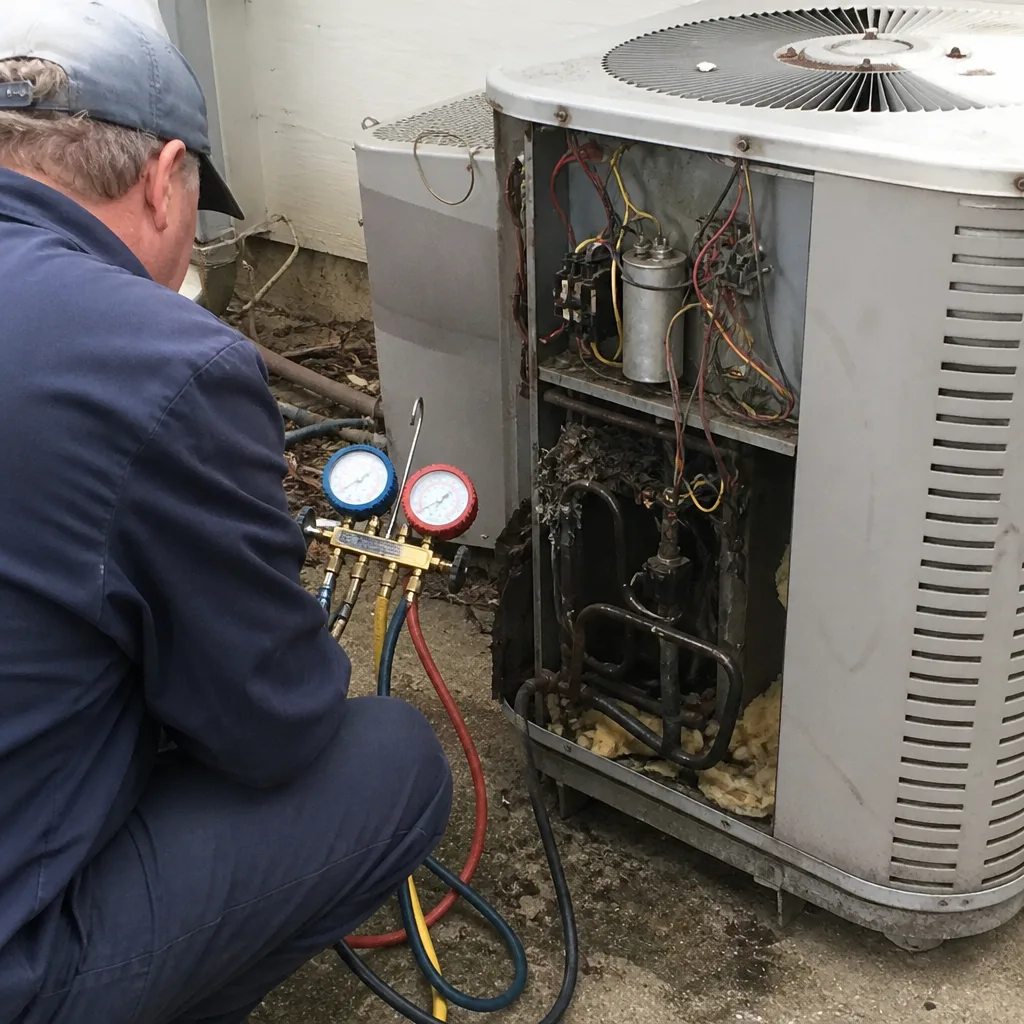 Before
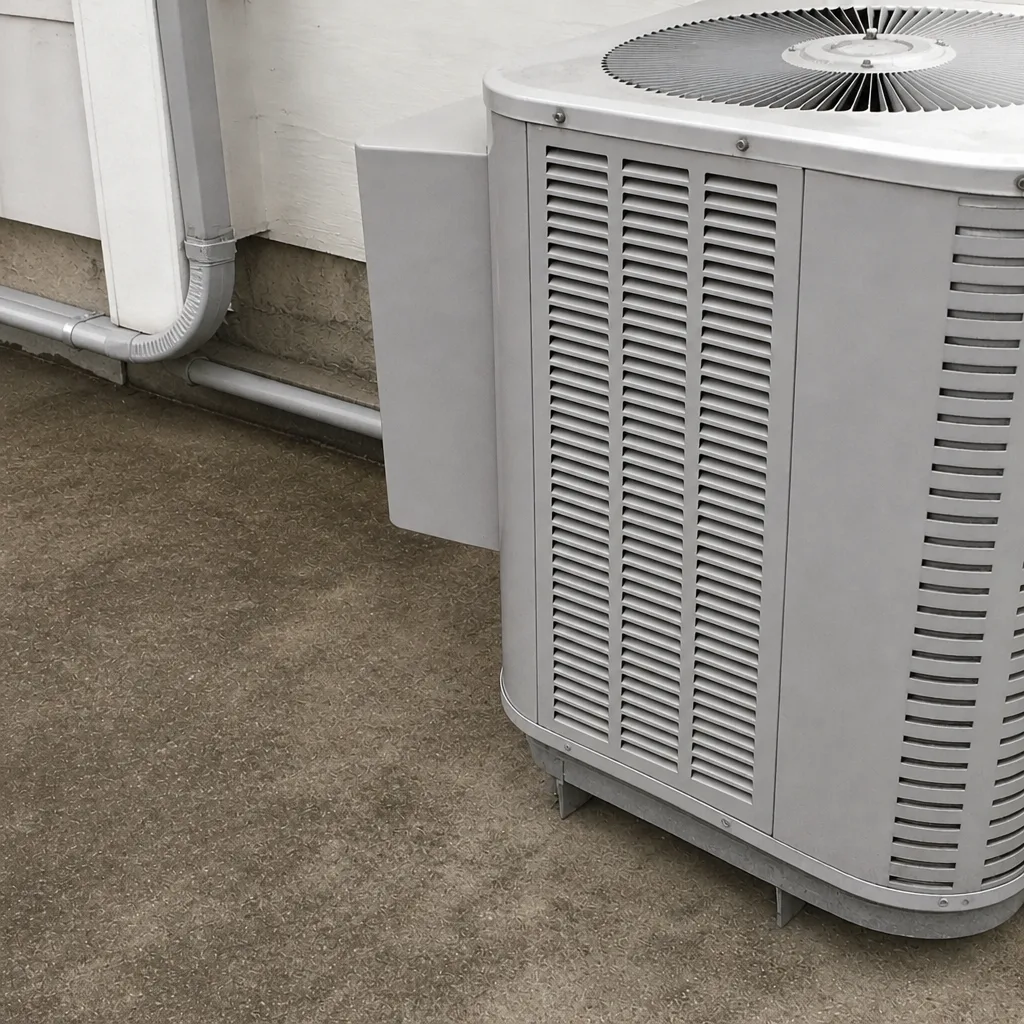 After
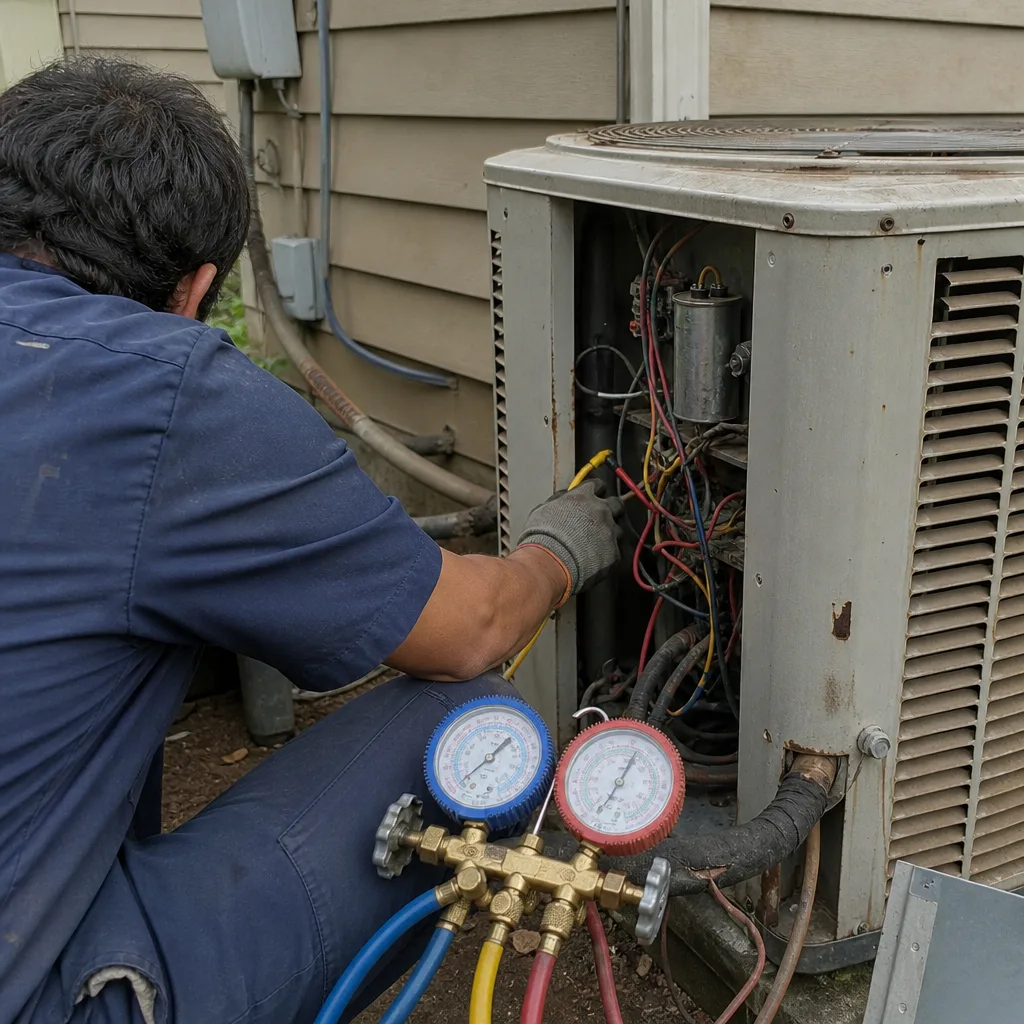 Before
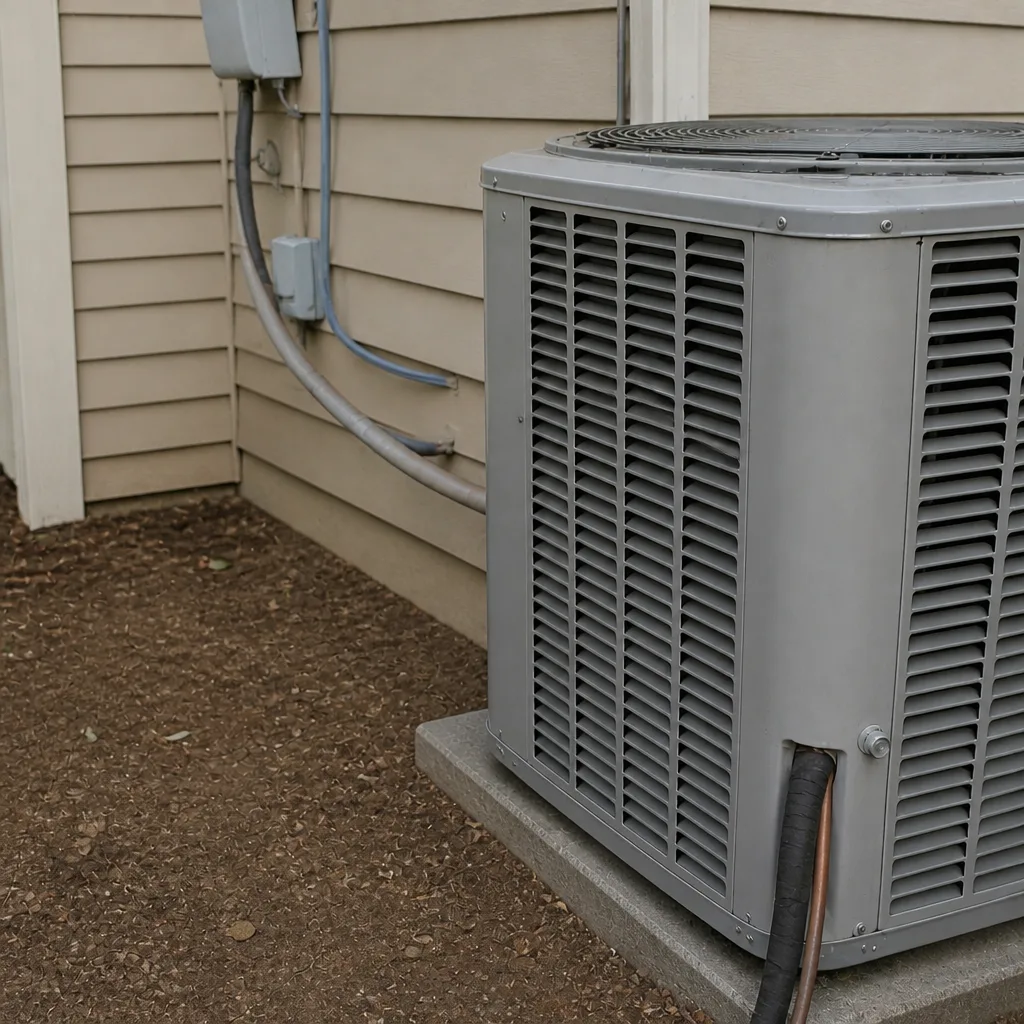 After
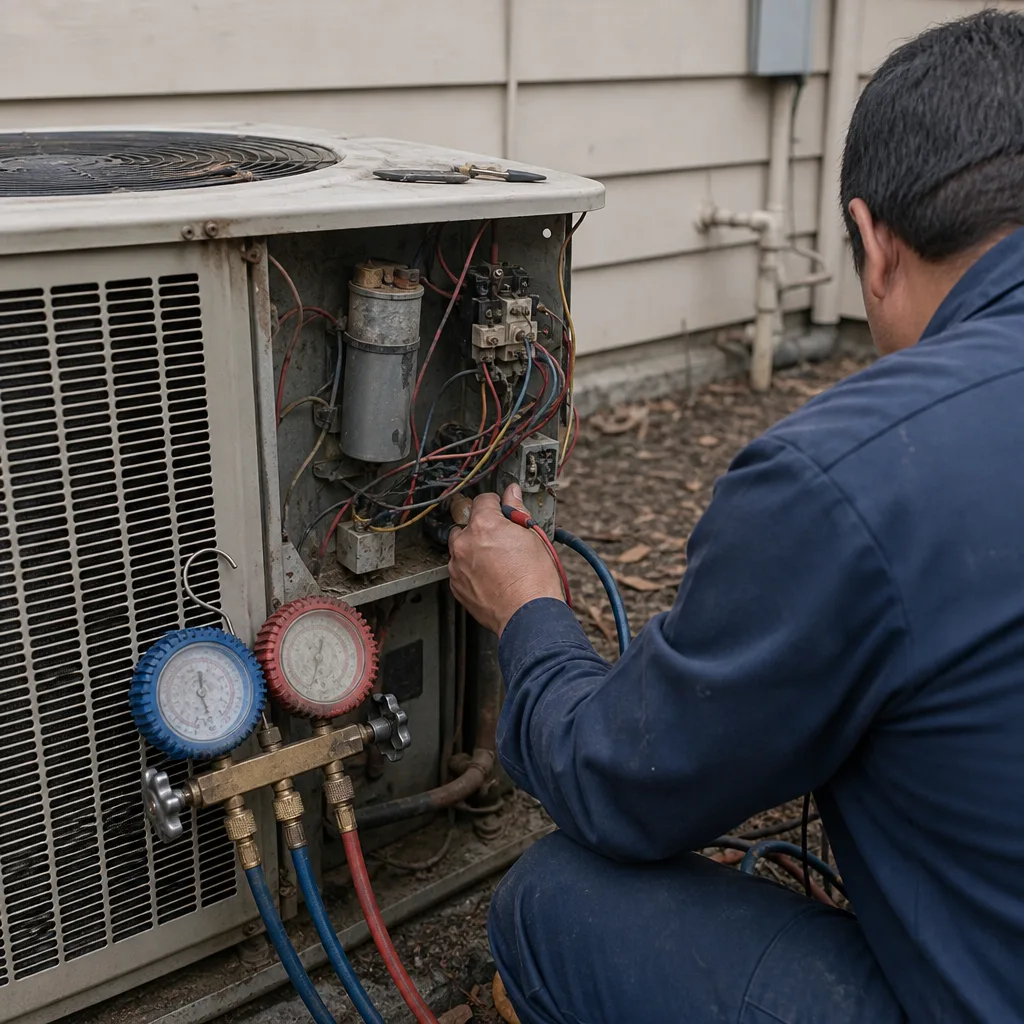 Before
 After
When to Call a Professional
Some HVAC situations aren’t DIY territory. If your system is tripping the breaker, if you smell gas or burning, or if the outdoor unit won’t start and you can’t isolate which component failed, call a licensed professional. If your system is more than 10 years old and the repair estimate is more than half the replacement cost, that puts you in territory where a professional diagnosis of repair-versus-replace is worth it. If you’ve had two repair calls in a single cooling season, that’s a signal. And if you’re interviewing contractors for a replacement in Garland, or if you’ve received a quote and want a second opinion on the sizing or the equipment, call us. Sunstone AC Repair offers free estimates in Garland. Call (866) 970-7959. We answer 24/7. Fast dispatch from 7am to 7pm, Sunday through Friday.
Frequently Asked Questions
Ask for their TACLB number and look it up in the state’s HVAC contractor license database. Confirm the status is “active” and the business name on the license matches the name on the truck and invoice. “Expired” or “inactive” means not currently authorized to perform the work. Call (866) 970-7959 if you’d like to talk through what to look for in a specific listing.
Yes. An expired or inactive license means the contractor isn’t legally authorized to perform HVAC work in Texas, regardless of their online reviews or how long they’ve been in business. Work done by an unlicensed contractor can put your insurance coverage and future warranty claims at risk. Verify the status before you sign anything.
Manual J is a room-by-room calculation that determines how much heating and cooling capacity your home actually needs, based on square footage, window orientation, insulation, and duct condition. It matters because oversizing is a common cause of poor comfort and premature equipment wear, while undersizing leaves the system struggling on hot days. A contractor who doesn’t run the calculation is guessing, even when the guess is well meant.
Sunstone services equipment from Carrier, Trane, Lennox, Goodman, Rheem, York, Daikin, Bryant, and American Standard. That brand coverage means a technician arrives already familiar with your unit’s common failure points and service details. Learn more about our AC repair and AC installation services.
The manufacturer warranty covers the equipment and parts for a defined term, and the contractor’s labor warranty covers the work they performed. When a part fails at 13 months, the part is usually still covered, but the labor to replace it often isn’t. That’s why the labor warranty terms belong on the written estimate, not in a phone conversation. Ask who pays for the labor at month 13 before you sign.
Yes. Sunstone AC Repair offers free estimates in Garland. Call (866) 970-7959 to schedule. We answer 24/7. Fast dispatch from 7am to 7pm, Sunday through Friday. The estimate is written, and the price is set per job by that estimate.
The Bottom Line
Hiring an HVAC contractor in Garland comes down to four checks that take about ten minutes: verify the TACLB license in the state database, ask about permits and follow up on the answers, ask specifically about Manual J load calculations, and get the labor warranty terms in writing. If you want to go further, ask about brand fluency so the recommendation is driven by your equipment and your home, not by what the contractor stocks. A contractor who answers these four questions clearly, without guessing or deflecting, is one worth trusting with the system you already own. The rest is habit and paperwork.
If you’re in Garland and want a second opinion or a free estimate, contact Sunstone AC Repair at (866) 970-7959. We answer 24/7. Fast dispatch from 7am to 7pm, Sunday through Friday. If you want the full picture of what we do in your city, start with Sunstone AC Repair, and our Garland service page shows the neighborhoods we cover.
Written by the team at Sunstone AC Repair, serving Garland since 2018.